






Coins
Storing Commemorative Coins: Choose Storage to Protect Condition
Nov
Careful storage helps preserve a commemorative coin’s surface. The right choice depends on its metal, condition and how often you handle it. For storing commemorative coins, use a PVC-free capsule or holder, keep it in a cool, dry place away from direct sunlight, and hold the coin by its edge. Some PVC plastics can release plasticisers over time, leaving residue or discolouration, while heat and humidity can accelerate changes to coin surfaces.
Condition matters to collectors because fingerprints, scratches and tarnish can affect a coin’s appearance and value. This guide explains how capsules, holders and albums suit different collections, and how Australian heat, humidity and light influence storage decisions. You’ll be able to choose an approach that protects the coin while keeping it accessible for viewing and organising.
Key Takeaways
- Match the holder to the coin’s size and how you plan to view or organise it.
- Choose PVC-free storage materials to reduce the risk of plasticiser residue and surface damage.
- Keep coins in a cool, dry place away from direct sunlight and temperature changes.
- Handle coins by their edges and avoid cleaning, which can alter their original surfaces.
1. Coin capsules, cases, albums and floating frames
For commemorative coins, choose holders made from PVC-free polypropylene or polyester, including Mylar-type material. These materials suit silver, gold, copper and coloured coins, but PVC-free alone does not make every holder suitable. PVC-based pages, sleeves and pockets can off-gas plasticisers over time, leaving residue or permanently etching and discolouring a coin’s surface. Coloured designs also need protection from rubbing, so avoid loose storage where coins can touch. Keep holders away from direct sunlight, which can degrade plastics over time.
A capsule suits an individual coin that needs to remain visible while limiting handling. A direct-fit capsule holds one diameter firmly; a universal or clamshell capsule accommodates a wider range but allows more movement. The coin should sit snugly without being forced into place. Match the capsule’s internal diameter to the coin, rather than assuming coins of the same denomination share a size. Coin capsules and 2×2 holders offer different formats for individual pieces.
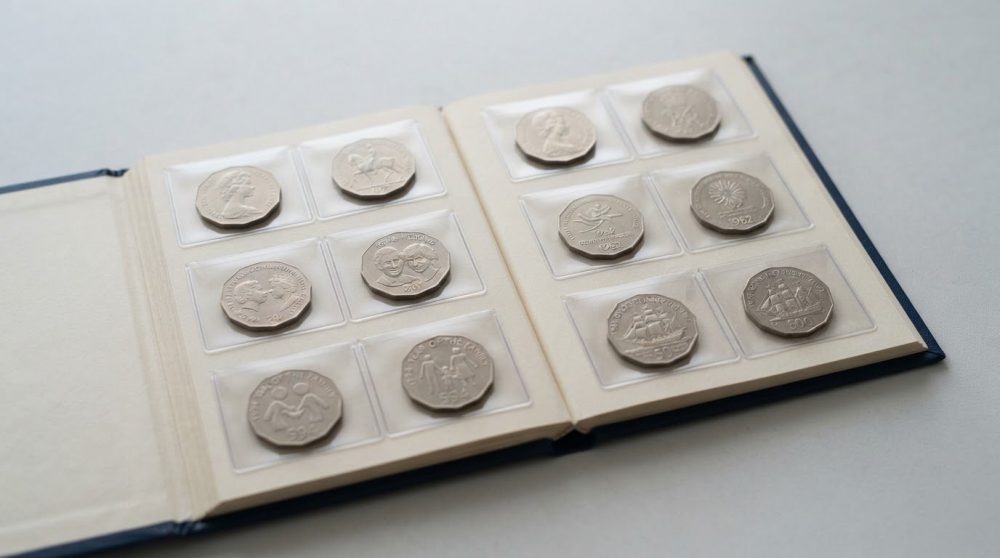
An album suits a commemorative series when you want to add new releases over time and keep them organised in sequence. Some older albums show only one face at a time, while designs with sliding windows allow viewing of both obverse and reverse. Cardboard 2×2 holders can label individual coins before they go into a case; avoid staples that could scratch a coin during removal.
A floating frame displays a coin between clear panels, but is better for presentation than frequent handling. Check that the coin is held securely and that any material touching it is PVC-free. For routine storage, a fitted capsule or album is easier to organise and access. A case can group coins in holders without stacking loose pieces together.
2. Oxidation, humidity and temperature fluctuations
Store commemorative coins in a stable indoor location, away from windows, kitchens and bathrooms. Humid air and temperature swings can create condensation on metal, increasing corrosion risk. Oxygen can react with silver and leave tarnish or surface stains; heat and humidity may accelerate toning on silver and copper. PCGS coin-storage guidance discusses environmental risks collectors should consider. A shed or garage is less suitable because Australian conditions can fluctuate sharply.
Direct sunlight is another avoidable risk. It can heat a display case, degrade plastic holders and affect a coin’s surface over time. Place capsules or albums in a closed drawer or cupboard, away from windows and heaters. Avoid storing coins against other metals, which may react with their surfaces. Keep each coin in an individual holder rather than loose in a shared container.
Don’t clean a commemorative coin before storing it. Polishing, abrasive cloths and chemical cleaners can remove the original surface, while rubbing may leave scratches. If a coin has dirt or grime, avoid household products and leave uncirculated or valuable pieces untouched. Natural toning is part of a coin’s surface history, not a reason to polish it.

3. Why careful storage helps preserve coin condition and value
Australian commemorative coins don’t need a separate preservation rule: their metal, finish and condition guide storage choices. For long-term storage, use a suitable holder and avoid placing coins loose together.
Condition matters because collectors distinguish original surfaces from later damage. Fingerprints, hairlines and residue can affect a coin’s appearance, while cleaning may remove the original finish and leave visible marks. Handle an unprotected coin by its edge over a soft, clean surface, then return it to its holder rather than passing it between hands.
A raw coin and a graded coin also need different handling. Coins graded by PCGS or NGC are sealed in tamper-evident holders, often called slabs, so the coin itself doesn’t need another capsule. Keep the slab clean and avoid stacking heavy objects on it; a raw coin remains exposed whenever its holder is opened.
Storage supports condition, but it doesn’t determine a coin’s value on its own. Collectors also consider factors such as mintage, demand and grade, and those assessments can change. Keep notes on the coin’s year, denomination and mint mark alongside clear photographs of both sides.
Renniks
Renniks brings together storage options for collectors choosing how to organise commemorative coins, from individual holders to albums for a growing series. Premium coin capsules suit coins stored individually, while 2×2 coin holders can be arranged in compatible album pages. Dedicated album systems and specialist sheets and binders provide further formats for organising and viewing a collection.
Choose according to the coin’s dimensions, how often you handle it, and whether you want to view or file coins by release. For a mixed collection, consistent labelling and a system that accommodates its range of holders can make future additions easier to organise. Contact Renniks if you need help selecting storage for your commemorative coins.
Choose a storage system that can grow with your collection
Renniks offers Lighthouse Album Systems, Lighthouse Coin Capsules and 2×2 coin holders for different ways to house and organise coins. The right format depends on whether you prefer individual holders or an album arranged for viewing. Keeping the storage approach consistent can also make it easier to identify gaps as your collection develops.
For guidance on selecting coin storage, Contact Renniks.
Shop the supplies in this guide
Put the advice above into practice with these collecting supplies from Renniks:
- Renniks Coin Album – Red
- Renniks Coin Album Plastic Refill Pages, 42 Pockets, Pack 10
- ULTRA coin capsules Perfect Fit for 2 oz. Queen’s Beasts Silver (38.61mm), pack of 10
- EVERSLAB Coin Capsules , Inner Diameter 29mm
- Renniks Australian Coin & Banknote Values 33rd Edition, Softcover
- OPTIMA Coin Sheets for 12 coin Holders 50x50mm, clear
Frequently Asked Questions
Why is proper coin storage important?
Proper storage reduces avoidable marks that can obscure a commemorative coin’s design and affect how collectors assess its condition. A fingerprint across a proof field, for example, can be more noticeable than handling marks on a circulated coin. A suitable holder protects each piece between viewings and makes the collection easier to catalogue.
What coin holders, capsules, albums and storage boxes are best for commemorative coins?
Choose storage according to how you’ll handle and organise the coin. A capsule suits an individual coin you want to view, while an album works well for arranging a series in release order. A storage box can group coins that are already housed in holders. Check that each holder fits without pressure and that any album page or insert is PVC-free.
What temperature and humidity are suitable for storing collectible coins?
Choose a stable indoor location rather than aiming for a precise temperature or humidity reading. Avoid sheds, garages, bathrooms and kitchen cupboards, where heat, moisture or rapid changes are more likely. Don’t move a cold collection straight into a warm, humid room and open it immediately: condensation can form on coins and holders as temperatures adjust.
How should coins be handled and removed from capsules safely?
Work over a clean, soft surface to reduce the chance of marking a coin if you drop it. Hold the capsule by its edges and open it slowly at the join, using your fingers rather than a knife or metal tool. Once exposed, lift the coin by its rim and avoid touching either face, especially a proof field.
How can commemorative coins be protected from moisture, PVC damage and corrosion?
Choose holders labelled PVC-free, such as those made from polypropylene or polyester, and keep them away from damp areas. Check older plastic pages for cloudiness, tackiness or a strong plastic smell, which may indicate a material problem. If a coin appears sticky or discoloured, don’t rub or polish it, as abrasion can worsen surface damage.
Disclaimer
This article is provided for general information and collecting guidance only, and is not financial or investment advice. Coins, stamps, banknotes and trading cards can fluctuate in value, and nothing here should be read as a guarantee that any item will increase in value. Any value mentioned reflects a reference-guide estimate at the time of writing, not a current market valuation; always check the latest edition of Renniks Australian Coin & Banknote Values or an independent source for current figures. Renniks does not grade, authenticate or appraise items; grading opinions belong to independent third-party services such as PCGS and NGC. Links to external websites are provided for reference only; Renniks is not responsible for the content of third-party sites.
