




Stamps
Glassine Paper: Its Uses, Limits and Packaging Suitability
Nov
Glassine paper is a smooth, translucent material suited to lightweight wrapping and interleaving, not to waterproofing or rigid protection. Its suitability depends on the object, whether the paper will touch its surface, and the protection needed in storage. These distinctions matter when choosing packaging for collectibles, artwork, or everyday goods.
This article explains how glassine paper is made, what its surface means in practical use, and where its limits matter. It covers packaging formats and disposal in Australia, then compares glassine with parchment, vellum, and wax paper. Choose by use case: consider what the item needs from its enclosure, what the material can provide, and when another format is more suitable. Collectors should also consider the item’s condition and how it will be stored or handled.
Key Takeaways
- Understand how wood pulp and supercalendering give this material its dense, glossy surface.
- Assess whether it suits interleaving or enclosures, and why it may be unsuitable for some painted surfaces.
- Compare parchment, vellum and wax paper by their properties and intended uses before choosing a packaging material.
- Learn which qualities to consider when selecting envelopes or bags for stamps and other collectibles.
What Makes Glassine Paper Unique?
Glassine paper is made by compressing wood-pulp fibres into a dense sheet with a distinctive smooth finish. This process affects how the paper handles dry objects and printed material.
Glassine composition and properties
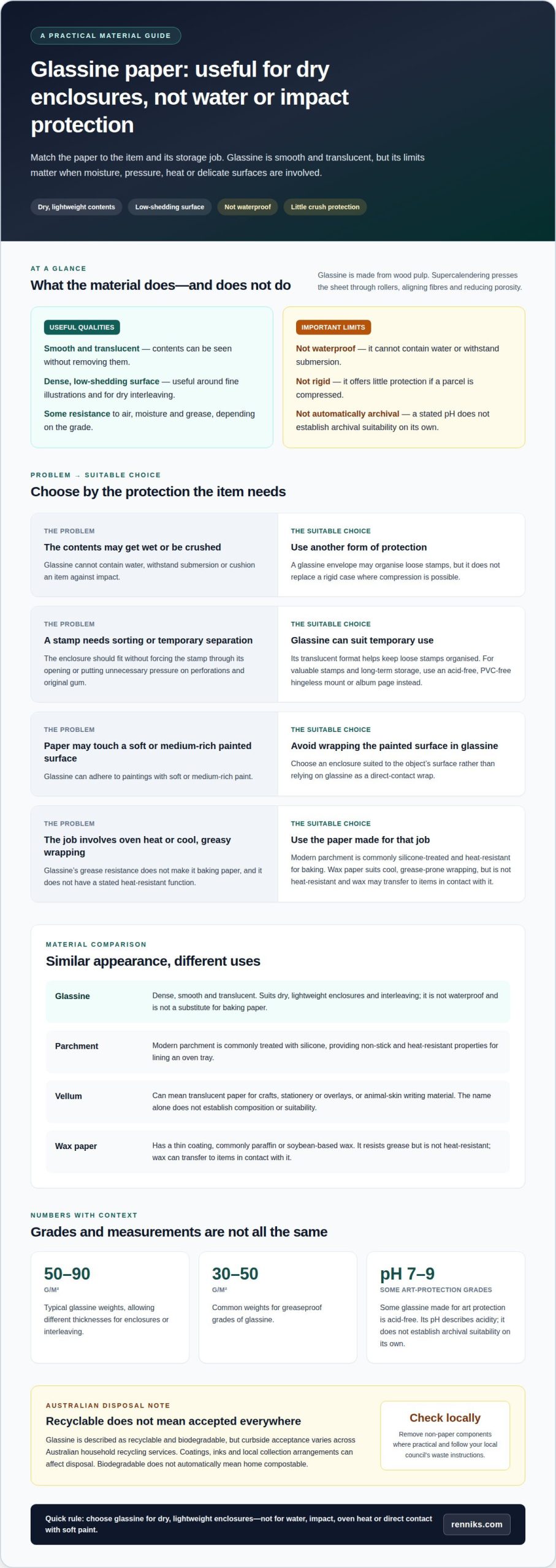
Manufacturers begin with wood pulp, then supercalender the paper. This process passes it through rollers that align fibres and reduce porosity. The result is a smooth, glossy surface that lets light pass through. Compared with ordinary paper, it is denser and sheds fewer tiny fibres. Typical weights range from 50 to 90 g/m², allowing different thicknesses for enclosures or interleaving. Its low-shedding surface can be useful around fine illustrations, where loose fibres may interfere with presentation.
Environmental qualities of glassine
Glassine paper is described as recyclable and biodegradable, and some bags may be accepted in curbside recycling. However, acceptance varies across Australian household recycling services. Coatings, inks, and local collection arrangements can affect disposal, while biodegradability does not automatically mean home compostability. Check the packaging and follow your local council’s waste instructions. These are separate disposal claims, not interchangeable terms.
Moisture, grease and archival qualities
Glassine may offer some resistance to air, moisture and grease, but it should not be relied on to keep out water. It cannot contain water or withstand submersion. Greaseproof grades commonly weigh 30 to 50 g/m². Some glassine made for art protection is acid-free, with a pH ranging from 7 to 9. That pH describes acidity, not archival suitability on its own. For prolonged contact with a stamp or photograph, the paper’s grade and the object’s surface both matter. Resistance to grease or moisture should not be mistaken for protection from every storage condition.
Glassine’s limitations and packaging suitability
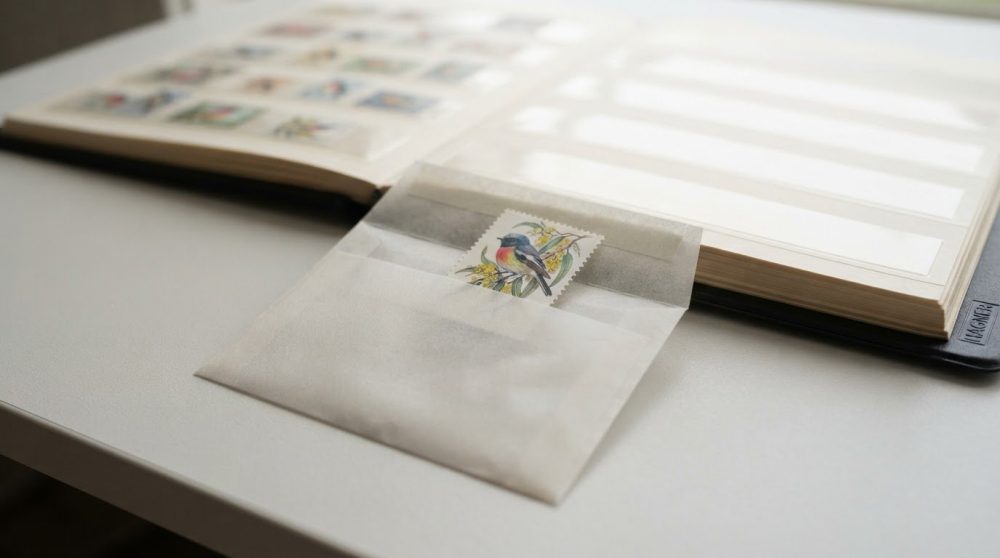
Glassine paper suits dry, lightweight contents, but not every package or object. It cannot contain water or withstand submersion, and it offers little protection from crushing. A glassine envelope can keep loose stamps organised, for example, but it won’t replace a rigid case if a parcel may be compressed during handling.
Whether glassine bags can go in a household recycling bin depends on local collection arrangements, so don’t assume curbside recyclability means universal acceptance across Australia. Remove non-paper components where practical and follow your local service’s disposal instructions.
Glassine comes in formats such as stamp and photograph envelopes, interleaving sheets, small-product pouches, and rolls that can be cut to size. Placing a sheet between illustrated pages helps limit direct contact. For apparel packaging, glassine bags offer a paper alternative to plastic polybags, but they do not provide the same protection from liquids.
Glassine can be printed using offset, digital, or flexographic methods. Cut a sheet or roll to size, crease it along the intended fold, then close the package in a way that suits its contents and design. The ink and any added closure can affect how the finished package is handled and disposed of.
Glassine is used in some food packaging, including for cookies, baked goods, candies, and frozen foods. Its grease resistance can be useful for a pastry wrapper, but the material is not waterproof, and printing alone does not establish that a package is suitable for food contact. Its thin, foldable format also works for decorative origami. Avoid wrapping paintings with soft or medium-rich paint, as the paper may adhere to the surface.
Glassine compared with parchment paper, vellum and wax paper
These materials can look similar, but their surfaces and intended uses differ. For stamp storage, baking, or presentation, choose based on contact, heat, and moisture needs, not appearance alone.
Glassine paper is dense, translucent, and smooth. It can work for dry interleaving and enclosures, including sleeves for photographs or stamps. It is not waterproof, so it cannot contain liquids or withstand submersion. Its grease resistance also does not make it a substitute for baking paper.
Modern parchment paper is commonly treated with silicone, giving it non-stick and heat-resistant properties for baking. It is the practical choice for lining an oven tray. Glassine paper does not have this stated heat-resistant function, so do not use it in place of parchment for baking.
Vellum can mean translucent paper used for crafts, stationery, or overlays. The term may also refer to animal-skin writing material, so the name alone does not establish a product’s composition or suitability. For paper crafts, consider the sheet’s opacity and finish. For a stamp enclosure, prioritise a suitable fit and storage properties.
Wax paper has a thin coating, commonly made from paraffin or soybean-based wax. It resists grease but is not heat-resistant, so it should not be used in an oven. Wax can also transfer to items in contact with the paper, making it a poor default for long-term collectible storage.
Practical choice: use parchment for oven baking, wax paper for cool, grease-prone wrapping, and vellum for suitable craft applications. Choose glassine for dry, lightweight enclosures, such as a stamp kept separately from adhesive or waxed surfaces.
Renniks: Glassine envelopes and bags
Renniks offers glassine envelopes and bags for temporarily sorting stamps or enclosing other suitable dry items. Their translucent format allows contents to be seen without removing them. Glassine alone is not a substitute for suitable long-term archival storage.
Choose a glassine envelope or bag that fits the stamp without forcing it through the opening. For valuable stamps, use an acid-free, PVC-free hingeless mount or album page for long-term storage; avoid unnecessary pressure on perforations and original gum. Glassine can serve as a temporary enclosure, but does not replace an album or cushion the item against impact.
Choose storage around the item
Match each enclosure to its role in your collection. A paper sleeve, an album page, and a coin capsule serve different storage needs, so no single format is a universal solution. Consider how each item will be handled, displayed, and organised, then choose a material and format suited to that use.
Renniks offers glassine envelopes and bags alongside Lighthouse Album Systems, Lighthouse Coin Capsules and 2×2 coin holders. These options let collectors consider an enclosure as part of a wider storage arrangement, rather than choosing packaging in isolation. For stamps, banknotes or other paper items, keep the intended contents in mind when selecting glassine paper.
For a packaging enquiry, contact Renniks through See an example here. A considered choice now can make it easier to catalogue and access your collection later.
Shop the supplies in this guide
Put the advice above into practice with these collecting supplies from Renniks:
- Cenveo/Westvaco Glassine envelope 44x72mm (5stk31) box of 1000
- WESTVACO GLASSINE ENVELOPES 60MM X 92MM [BOX1000]
Frequently Asked Questions
What is glassine paper and what is it made from?
Glassine is a translucent paper made from wood pulp and processed to create a smooth, dense surface. For collectors, that finish makes it easier to view an enclosed item without removing it. The name describes a material, not a guarantee of a particular grade, acidity level or preservation performance. Check the intended use before placing valuable material inside.
What are the main uses of glassine paper?
Common uses for glassine paper include sleeves for stamps and photographs, and interleaving sheets to keep illustrated pages apart. A loose stamp, for example, can be kept in an envelope while awaiting placement in an album. Glassine is also used in some small-product and food packaging. It is an enclosure, not a rigid case, so it will not prevent bending or crushing under pressure.
How does it compare with wax paper, parchment paper, and tracing paper?
Glassine paper has a smooth, translucent finish and is commonly used for enclosures. Wax paper has a wax coating and is not heat-resistant; modern parchment is commonly treated with silicone for non-stick, heat-resistant baking use. Tracing paper lets a drawing show through for copying or drafting, rather than protecting an item in a sleeve. Choose by task, not translucency alone.
What weights, sizes, and roll formats of glassine paper are available in Australia?
Formats include sheets, envelopes, bags and rolls, with rolls cut to custom sizes. Typical glassine weights range from 50 to 90 g/m²; greaseproof grades commonly range from 30 to 50 g/m². These are broad material ranges, not a guarantee that every format or weight is stocked by every Australian supplier. Match dimensions to the item and enclosure.
What are the risks or limitations of using glassine paper?
Glassine paper will not cushion a stamp or photograph against impact, prevent crushing, or contain liquids. It may also adhere to soft or medium-rich paint, so do not wrap those paintings directly in it. For collectibles, an envelope alone may not provide enough protection during rough handling. Place it in a suitably rigid storage system if the contents need support.
Disclaimer
This article is provided for general information and collecting guidance only, and is not financial or investment advice. Coins, stamps, banknotes and trading cards can fluctuate in value, and nothing here should be read as a guarantee that any item will increase in value. Any value mentioned reflects a reference-guide estimate at the time of writing, not a current market valuation; always check the latest edition of Renniks Australian Coin & Banknote Values or an independent source for current figures. Renniks does not grade, authenticate or appraise items; grading opinions belong to independent third-party services such as PCGS and NGC. Links to external websites are provided for reference only; Renniks is not responsible for the content of third-party sites.
