





Coins
Ways to Safely Store a Coin Collection in Albums and Holders
Nov
Keep coins in an acid-free, PVC-free album or holder, away from direct sunlight, heat and damp, and handle them by the rims. Oils and moisture from fingers can affect a coin’s surface, while an unstable storage environment can accelerate changes to silver and copper. Knowing how to safely store a coin collection starts with choosing materials that won’t expose coins to harmful plasticisers and keeping the album in a dry, stable place.
Careful storage helps preserve a coin’s original surface and condition, whether it’s a circulated piece, an uncirculated coin or part of a set. This guide covers practical ways to protect an album from sunlight and damp, handle and organise coins, and keep an eye on their storage conditions. It also compares SAFLIPs with cardboard 2×2 holders, so you can weigh their different features when choosing a format for your collection.
Key Takeaways
- Choose acid-free, PVC-free storage materials, and handle coins by their rims to limit contact with oils and moisture.
- Keep albums in a cool, dry place away from direct sunlight, heaters and damp areas to reduce environmental stress on coins.
- Weigh the format and handling differences between SAFLIPs and cardboard 2×2 holders, including the risk of staples scratching a coin.
- Match the album or holder to how you organise and view your collection; purpose-made coin storage options include Lighthouse Album Systems and 2×2 coin holders from Renniks.
1. What Are the Key Tips to Keep Your Coin Collection Album in Top Shape?
Store albums on a shelf in a dry room, away from windows and exterior walls that feel damp. The Royal Australian Mint’s coin-care guidance supports careful handling and storage to help preserve coins. Check album pages occasionally for coins that have shifted or signs of damp, and keep the album off the floor where spills can reach it.
Choose holders labelled acid-free and PVC-free. Keep the material information with the album so it’s available if you replace pages or transfer coins. Don’t use an unidentified household sleeve as a substitute for a coin holder.
For valuable coins, a home safe keeps them accessible, while a bank safe deposit box offers separate storage. Keep an inventory and photographs apart from the coins, so you can identify the collection if access to its storage location is disrupted. An insurer’s policy determines the documentation required, so retain acquisition records and any third-party grading certificates.
PCGS explains that a coin sealed in its grading holder is already encapsulated; raw coins require a different storage approach. Its grading reference helps distinguish graded coins from ungraded pieces. For raw coins, use a PVC-free capsule sized to fit securely and handle each coin by the rim.
For photographs, capture both sides in even light and record the date, mintmark and distinguishing features. Handle raw coins by the rim, following the Royal Australian Mint’s guidance. Avoid mounting a valuable coin in jewellery, as this can alter its surface.
2. Avoiding sunlight, heaters and damp locations
Choose a storage spot away from windows, heaters, bathrooms and damp exterior walls. The Royal Australian Mint advises careful coin storage. A shaded, dry room helps limit exposure to sunlight and moisture, while changes in humidity and temperature can contribute to surface changes on silver and copper coins. In Australian homes, a dry living-area cupboard is generally preferable to a hot shed or damp garage.
Check the holder material as well as the room. PCGS warns against PVC storage materials, which can release plasticisers and damage coin surfaces. Polypropylene and polyester, including Mylar-type plastic, are more stable alternatives. Clear plastic alone doesn’t show that a sleeve is suitable for long-term storage.
Choose a PVC-free flip, capsule, album or slab to suit the coin and your storage needs. A capsule holds an individual coin, an album organises a series, and a slab is a sealed holder for a coin graded by a third-party service. Keep all formats away from direct sunlight and damp.

3. SAFLIPs versus cardboard 2×2 holders
SAFLIPs and cardboard 2×2 holders both enclose an individual coin, but use different materials. A SAFLIP is a clear plastic flip; choose a PVC-free, inert option, such as polyester, for long-term storage. The coin remains visible without opening the holder, which helps limit handling during viewing or cataloguing.
A cardboard 2×2 folds around the coin and has a clear window. It can be labelled with a date, mintmark or die variety, making it useful for organising Australian coins by series. Check the holder’s material and fastening: staples can scratch a coin or leach chemicals, while adhesive-backed holders can loosen over time and leave residue. Dust inside the holder or gases passing through its window may also affect a coin’s surface.
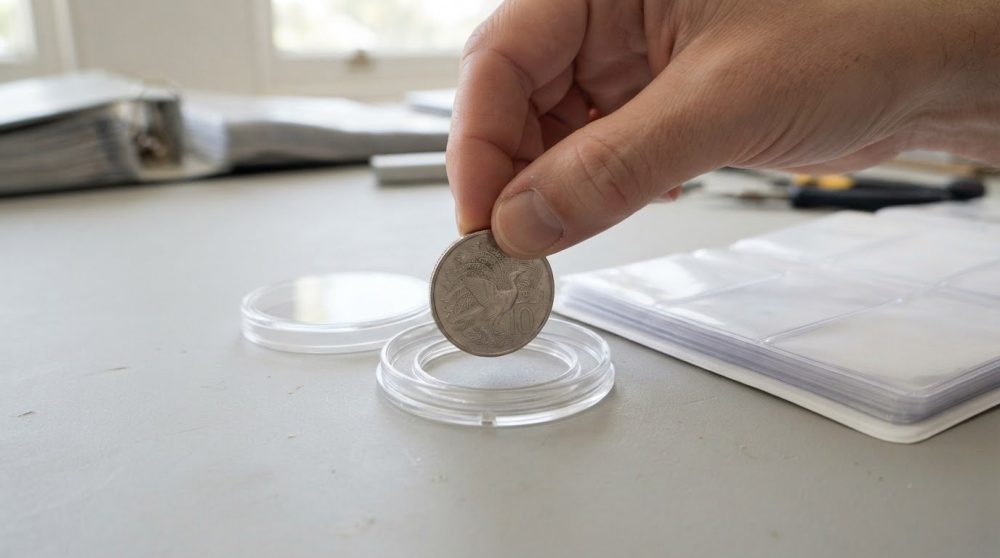
With either format, place the coin centrally and avoid contact with the viewing window. A holder should fit the coin without letting it rattle; excess space can allow it to shift during handling. Keep holders in a dry album or storage box, and avoid plastic sleeves unless they’re explicitly PVC-free. Polypropylene and polyester are more stable than PVC, whose plasticisers can migrate and leave coins etched or sticky.
Coin cards provide a labelled, display-ready format, while a capsule holds a coin rigidly and limits handling. Choose based on whether you prioritise easy identification, album storage or individual protection. For a growing Australian series, consistent holder sizes make filing and retrieving coins simpler.
Renniks
Renniks helps collectors choose storage formats that suit their coins, album layout and handling needs. If you’re moving a series into an album, comparing individual holders or organising coins for reference, its range includes Lighthouse Album Systems, Lighthouse Coin Capsules, 2×2 coin holders, and HAGNER sheets and binders.
For a raw coin, a correctly sized capsule or holder limits handling, while album pages make a series easier to arrange and view. Match the format to the coin’s dimensions and how you want to catalogue it, and choose PVC-free materials for long-term storage.
If you’d like help choosing a suitable storage format for your collection, contact Renniks.
Plan storage that can grow with your collection
Plan storage with room for new finds rather than forcing every coin into the same holder. Before adding a piece, decide whether it belongs in an existing series, a separate study group or an individual holder. Consistent placement makes later cataloguing and handling easier.
Knowing how to safely store a coin collection also means choosing a system you can maintain as it grows. Renniks offers Lighthouse Album Systems, Lighthouse Coin Capsules and 2×2 coin holders for different storage needs. Match the format to each coin’s dimensions and how you prefer to view it, then keep your records alongside the collection. That way, new acquisitions can be organised without disrupting the system already in place.
For coin storage advice from Renniks, explore coin albums and holders. A considered arrangement gives each addition a clear place and supports careful collecting over time.
Shop the supplies in this guide
Put the advice above into practice with these collecting supplies from Renniks:
- Album for coin holders with 10 sheets for 20 coin holders each
- Renniks Premier Coin Album Extra Pages Kit for $2
- Renniks Premier Australia $2 Coin Album
- Ultra coin capsules Perfect Fit for Australian $2 coin
- ULTRA Coin Capsules, inside Ø 25mm suit Australian $1 coin
Frequently Asked Questions
First, why is coin storage so important?
Knowing how to safely store a coin collection helps keep related pieces together and their collecting context clear. A consistent arrangement makes it easier to study a date run, compare mintmarks or find a particular variety without repeatedly handling other coins. Separating different metals or series can also make a collection easier to review and maintain as it grows.
What Are the Key Tips to Keep Your Coin Collection Album in Top Shape?
Don’t overfill an album or force pages against a tight binder spine. Too much pressure can make pages difficult to turn and strain the binding. Keep the sequence consistent, such as arranging Australian decimal coins by denomination and year, and use vacant spaces deliberately so new additions don’t disrupt the order.
What temperature and humidity are best for storing a coin collection?
Choose moderate, stable conditions rather than aiming for a precise temperature or humidity. In a humid part of the home, a moisture absorber can help manage the storage area; replace it regularly and keep it separate from coin holders. Check the cupboard or cabinet too, since conditions inside an enclosed space can differ from those in the room.
How should you handle coins to avoid fingerprints and scratches?
Prepare a clean, uncluttered work surface before opening an album or holder. A padded tray can catch a coin if it slips, and handling one piece at a time reduces the chance of coins knocking together. Keep tools, jewellery and loose coins away from the work area to prevent scratches during examination.
How can you spot PVC damage or other signs of deterioration in stored coins?
Check packaging or product labels for the storage material; clear plastic alone doesn’t identify its composition. If a holder’s material is unknown, separate it from other coins and record which pieces were stored in it. Don’t rub or polish a coin during inspection, as this can alter its surface and make later assessment more difficult.
Disclaimer
This article is provided for general information and collecting guidance only, and is not financial or investment advice. Coins, stamps, banknotes and trading cards can fluctuate in value, and nothing here should be read as a guarantee that any item will increase in value. Any value mentioned reflects a reference-guide estimate at the time of writing, not a current market valuation; always check the latest edition of Renniks Australian Coin & Banknote Values or an independent source for current figures. Renniks does not grade, authenticate or appraise items; grading opinions belong to independent third-party services such as PCGS and NGC. Links to external websites are provided for reference only; Renniks is not responsible for the content of third-party sites.
