






Coins
Coin capsule sizes by coin diameter, round capsule and 2×2 fit
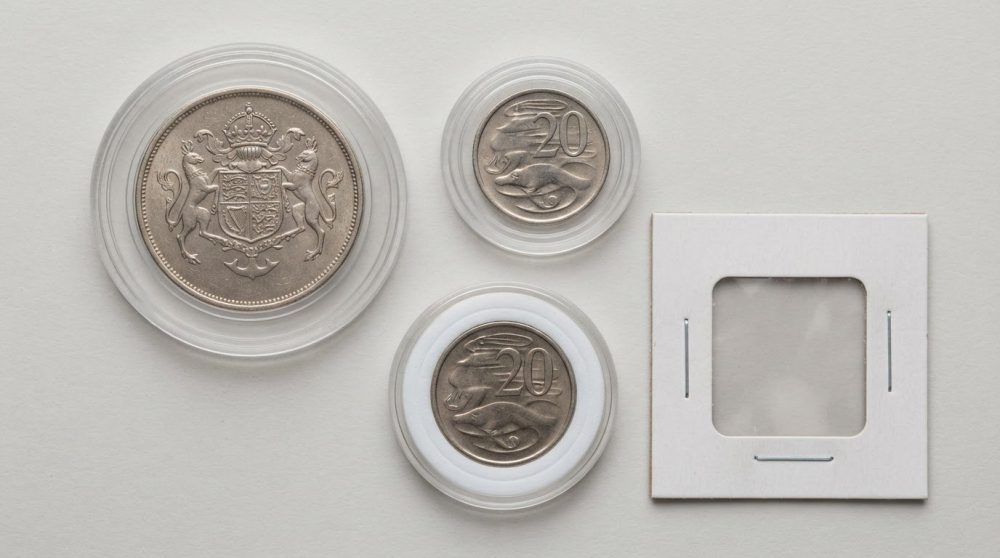
Nov
To choose a coin capsule, measure the coin’s diameter and match it to the capsule’s intended coin size, rather than relying on denomination or appearance. The Royal Australian Mint’s coin information provides an official reference point for Australian coin specifications; use a suitable sizing chart to select a capsule for the measured coin.
Capsule measurements can be easy to misread: the size usually refers to the coin it holds, not the capsule’s external width. This guide explains how to compare coin and capsule dimensions, distinguish round capsules from 2×2 holders, and assess fit for Australian circulating, pre-decimal and gold coins. It also considers direct-fit and ring-type designs, including when an insert can help centre a coin. These distinctions make it easier to select a holder that suits both the coin and the way you organise your collection.
Key Takeaways
- Measure a coin’s diameter before selecting a capsule; the closest recommended size is a practical starting point for a secure fit.
- Use the recommended 39 mm Lighthouse capsule size for an Australian pre-decimal crown, and compare other coins against their listed sizes.
- Choose a round capsule for a close fit around an individual coin; 2×2 holders are a separate format, so match the holder to its intended coin size.
- For a mixed collection, consider whether direct-fit capsules or 2×2 holders better suit the coins and the way you organise them.
Recommended Lighthouse capsule sizes
Measure the coin’s diameter, then match it to the recommended Lighthouse capsule size. The Royal Australian Mint’s coin information is a reliable reference for Australian coin dimensions, while capsule size charts use those measurements to guide your choice.
A capsule can reduce direct handling, but correct fit and storage conditions matter too. Keep coins away from heat, humidity and direct sunlight, and handle raw coins by their edges.
Lighthouse Capsule Sizes
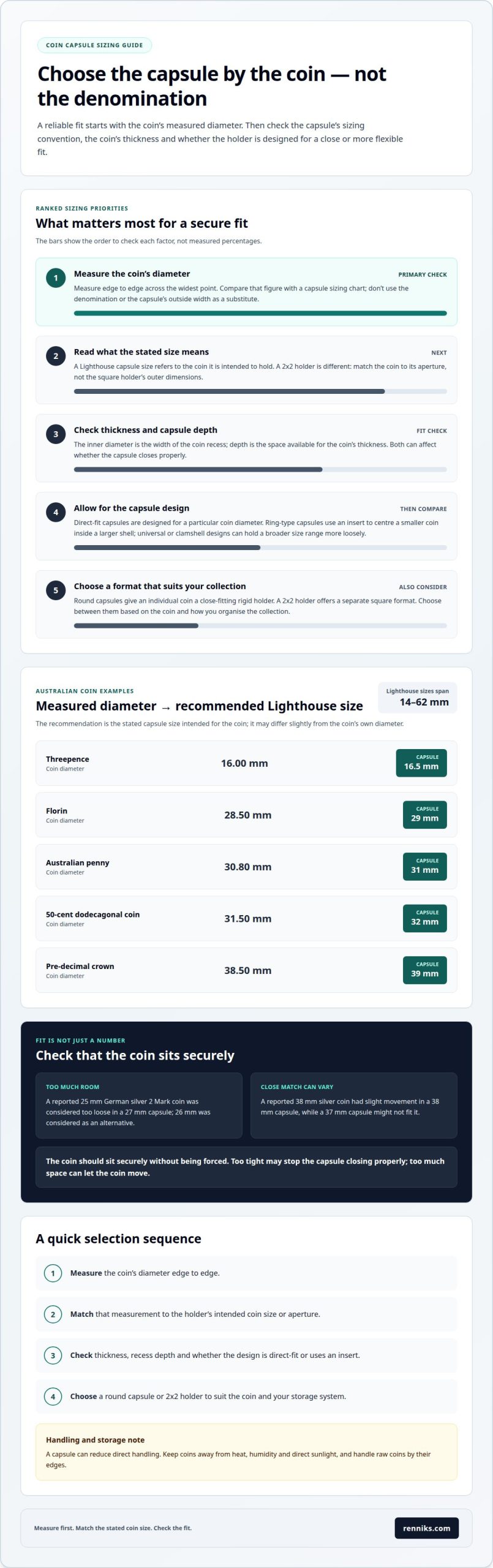
A Lighthouse capsule size is the stated size intended for the coin it holds. Available sizes range from 14 mm to 62 mm, covering small Australian coins and larger pieces such as the pre-decimal crown.
For example, Australian coin measurements and corresponding Lighthouse recommendations include:
- The threepence measures 16.00 mm; the recommended capsule size is 16.5 mm.
- The florin measures 28.50 mm; the recommended size is 29 mm.
- The pre-decimal crown measures 38.50 mm; the recommended size is 39 mm.
Sizing Charts from Brands and Sellers
A sizing chart pairs a coin’s diameter with a recommended capsule size. For Australian coin dimensions, consult the Royal Australian Mint’s coin information, then use a capsule sizing chart to match the measurement to a holder.
Gold and bullion coins also require attention to diameter.
Distinguish the coin’s measurement from the capsule size. A chart recommendation is a guide to choosing a holder, not the coin’s own diameter.
Round capsule and 2×2 sizing
A round capsule is a rigid holder sized for a coin’s diameter. A 2×2 holder is a square-format holder with a coin-sized aperture, so its outside dimensions don’t indicate the coin fit. The Royal Australian Mint’s coin information provides a reference for Australian coin specifications, which helps establish the coin measurement before selecting a holder.
Direct-fit capsules hold a coin close to its edge, while universal or clamshell designs accommodate a broader size range with a looser fit. In reported examples, German silver 2 Mark coins measuring 25 mm were considered too loose in 27 mm capsules, with 26 mm considered as an alternative. For a close fit, match the holder’s intended coin size to the measured coin rather than choosing a substantially larger opening.
For a 2×2 format, match the coin to the holder’s aperture. Choose an opening that lets the coin sit centred without moving freely inside. A range of 2×2 coin holders can be compared by format and intended fit.
A coin mount is a holder that supports a coin while allowing handling without touching its surface. Australian mounts are available in sizes from 17.5 mm to 39.5 mm. Keep the mount’s stated coin size distinct from a capsule’s sizing convention.
Fit can vary between capsule designs. A reported 38 mm silver coin had slight movement in a 38 mm capsule, while a 37 mm capsule might not fit it. Measure the coin and compare it with the holder’s intended fit before selecting a size.
Choosing a capsule by coin diameter
Measure the coin first, then use its diameter and thickness to assess capsule fit. Choosing the right size coin capsule starts with the coin itself, not its denomination or the holder’s outer dimensions.
Coin Diameter as a Sizing Guide
Coin diameter is the distance across its widest point. Measure edge to edge, without including raised design details that could affect the reading. To choose the right size coin capsule, compare this measurement with the coin diameter specified in the capsule guide.
The coin should sit securely without being forced into the capsule. A tight fit may stop the capsule closing properly, while too much room can let the coin move.
Direct-Fit and Ring-Type Capsules
A direct-fit capsule is designed for a particular coin diameter. A ring-type capsule has an insert that holds a smaller coin inside a larger shell. Direct-fit capsules suit coins with a known size; inserts can help standardise capsule sizes for coins with different diameters.
For example, a 25 mm German 2 Mark coin was considered too loose in a 27 mm capsule, with 26 mm considered as an alternative. Use the coin’s measurement to guide the choice.
Capsule Sizes for Common Australian Coins
A recommended capsule size is the stated size intended to hold a coin. An Australian 50-cent dodecagonal coin measures 31.50 mm, with a recommended capsule size of 32 mm. An Australian penny measures 30.80 mm and has a recommended size of 31 mm.
These examples show why denomination alone is not a reliable sizing guide. Measure the specific coin, especially when comparing different denominations or older issues.
Inner Diameter and Capsule Depth
The inner diameter is the width of the capsule’s coin recess; the depth is the space available for the coin’s thickness. Both affect the fit, so diameter alone may not resolve a close match.
Compare the capsule’s stated dimensions with the coin’s diameter and thickness. A capsule that is too small may not close properly, while excess space can allow the coin to move.
Renniks: Lighthouse Coin Capsules
Renniks offers Lighthouse Coin Capsules to help collectors match a holder to a measured coin diameter. Use the coin’s measurement and the recommended capsule size as your starting point, then consider whether a direct-fit capsule or another holder format better suits the coin and your collection.
The Lighthouse Coin Capsules range includes sizes from 14 mm to 62 mm. That range covers small Australian coins as well as larger pieces, including the pre-decimal crown. For mixed collections, 2×2 coin holders offer a different format; Lighthouse Album Systems can help organise coins in a dedicated album system.
Choose a capsule based on the coin’s diameter and how you plan to store it, not its denomination alone. For Lighthouse Coin Capsules, browse Renniks’ range and select a size using your coin’s measurements.
Put your capsule choice into practice
Once you’ve chosen a suitable fit, consider how each coin will sit within the wider collection. Consistent holders make it easier to arrange coins by denomination, date or series, and plan for future additions without changing your storage approach.
Renniks offers Lighthouse Coin Capsules for individual coins, 2×2 coin holders as a square-format option, and Lighthouse Album Systems for organising housed coins in an album. Choosing the right size coin capsule gives each raw coin a suitable starting point; the storage format then determines how it fits into your broader collecting system.
To match a capsule to your coin, measure its diameter and ask Renniks for help choosing a suitable size, or browse the Lighthouse capsule range. A measured, consistent approach can make your collection easier to organise as it grows.
Shop the supplies in this guide
Put the advice above into practice with these collecting supplies from Renniks:
- Square Coin Capsules QUADRUM, Inner Diameter 21mm (pack of 10)
- Square Coin Capsules QUADRUM, Inner Diameter 25mm (pack of 10)
- Square Coin Capsules QUADRUM, Inner Diameter 33mm (pack of 10)
- Square Coin Capsules QUADRUM, Inner Diameter 29mm (pack of 10)
- Square Coin Capsules QUADRUM, Inner Diameter 41mm (pack of 10)
- TACK Coin Holders with display diameter of 22.5mm, for stapling, pack of 100
Frequently Asked Questions
How do you measure a coin to choose the correct capsule size?
Measure straight across the coin at its widest point, using callipers for a precise reading. For a dodecagonal Australian 50-cent coin, measure across opposite points rather than between neighbouring flat sides. Compare that measurement with the capsule’s intended coin size, and keep the coin’s thickness in mind if the capsule also lists an internal depth.
Do coin capsule sizes refer to the coin diameter or the capsule’s outer diameter?
Capsule sizes generally refer to the diameter of the coin they are designed to hold, not the capsule’s external measurement. Outer dimensions matter when fitting capsules into a tray, case or album; the inner fit determines whether the coin sits correctly. Keep these measurements distinct when choosing capsules and planning storage.
Are coin capsules safe for long-term storage of Australian coins?
Choose capsules made from PVC-free material to avoid plasticisers that can damage coins over time. Capsules reduce direct handling; store them away from heat, humidity and direct sunlight, which can accelerate toning on silver and copper coins in Australian conditions. Handle raw coins by their edges.
What coin capsule sizes are available in Australia and what do they cost?
Australian Lighthouse coin capsules are available in sizes from 14 mm to 62 mm. Check current pricing when choosing a size.
Disclaimer
This article is provided for general information and collecting guidance only, and is not financial or investment advice. Coins, stamps, banknotes and trading cards can fluctuate in value, and nothing here should be read as a guarantee that any item will increase in value. Any value mentioned reflects a reference-guide estimate at the time of writing, not a current market valuation; always check the latest edition of Renniks Australian Coin & Banknote Values or an independent source for current figures. Renniks does not grade, authenticate or appraise items; grading opinions belong to independent third-party services such as PCGS and NGC. Links to external websites are provided for reference only; Renniks is not responsible for the content of third-party sites.
