





Coins
3 Ways to Display Coins Without Risking Damage
Nov
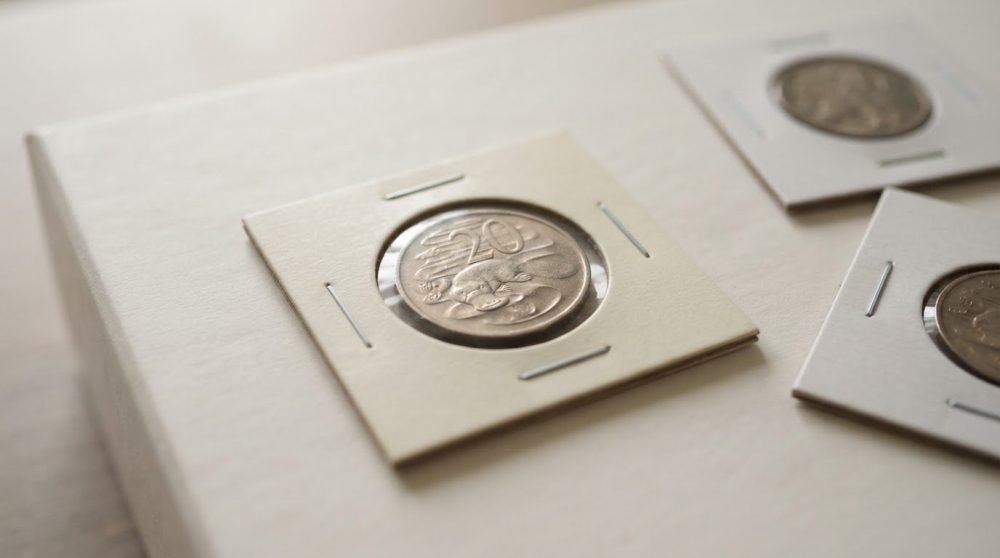
A coin’s original surface can be marked by fingerprints, unsuitable plastic or prolonged exposure to heat and light. To display a coin collection while reducing the risk of damage, handle coins by their edges, keep them in a stable, dry place and use PVC-free holders, albums or capsules.
Good storage matters because skin oils and moisture can affect a coin’s surface over time, while PVC-based plastics can leave residue or discolouration. This guide explains practical ways to reduce those risks, from careful handling to choosing a suitable display system. It also covers why Australian heat and humidity make material choice and placement important, whether you’re arranging a few circulated coins or protecting pieces with delicate surfaces.
Key Takeaways
- Hold coins by their edges and minimise handling to limit contact with surface oils and dirt.
- Choose a cool, dry storage spot away from direct sunlight, heat and damp conditions.
- Use coin-specific, PVC-free holders, albums or capsules to suit how you want to store and view each piece.
- Renniks offers Lighthouse Album Systems, Lighthouse Coin Capsules and 2×2 coin holders for different collection storage needs.
1. Handling coins by their edges
Before handling a coin, choose a clean, dry surface and hold it by the rim. This keeps your fingers away from the obverse and reverse, where skin oils, salts and dirt can leave marks. Clean cotton gloves reduce direct contact during extended inspection, though they can make coins harder to grip. Hold each coin steady above a soft, uncluttered surface, and handle valuable or uncirculated pieces only when needed.
Store coins individually to prevent their faces and edges from rubbing together. Coins kept loose in a tray or container can scratch as they shift during movement. Use a coin-specific holder or capsule for each piece, made from PVC-free materials. Flexible PVC can release plasticisers that leave sticky residue or discolour metal. For display, choose a holder that secures the coin without pressing on its surface.
Cleaning and polishing can remove a coin’s original surface, while rubbing can leave fine scratches visible under magnification. Avoid metal polish, abrasive cloths and brushes. Adhesive mounts or pressure can also mark or stress a coin’s surface. For a valuable coin, leave its natural toning undisturbed rather than trying to restore a bright finish.
Keep displayed coins away from heat and damp areas. Wood and cardboard can release compounds that react with coin metals, so don’t place bare coins directly on shelves or backing boards made from these materials. In Australian conditions, choose a dry display spot away from damp areas and heat sources. Humidity and temperature changes can affect metal surfaces.
2. First, why is coin storage so important?
Suitable storage limits contact with moisture, airborne pollutants and changing temperatures, all of which can affect metal surfaces. In Australian homes, a hot room or damp drawer can encourage tarnish on silver and copper. A stable, dry cupboard away from external walls is preferable to a garage, shed or sunny windowsill. Natural patina is part of a coin’s surface, so preservation means avoiding unwanted chemical change, not restoring a bright shine.
Choose materials made specifically for coin storage. Polypropylene and polyester, including Mylar-type film, are stable plastics, and hard acrylic is also suitable. Avoid flexible PVC pages and pockets: their plasticisers can migrate over time, leaving sticky residue, clouding or discolouration. Acid-free materials are a sensible choice for valuable coins. Gloves can help during inspection, but they don’t make unsuitable storage materials safe.
A display case can reduce exposure to dust and handling, but placement still matters. Keep it away from direct sunlight, heaters and damp areas, and avoid rapid temperature changes. Heat and humidity can accelerate toning, while airborne contaminants can contribute to tarnish on silver. Check that the backing, lining and any coin-contact surfaces are inert and PVC-free.
Australians can buy coin-safe display supplies from specialist collecting retailers. Choose purpose-made holders or cases with clearly identified PVC-free materials, rather than ordinary plastic organisers. For a suitable starting point, browse coin-storage systems and select a format that suits the coins and display space.
3. Protective coin holders, albums and capsules
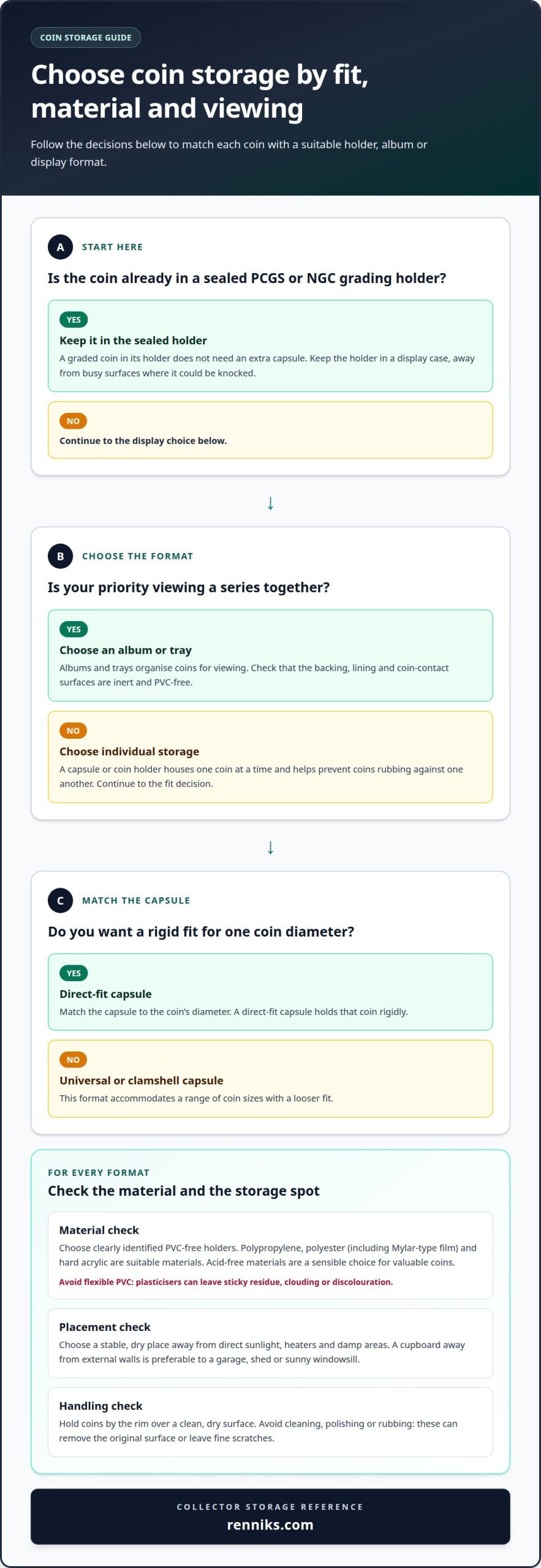
Choose a holder that fits the coin and supports it without pressure. Direct-fit capsules match a coin’s diameter, while universal clamshell capsules accommodate a range of sizes with a looser fit. Albums and trays organise coins for viewing, while fitted presentation cases hold them in place. To display a coin collection while reducing the risk of damage, choose a format suited to each coin and its intended use.
Check the holder material before use. PVC-based plastic can release plasticisers over time, leaving residue or discolouration on silver, copper and other metals. Polypropylene and polyester are suitable alternatives. If a coin shows a hazy film or green residue, don’t scrub it, as abrasion can affect its original surface. Individual holders also prevent coins from rubbing against and scratching one another.
Archival-quality holders and cases in Australia vary in cost according to their format, size and material. Individual capsules, album pages and presentation cases have different uses, so match the format to the coin’s dimensions and display setting. Coin tubes are better suited to storage than viewing, as coins inside can move against one another. Purpose-made Lighthouse coin capsules are one option for individually housed coins.
Keep valuable graded coins in their sealed holders. PCGS and NGC describe their graded coins as enclosed in grading holders, so an additional capsule isn’t needed. Secure the holders in a display case, away from busy surfaces where they could be knocked or handled casually.
Capsules and albums designed for coin storage can reduce handling and contact with environmental contaminants. House each coin individually in an inert, acid-free capsule or holder. An airtight capsule may limit exposure to moisture and contaminants, but its effect on silver tarnish depends on the capsule and storage conditions.
Renniks
Renniks helps collectors match display and storage formats to their coins, from individual pieces to organised series. Lighthouse Album Systems provide an album option, while Lighthouse Coin Capsules and 2×2 coin holders suit coins stored individually. HAGNER sheets and binders offer another way to organise a collection.
Consider the coin’s diameter, condition and how often you plan to view or handle it before choosing a format. A well-fitted holder helps limit movement and contact, while an album keeps a series together for viewing. If you’re deciding between these options for your collection, contact Renniks for assistance choosing relevant storage supplies.
Plan your next display with care
A display can evolve as a collection grows, a new series takes shape or a piece needs closer examination. Treat the layout as something you can revise: leave room for additions, keep labels legible and arrange pieces so they can be viewed without repeatedly moving neighbouring holders. A considered layout can reduce handling and the risk of damage, making display planning a practical part of organising the collection.
If you’re planning a new display or reviewing existing storage, take the coin sizes and the way you want to view them into account before choosing a format. For help with your next coin-care decision, contact Renniks. A thoughtful display gives each coin a clear place while keeping its presentation practical.
Shop the supplies in this guide
Put the advice above into practice with these collecting supplies from Renniks:
- TACK Coin Holders with display diameter of 17.5mm, for stapling, pack of 100
- TACK Coin Holders with display diameter of 35mm, for stapling, pack of 100
- TACK Coin Holders with display diameter of 22.5mm, for stapling, pack of 1000
- Ultra coin capsules perfect fit for 1 oz silver 39mm pack of 10
- Ultra Perfect Fit coin capsules for 1 oz. Silver Dragon (47.6 x 27.6 mm), pack of 10
Frequently Asked Questions
First, why is coin storage so important?
Suitable storage keeps a coin’s surfaces available for close examination and comparison. For example, organising a collection by denomination or year makes it easier to track gaps and spot design differences. A consistent system also reduces repeated handling while you search through mixed containers. Record identifying details separately so they remain available if a coin is moved.
Why display your treasures?
A display makes a collection easier to enjoy and study without repeatedly opening storage boxes. Arranging coins by year, denomination or design can reveal patterns across a series. Clear labels can record the date, mint mark or reason a coin is noteworthy, helping viewers understand the arrangement without handling the pieces. Keep display notes separate from the coins.
What materials are safe for storing and displaying coins long term?
Polypropylene, polyester such as Mylar-type film, and hard acrylic are suitable coin-storage materials. Check the product information to identify the material and confirm that coin-contact components are PVC-free; a clear appearance alone doesn’t identify a plastic. For a case made from several materials, consider every part that touches or sits close to the coin, including inserts and linings.
How should coins be handled when arranging a display?
Plan the layout before opening holders, then arrange empty labels and mounts first. Lift each coin by its edge over a clean, soft work surface, keeping fingers clear of both faces. If gloves reduce your grip, don’t force the handling. Stabilise the coin carefully and return it to its holder before moving to the next piece. Don’t slide coins across a surface.
Disclaimer
This article is provided for general information and collecting guidance only, and is not financial or investment advice. Coins, stamps, banknotes and trading cards can fluctuate in value, and nothing here should be read as a guarantee that any item will increase in value. Any value mentioned reflects a reference-guide estimate at the time of writing, not a current market valuation; always check the latest edition of Renniks Australian Coin & Banknote Values or an independent source for current figures. Renniks does not grade, authenticate or appraise items; grading opinions belong to independent third-party services such as PCGS and NGC. Links to external websites are provided for reference only; Renniks is not responsible for the content of third-party sites.
