





Coins
Australian coin errors: Identify varieties and assess their value
Oct
An unusual-looking coin is not automatically a mint error. A genuine Australian mint error is an unintended fault made during production; a variety is a repeatable difference linked to a die or production change. This Australian coin error identification guide explains the distinction and why value depends on the fault, its severity, scarcity, condition and collector demand.
Scratches, wear and alterations can resemble minting faults, while genuine varieties have identifiable design features. The guide explains what to examine on each coin, how to distinguish production features from later damage, and which factors shape a considered value assessment. It also covers careful handling and record-keeping when a coin’s status is uncertain.
Key Takeaways
- On a 2001 50-cent Incused Flag, check whether the flag design is sunken rather than raised, not simply marked or scratched.
- Assess an unusual coin by the type and severity of its production fault, its condition, scarcity and collector demand.
- Once you’ve documented a coin’s details, choose a suitable Lighthouse Album System to organise and store your collection.
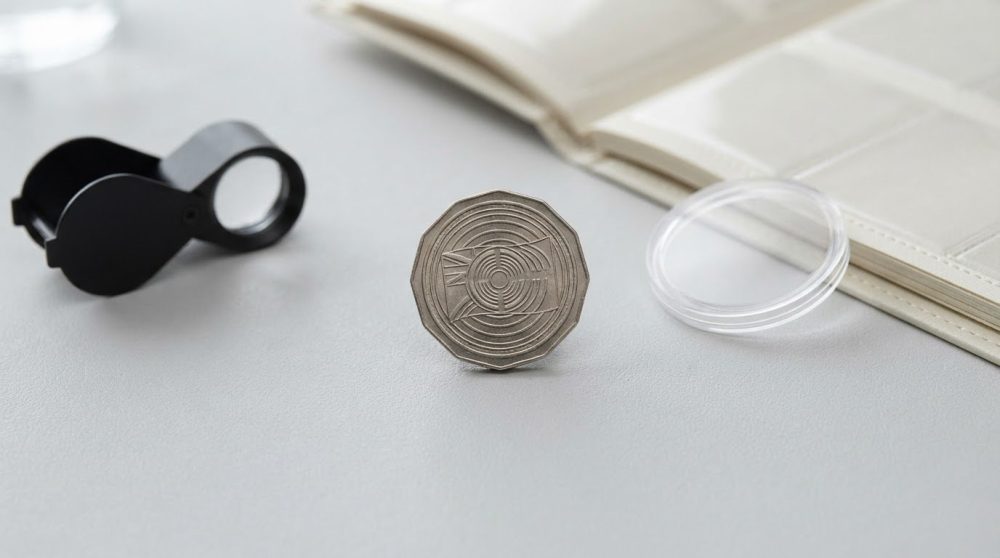
Its 10-cent obverse die produced the distinctive double rim, a key feature to examine.
Double Rim Features
A double rim is a second raised border visible around the Mule’s obverse edge. Examine the border in even light and check whether the extra rim follows the edge consistently. A scrape or impact mark will not create a continuous outline. Compare both faces before deciding what the rim indicates.
Genuine Error Identification
A genuine mint error forms during production, unlike circulation wear, cleaning or deliberate alteration. Inspect both faces and the edge, then look for a fault affecting the design or planchet coherently. Australian examples include off-centre strikes on halfpennies, pennies, sixpences, 2-cent coins and 5-cent coins. Other documented types include clipped planchets and brockage. The Royal Australian Mint is identified as the source of most modern Australian coin errors. These examples show why the denomination alone can’t establish a coin’s status.
Avoid scraping, polishing or applying chemicals to a suspected error; these actions can remove useful evidence. The Reserve Bank of Australia states that intentionally defacing, mutilating or destroying current Australian currency carries a penalty for an individual of $5,000 or two years’ imprisonment, or both, and $10,000 for a body corporate.
Record the date, visible details, weight and alignment before storing the coin in a dry, non-abrasive holder. Photographs can support your notes, but rarely prove a suspected mint error on their own.
2001 50-Cent Incused Flag variety
The 2001 50-cent Incused Flag variety is identified by the flag on its Federation emblem. On affected coins, the flag sits sunken into the design instead of raised like the usual version. This difference in relief is the defining feature to examine. A surface scratch can also look unusual, but it doesn’t create the same designed, incuse form.
Start with the reverse and locate the flag within the Federation emblem. Tilt the 50-cent coin under steady light, then inspect how the flag sits against the surrounding metal. An incuse feature appears recessed; the usual raised design projects above the field. Look at the whole flag, not one isolated line or mark. The shape and position should read as part of the emblem.
Check whether the feature is genuinely recessed rather than a cut, scrape or dent. A scratch interrupts the surface and may cross other details; the Incused Flag’s sunken appearance belongs to the flag design itself. Compare the suspected coin with a standard 2001 50-cent example, focusing on the same emblem area. Matching the location makes the difference easier to assess.
This is a variety, not simply an accidental mark on one circulating coin. A repeatable design difference can occur on more than one coin, while a scratch is individual damage. Record the year, denomination and precise position of the flag feature. Clear notes help distinguish the 2001 variety from coins with similar-looking surface marks.
Avoid cleaning or scraping the flag area, since that can obscure its relief. Handle the 50-cent coin by its edge and inspect both faces under good light. The raised-versus-sunken distinction is the central identification check; colour or general wear alone doesn’t establish the variety. A careful comparison of the emblem provides a more useful basis for classification.
Factors affecting error coin value
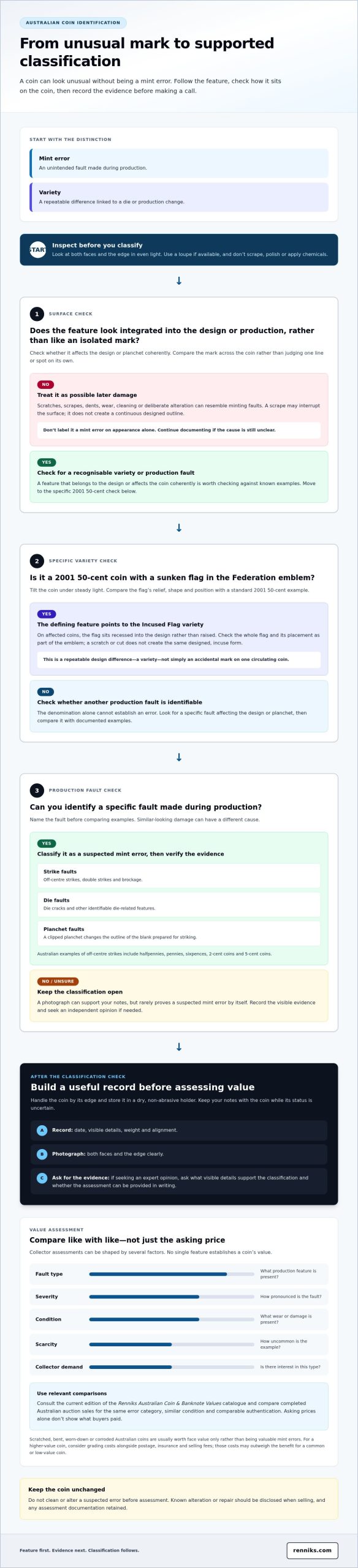
An Australian coin error identification guide helps organise the evidence, but value depends on comparable examples and market interest. Fault type, severity, condition, scarcity and provenance all influence how collectors assess a coin.
Error Types and Planchet Issues
Australian mint errors include off-centre strikes, die cracks, double strikes, brockage and planchet flaws. A planchet is the blank prepared for striking; a clipped blank changes the coin’s outline. Record the specific fault before comparing examples. Similar-looking damage can have a different cause, so accurate classification matters when assessing rarity and collector interest.
Inspection and Photography
Use a loupe and steady lighting to inspect the coin’s design, rim and edge. Record its date, weight and alignment, then photograph both faces and the edge clearly. For an expert opinion, ask what visible evidence supports the error classification and whether the assessment can be provided in writing. Do not clean or alter the coin before assessment.
Value, Grading and Certification
For price references, consult the current edition of the Renniks Australian Coin & Banknote Values catalogue. Compare recent completed Australian auction sales for the same error category, similar condition and comparable authentication; asking prices alone don’t show what buyers paid. A suspected counterfeit or post-mint alteration must not be presented as a mint error. Disclose known alteration or repair when selling, and retain any assessment documentation. Consider grading costs alongside postage, insurance and selling fees when estimating net proceeds.
Scratched, bent, worn down or corroded Australian coins are usually worth face value only rather than being valuable mint errors. Independent assessment or professional grading may help establish authenticity and condition for a higher-value Australian $2 error, but costs may outweigh the benefit for a common or low-value coin.
Renniks: Lighthouse Album Systems
Renniks offers Lighthouse Album Systems for collectors organising Australian coins by denomination, year or variety. A consistent album arrangement keeps related pieces together, while individual holders separate coins that need their own storage. Renniks’ coin storage systems include Lighthouse Coin Capsules and 2×2 coin holders for organising individual coins alongside an album.
Choose an arrangement that suits the scope of your collection and how you want to view it. Keep your records with the relevant coin so its identifying details remain easy to find.
Give a suspected error a clear record
Documenting your findings accurately is an essential part of any thorough Australian coin error identification guide. Keeping a detailed log helps you track your collection, monitor condition changes over time, and provide clear details if you decide to consult with Renniks or other numismatic experts.
Shop the supplies in this guide
Put the advice above into practice with these collecting supplies from Renniks:
- Renniks Australian Pre-Decimal & Decimal Coin Errors
- Renniks Australian Coin & Banknote Values 31st Ed. Softcover
- Renniks Australian & New Zealand Tokens Values
- ULTRA Coin Capsules, inside Ø 25mm suit Australian $1 coin
- Lighthouse Coin Tubes for US Nickels (Suits Australian $2 coin) (21.21mm)- Box of 100
Frequently Asked Questions
What is an error coin?
An error coin is a coin whose manufacture produced an unintended result, such as a misplaced strike or a flaw in the blank metal. The fault may arise while preparing the planchet, making a die or striking the coin. A recognised design difference repeated across multiple coins is usually classified as a variety, rather than an individual minting error.
Why Collect Error Coins?
Collectors study error coins because each type can reveal a different part of the minting process. Comparing examples shows how a planchet, die or strike can affect the finished design. Some collectors focus on one error category, while others add unusual pieces to an Australian denomination or date collection. The interest can be historical and technical, independent of resale value.
How can you distinguish a mint error from coin damage or wear?
Check whether the unusual feature belongs to the coin’s original design and strike, rather than appearing as a later mark. Wear tends to flatten exposed details; a scratch may cut across raised design elements, while corrosion can leave irregular pits. Compare the same area with an undamaged coin of the same type, and check whether the feature has a coherent shape and position.
What affects the value and rarity of Australian mint error coins?
Rarity depends on how many examples are known and how confidently they can be identified, not simply on how dramatic one coin looks. For comparisons, match the specific error type and assess condition and provenance. A completed sale records what a buyer paid, unlike an asking price, which may not reflect demand. Collector interest in the denomination and error type also matters.
Disclaimer
This article is provided for general information and collecting guidance only, and is not financial or investment advice. Coins, stamps, banknotes and trading cards can fluctuate in value, and nothing here should be read as a guarantee that any item will increase in value. Any value mentioned reflects a reference-guide estimate at the time of writing, not a current market valuation; always check the latest edition of Renniks Australian Coin & Banknote Values or an independent source for current figures. Renniks does not grade, authenticate or appraise items; grading opinions belong to independent third-party services such as PCGS and NGC. Links to external websites are provided for reference only; Renniks is not responsible for the content of third-party sites.
