





Coins
Coin Magnifiers: How to Choose the Right Loupe for Examining Coins
Oct
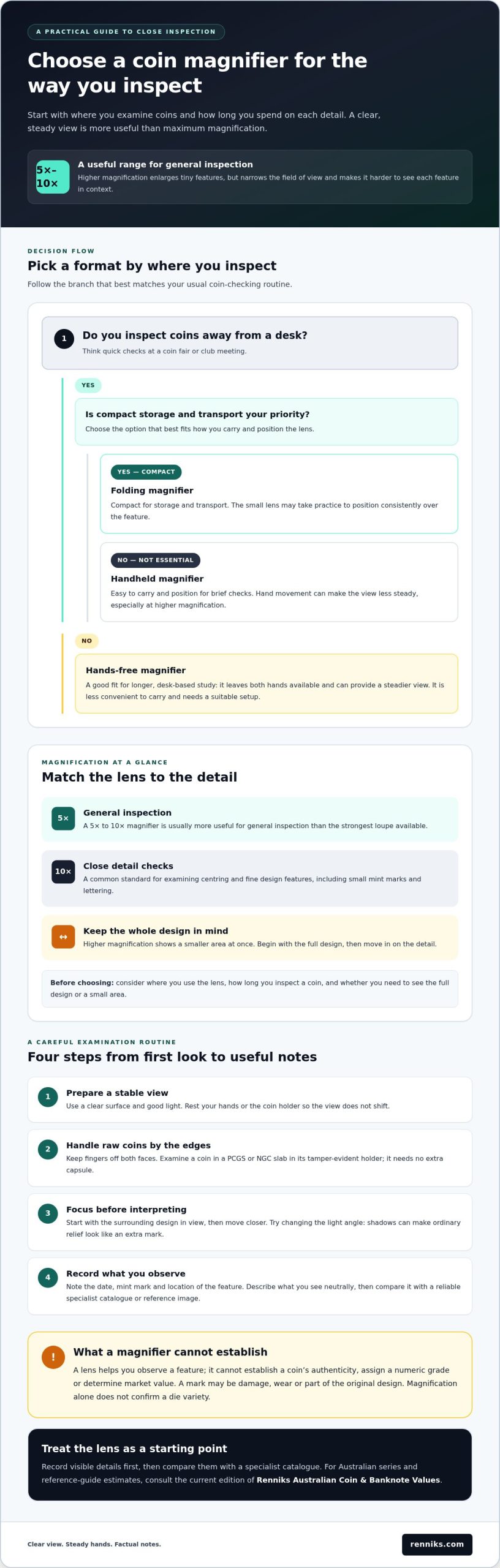
A 5x to 10x coin magnifier is usually more useful for general inspection than the strongest loupe available. Higher magnification can reveal tiny marks, but narrows the field of view and makes it harder to judge a feature in the context of the whole design.
A closer look can help you check a date, mint mark or possible die variety, a repeated design difference associated with a particular die. The right choice depends on what you’re examining and how you prefer to hold and illuminate the coin, not just the number printed on the lens. This guide compares handheld, folding and hands-free formats, then outlines a careful examination routine. A magnifier helps you observe details, but it cannot establish a coin’s authenticity or grade on its own.
Key Takeaways
- Choose a coin magnifier for the way you inspect coins, and prioritise a clear, steady view over maximum magnification.
- Check the whole design before examining a small feature, then record what you can see without jumping to a conclusion.
- Handle raw coins by the edges. Examine a coin in a PCGS or NGC slab in its holder.
- Use a specialist catalogue to research a suspected variety; magnification alone does not confirm what caused a feature.
What a coin magnifier reveals, and what it cannot tell you
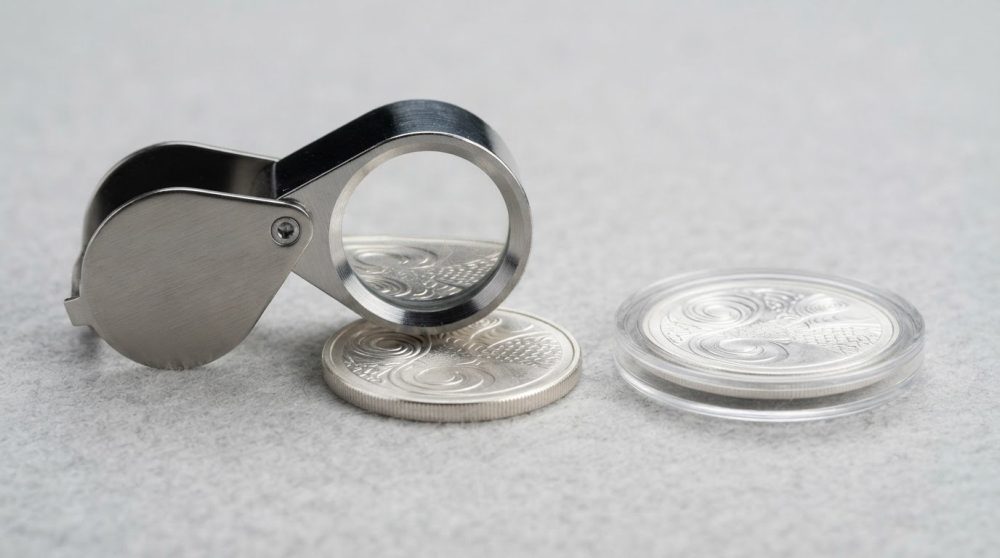
A coin magnifier enlarges details that are difficult to see with the unaided eye. A loupe is a common handheld type of magnifier; What is a Loupe? outlines its basic function. The magnification figure describes apparent enlargement, not a coin’s authenticity, grade or value.
A 10x lens is a common standard for close inspection, including checking a coin’s centring and fine design features. It can help you locate a small mint mark or examine the shape of lettering, but it shows only part of the coin at once. Start with the full design, then inspect the detail so you can judge its position and relationship to nearby features.
Which coin details can magnification help you inspect?
With a clear, steady view, a loupe can help you examine a mint mark, small design elements, surface marks and possible die varieties. Lighting, focus and a steady hand all affect what you can see. Try changing the angle of the light before drawing conclusions, as shadows can make ordinary relief appear like an extra line or mark.
Magnification shows a feature, but cannot explain it. A mark might be damage, wear or part of the original design; an apparent variety may have another explanation. Note the coin’s date, mint mark and the exact location of the feature, then compare it with a reliable specialist catalogue or reference image. Treat what you see through the lens as an observation for further research, not proof of authenticity or grade.
How to choose a coin magnifier for your collecting habits
Choose a format that suits where and how you examine coins. A pocket loupe is convenient for a quick check at a coin fair or club meeting, while a stable setup is more comfortable for comparing details at a desk. Higher magnification makes a small feature appear larger, but reduces the area visible at once. A clear, workable view is more useful than maximum power.
Match the magnifier to the task, not just the number
For a quick check of a date or mint mark, portability may matter most. For longer study of fine design features, look for a steady viewing position, good lighting and a lens that keeps enough of the coin in view to orient the detail. A 10x loupe is a common standard, not a requirement for every inspection.
- Handheld: Easy to carry and position for brief checks. Hand movement can make the view less steady, especially at higher magnification.
- Folding: Compact for storage and transport. The small lens may take practice to position consistently over the feature you’re examining.
- Hands-free: Leaves both hands available and can provide a steadier view for desk-based study. It is less convenient to carry and needs a suitable setup.
Before choosing, consider where you’ll use it, how long you’ll inspect a coin and whether you need to see the whole design or a small area. Compare the available coin magnifier formats against those practical needs. The right fit lets you focus comfortably without losing the context around the feature.
Use a coin magnifier carefully: a practical examination routine
A deliberate routine keeps the coin steady and your observations useful. Set up before taking a raw coin out of its holder, and avoid touching the faces: skin oils can leave marks on a coin’s surface. Never clean a coin to make a detail easier to see, as cleaning can alter the surface.
- Prepare a stable view. Work at a clear surface with good light. Rest your hands or the coin holder so the view doesn’t shift as you inspect.
- Handle the coin by its edges. Keep fingers off both faces of a raw coin. Examine a coin sealed in a PCGS or NGC slab, a tamper-evident grading holder, in that holder. It needs no extra capsule.
- Focus before interpreting. Position the lens and coin until the detail appears sharp. Start with the surrounding design in view, then move closer to the feature you want to examine.
- Record what you observe. Note the date, mint mark and location of a mark or design difference. Use neutral descriptions first, then compare them with reliable references.
What magnification cannot establish about a coin
A close view records visible detail, but cannot establish authenticity, assign a numeric grade or determine market value. Grading considers the coin as a whole and applies defined standards. Consult the independent PCGS grading scale or NGC grading scale for grading terminology. Suspected alterations or varieties may also need specialist assessment beyond what a lens reveals.
For Australian series and reference-guide estimates, consult the current edition of Renniks Australian Coin & Banknote Values. Treat magnified observations as a starting point for research, not a substitute for independent authentication or grading.
Make close inspection part of your collecting routine
Set aside a consistent place to examine new finds and coins already in your collection. A suitable coin magnifier can help you document visible features, while a specialist catalogue gives you a basis for comparison. Keep notes factual: record the date, the area examined and what you can see before deciding what it may indicate.
Renniks is a recognised member of SCDAA, ANDA and APTA, and publishes Australian coin reference guides. Use a reliable reference alongside your observations, and keep the record of each examination clear and consistent. To compare optical accessories for coin inspection, browse Renniks optical accessories. For broader context on numismatics and collecting coins, banknotes and medals, explore the field’s scope and the supplies collectors use to organise and preserve their collections. A steady, well-documented approach makes each examination more useful.
By the Renniks team
Disclaimer: This article is general collecting information. A magnifier and catalogue are not substitutes for independent authentication or grading.
Shop the supplies in this guide
Put the advice above into practice with these collecting supplies from Renniks:
- Overlay Magnifier with 10x magnification, with LED
- Bright-field magnifier with LED illumination and 10x magnification, rechargeable
- LOOK LED magnifier set, magnification 2.5x – 10x
- Plastic Sheets ENCAP, clear pockets for 30 coins with a diameter between 30 and 31mm
- OPTIMA Coin Sheets for 54 coins up to 20mm Ø, clear
Frequently Asked Questions
What magnification is best for looking at coins?
Choose a lens that lets you read the smallest lettering you need to examine without eye strain. Lens clarity matters alongside magnification: a poorly corrected lens can show colour fringes or distort details near the edge. If you can, compare the same coin through different lenses, using its lettering and fine design lines as practical tests.
Is a 10x magnifier enough to examine a coin?
For many collectors, yes. It can help with close checks of fine lettering or small features within a design. To assess a detail, compare its position and shape with a reliable image or description of the same issue rather than relying on memory. The lens makes comparison easier, but the reference remains essential.
Can a magnifier tell if a coin is genuine?
No. For an initial check, compare the coin’s weight, diameter, thickness and edge with reliable specifications for its denomination and issue. These observations can flag points that need further investigation, but they don’t guarantee genuineness. If the result matters, use an independent authentication service with the appropriate expertise.
Do I need a loupe or a microscope for coin collecting?
A loupe is generally enough for routine, direct viewing. A microscope may be useful for capturing an enlarged image of a tiny feature, then comparing or documenting it on a screen. A digital image’s displayed size does not by itself provide a reliable measurement, so record the capture setup if you need to compare images later.
Disclaimer
This article is provided for general information and collecting guidance only, and is not financial or investment advice. Coins, stamps, banknotes and trading cards can fluctuate in value, and nothing here should be read as a guarantee that any item will increase in value. Any value mentioned reflects a reference-guide estimate at the time of writing, not a current market valuation; always check the latest edition of Renniks Australian Coin & Banknote Values or an independent source for current figures. Renniks does not grade, authenticate or appraise items; grading opinions belong to independent third-party services such as PCGS and NGC. Links to external websites are provided for reference only; Renniks is not responsible for the content of third-party sites.
