



Knowledge Base, Stamps
Stamp Collecting: Practical Guide for Australian Collectors
Oct
Stamp collecting is easier to organise when you begin with a clear focus, then identify and record each stamp before adding it to an album. Note the country or issuing authority, denomination, design, perforations and condition, and keep uncertain details marked as provisional.
Australian issues, a subject such as native birds, or postal history built around complete covers can each give your research a practical direction. You’ll encounter terms such as mint never hinged, gum and watermark as you compare stamps. This guide explains how to choose a focus, research issues and store your collection so it remains organised and accessible.
Condition details matter: perforations, original gum and signs of hinging can distinguish stamps that otherwise look similar. Catalogues support identification and comparison, but listed values are reference estimates, not guaranteed sale prices. Renniks publishes philatelic references and supplies storage systems, mounts and albums for collectors. The guidance below covers how to use them alongside careful handling and record-keeping.
Key Takeaways
- Choose a subject, country or period that interests you, then set boundaries that keep the collection manageable.
- Identify stamps from observable details such as inscriptions, denomination, design and printing features. Keep uncertain identifications provisional.
- Learn to distinguish perforations, watermarks and gum condition so you can describe stamps consistently.
- Record catalogue references, condition observations and known acquisition details to make future research easier.
- Use catalogues for identification and comparison, and treat listed values as reference estimates rather than guaranteed sale prices.
- For storage, use acid-free, PVC-free mounts or pages. PVC can release plasticisers over time, which may leave residue or damage stamps.
What Stamp Collecting Involves: From Individual Stamps to a Collection
Stamp collecting is the practice of acquiring, studying and organising postage stamps around a subject, place, period or research question. A collection may include mint stamps, postally used examples, or both. Inscriptions, designs, cancellations and differences between issues can all help explain what a stamp represents.
Rarity is only one possible point of interest. A familiar stamp can still prompt close study of design, printing features or postal use. The broader practice is outlined in Stamp collecting, but each collector decides the scope and purpose of their own collection.
What can a stamp collection focus on?
A focus gives a collection shape and helps you decide what to research or add. You might collect stamps from one country, a defined period, a particular design or a subject such as animals, transport or sport. Postal-history collecting can instead centre on cancellations, routes or complete envelopes, known as covers.
Australian commemorative issues offer one starting point for subject-based collecting. Australia Post’s stamp information helps collectors explore current issues and their themes. Narrowing the subject, for example to Australian commemoratives featuring one topic, can make the collection easier to catalogue while leaving room to follow related designs.
There’s no single correct approach. A country-wide collection offers a broad overview but needs decisions about dates, issues and arrangement. A period or design focus makes comparisons between related stamps more direct. Setting boundaries helps prevent the collection becoming a pile of unrecorded additions.
Does stamp collecting require rare or valuable stamps?
No. Common stamps can prompt close study of printed details, design variations and postal markings. A postmark, for example, provides evidence of postal use that an unused stamp doesn’t have. The interest may lie in what an item can teach, rather than how scarce it is.
Keep historical or personal interest separate from financial expectations. Age or apparent scarcity alone doesn’t establish rarity or market value; condition, identification and demand also matter. Catalogue entries support research and comparison, but they aren’t guaranteed sale prices. A clear collecting question and careful notes give each stamp a place, whether it’s commonly found or less familiar.
How to Choose a Stamp Collecting Focus That Can Grow With You
A useful focus gives your research direction without locking you into a rigid checklist. Start with what you’d like to learn, then set boundaries that make the collection practical to build and organise.
How do you choose a stamp collecting theme?
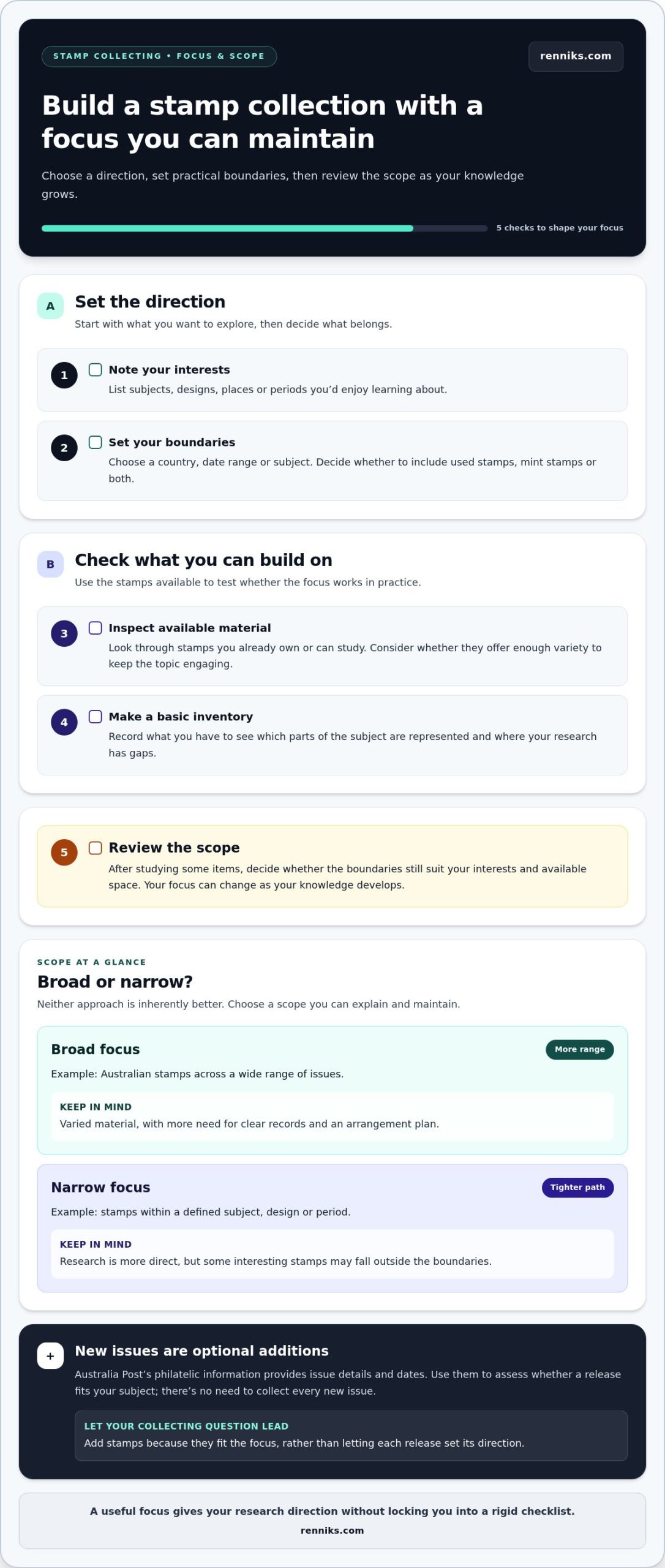
Use these steps to shape a focus:
- Note your interests. List subjects, designs, places or periods you’d enjoy learning about.
- Set boundaries. Choose a country, date range or subject, and decide whether to include used stamps, mint stamps or both.
- Inspect available material. Look through stamps you already own or can study. Consider whether they offer enough variety to keep the topic engaging.
- Record what you have. Make a basic inventory to see which parts of the subject are represented and where your research has gaps.
- Review the scope. After studying some items, decide whether the boundaries still suit your interests and available space.
A broad focus, such as Australian stamps, offers a wide field for discovery but calls for clear records and decisions about arrangement. A narrower subject or period makes research more direct, though some interesting stamps may fall outside the chosen boundaries. Neither approach is inherently better; choose a scope you can explain and maintain.
Broad approach: Collect Australian stamps across a wide range of issues. This allows varied material, but you’ll need clear records and a plan for arranging it.
Narrow approach: Collect stamps within a defined subject, design or period. This gives your research a tighter path, but some additions may not fit the focus.
Your focus can change as your knowledge develops. A broad collection might lead you to concentrate on one period, or a subject might expand as you discover related designs. Treat the scope as a guide, not a rule that prevents thoughtful changes.
How can new issues fit into a collection?
Commemorative releases can bring fresh material and research questions, but collecting them is optional. Australia Post’s philatelic information provides issue details and dates to help you assess whether a release fits your subject. There’s no need to collect every new issue, and a release date alone says nothing about future scarcity.
For Australian issues, Renniks Stamps of Australia can support your research as your focus takes shape. You can explore Renniks stamp references to help organise that research. Let your collecting question guide what you add, rather than allowing each new release to determine the direction of the collection.
How to Identify and Research Stamps Without Guessing
Start with what you can observe, and keep an early identification provisional until the details agree with a reference. The issuing country or authority, inscriptions, denomination, design, date, perforations, watermark and printing characteristics all provide clues to compare with catalogue illustrations and descriptions.
Which stamp details help with identification?
Read the inscriptions and denomination first, then describe the central design, colours and any visible date or printer’s imprint. These features can suggest an issue, but they aren’t conclusive: different stamps may share a subject or design, and small differences in lettering or printing can matter. Record what you can see before deciding what the stamp is.
Perforations are the small holes or cuts separating stamps. Some stamps are imperforate by design and have no perforations. A watermark is a design pressed into the paper during manufacture. It can be visible when the stamp is viewed against light, and can help distinguish or authenticate an issue. Compare suspected watermarks and other physical details with a suitable philatelic catalogue rather than relying on appearance alone.
Gum is the adhesive on the back of an unused stamp. Record whether it appears present and undisturbed, has a hinge mark, or shows other disturbance. Don’t try to remove a hinge or residue during identification; doing so can change the condition you’re documenting.
How should you describe stamp condition?
Use condition terms precisely. Mint never hinged means an unused stamp retains its original gum and has never been mounted with a hinge. Mint hinged describes an unused stamp with evidence of a hinge or hinge mark. Used indicates a stamp that has been postally cancelled. These distinctions matter when comparing condition and catalogue descriptions.
Also record observable features such as centring, perforations, gum, creases, tears, stains or fading. These notes help distinguish examples and make later comparisons more consistent. They don’t, on their own, establish a grade, authenticity or market value.
Compare the stamp’s country, denomination, design and physical features with a relevant catalogue, including Renniks Stamps of Australia for Australian material. Australia Post’s philatelic information can provide issue details for its stamps. If an inscription is unclear or a watermark remains uncertain, record the question rather than forcing a match. A note such as “possible watermark, not confirmed” keeps observation separate from identification and gives you a clear point to return to.
How to Organise Stamp Collecting Records and Storage
A consistent record connects each stamp to the observations and references that support its identification. It also makes it easier to resume research later without repeating comparisons or treating an early guess as established fact. Good storage matters too: paper, gum and ink can be affected by unsuitable plastics, heat, humidity and light.
What information belongs in a stamp collection record?
A notebook or spreadsheet works well if you use the same fields for each item. Record the subject or issue, identification notes, condition observations and reference consulted. Where known, add acquisition details such as when or how you obtained the stamp.
- Identification: country or issuing authority, denomination, design and any verified issue details.
- Condition: observations about gum, centring, perforations, cancellations, creases, tears or fading.
- Research: catalogue title and reference, plus details still to check.
- Acquisition: date and source, if known.
Distinguish evidence from uncertainty. Write “possible watermark, unconfirmed” rather than entering a guess as fact, then update the record if later research resolves the question. An inventory supports organisation and study; it isn’t an appraisal or guaranteed valuation.
How can a collector choose an organisation format?
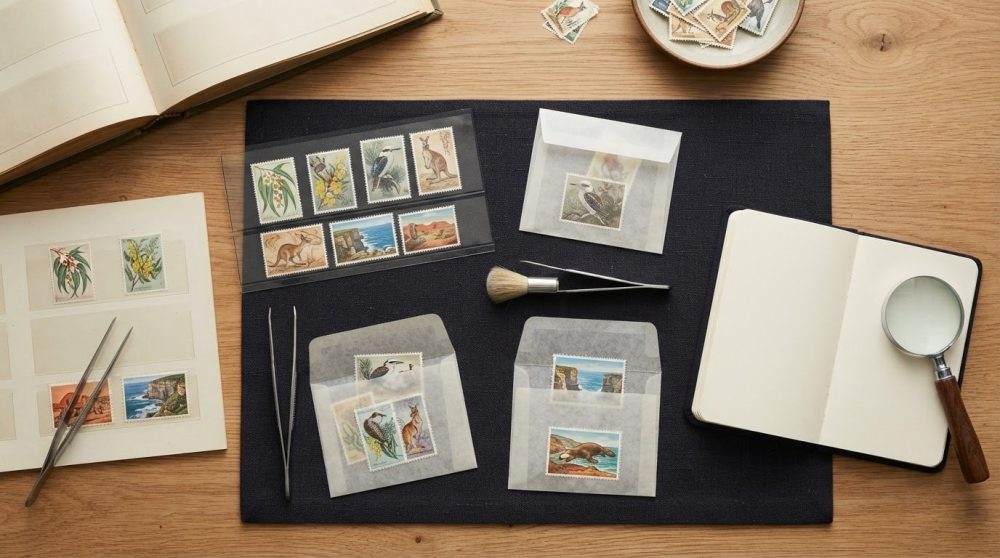
Choose a format based on how you want to view, arrange and retrieve stamps. Albums suit a planned sequence, such as a country or period, while Hagner sheets let you reposition stamps as the collection changes. Protective envelopes can keep individual stamps or small groups together during sorting, but they don’t offer the same at-a-glance display as an album page.
- Albums: provide a structured layout for a collection with a defined order.
- Stock pages or sheets: make it easier to rearrange and compare stamps as your focus develops.
- Mounts: hold selected stamps in place for display. Choose the right size and an acid-free, PVC-free material.
- Glassine envelopes: separate items during sorting or temporary storage. Labels help keep each item linked to your notes.
For valuable or condition-sensitive stamps, hingeless mounts are generally preferable to traditional gummed hinges. A hinge can leave a mark or disturb original gum, which affects the stamp’s condition. Choose mounts made from stable, PVC-free material such as polypropylene or polyester, and check that they fit both the stamp and the album page. PVC sleeves and pockets can release plasticisers over time, leaving a sticky residue or discolouring gum; a clear sleeve isn’t automatically safe just because it looks clean.
Store albums flat in a cool, dry place, away from direct sunlight. Australian heat and humidity can accelerate deterioration, while sunlight can fade stamp inks and gum and degrade plastics. Keep mounts and pages clean, and avoid overcrowding pockets, which can make stamps difficult to remove without bending or catching perforations. For stamp storage and album options, choose a format that suits how you catalogue, display and handle your collection.
How to Keep Stamp Collecting Informed and Sustainable
A steady research routine helps a collection develop without turning every new issue into a purchase decision. For each stamp you add, observe its features, consult a suitable reference, then update your record with what you’ve confirmed and what remains uncertain.
- Add one item: decide how it fits your chosen focus.
- Observe it: note its inscriptions, design and condition.
- Consult a reference: compare the evidence with a relevant catalogue or issue record.
- Update your notes: record the identification, source and any unresolved questions.
This repeatable approach makes stamp collecting a process of considered research, rather than a race to acquire more material. It gives each addition a clear place in the collection and creates a useful record of how your understanding has developed.
How should stamp catalogues be used?
A catalogue provides a consistent reference system. Its entries can help you compare designs and issue details, narrow down possible identifications and describe a stamp in terms other collectors can understand. Record the catalogue title and edition alongside the reference so you can return to the same source or interpret the note later.
Catalogue information isn’t a guaranteed sale price or a prediction of future value. Transactions depend on factors including condition, rarity and demand. Catalogue references serve a different purpose: structured identification and comparison. Treat any value shown as an estimate in that reference, not a promise of what the stamp will sell for.
Where can Australian collectors continue their research?
For Australian issues, Australia Post’s philatelic pages provide information that can help confirm release details and themes. Renniks Stamps of Australia and Stanley Gibbons catalogues offer further reference options for researching stamps and comparing them within a catalogue framework. Note which source supports each part of your identification, particularly when details don’t yet align.
Keep the routine manageable: add material that suits your focus, document it and leave uncertain identifications open for later research. To build your reference shelf and organise your stamps, explore Renniks stamp references and supplies.
Which albums and storage formats suit a stamp collection?
Choose storage according to how you want to arrange and view the material. Albums provide an organised presentation, often with spaces for particular stamps. Mounts hold individual stamps on a page, while Hagner sheets offer flexible layouts for arranging and rearranging material. Glassine envelopes are useful for handling or temporary storage, but they’re not a substitute for a planned album or longer-term arrangement. This guide to Hagner sheets and binders for Australian collectors explains how to plan pages and choose a binder for an expandable collection.
How do albums, mounts and sheets differ?
For stamps beyond low-value stock, hingeless mounts are generally preferred to hinges, which can mark or disturb gum. Choose mounts that are both acid-free and PVC-free. Clear plastic alone doesn’t establish that a material is suitable for storage. Polypropylene and polyester are stable alternatives to PVC when used for stamp protection.
Hagner sheets can suit collections that are still being developed, while album pages provide a more settled structure. Renniks supplies stamp mounts and Hagner sheets for these different ways of organising material. Compare stamp mounts and Hagner sheets to find a format that suits your collection.
What storage conditions should collectors consider?
Store stamps flat in acid-free, PVC-free materials, away from direct sunlight. Heat and humidity can affect gum, inks and storage materials, so avoid leaving albums in hot, damp or exposed places. PVC plasticisers can migrate from some plastics and may leave residue, clouding or discolouration on stamps. Glassine envelopes can keep items separate during sorting, but move material into a suitable long-term system once its place in the collection is established.
Build Your Collection Through Careful Research
A clear focus gives stamp collecting direction, while careful observation and consistent records make each addition easier to understand. Start with a subject, country or period that interests you, compare stamps with a suitable catalogue, and note both confirmed details and unanswered questions. Use catalogue references for identification and comparison, not as guaranteed sale prices.
Renniks publishes Renniks Stamps of Australia and supplies stamp albums, mounts and storage systems, including Lighthouse illustrated album systems and HAWID mounts. To find references and supplies for organising your collection, explore Renniks stamp references and supplies.
Keep your approach manageable and let your knowledge shape the collection over time. Each well-observed, well-documented stamp gives you another opportunity to learn.
Shop the supplies in this guide
Put the advice above into practice with these collecting supplies from Renniks:
- STAMPS- 400 VIETNAM
- STAMPS- 100 CHAD
- STAMPS- 200 LAOS
- Stanley Gibbons Great Britain Concise Stamp 2022
- Stanley Gibbons Collect British Stamps 2023
- Folded Stamp Hinges FASTO
Frequently Asked Questions
What is stamp collecting?
Stamp collecting is the practice of acquiring, studying and organising postage stamps. Collectors may focus on a country, period, subject, design or postal history, then compare examples and record what they learn. The hobby doesn’t require rare stamps or a particular level of spending. A defined focus can make research and organisation more manageable while leaving room to adjust the collection as your interests develop.
How do I start stamp collecting in Australia?
Start by choosing a subject or group of stamps that interests you, then set a manageable boundary, such as Australian issues from a particular period or stamps featuring one subject. Examine each item’s inscriptions, denomination, design and condition, and note what you can identify. Compare your observations with a suitable catalogue or philatelic reference. Add stamps deliberately, and record uncertain identifications as provisional rather than guessing.
Do I need rare stamps to start a collection?
No. You can begin with stamps that interest you for their design, subject, postal use or connection to a place or period. Common examples can still prompt useful study of printing, perforations and condition. Rarity and market value are separate questions that need careful research. A stamp’s age or appearance alone doesn’t establish either, so don’t treat an old-looking or unfamiliar stamp as rare without supporting evidence.
How can I identify an Australian stamp?
Begin with the printed wording, denomination, design and any visible date or issuing information. Check the perforations and other distinguishing features, then compare your observations with a suitable catalogue or Australia Post philatelic reference. Identification may depend on several details, not one visual clue. If the evidence doesn’t support a definite match, note it as provisional. A catalogue entry can guide research, but it isn’t authentication or valuation.
How should I handle stamps without damaging them?
Examine stamps on a clean, dry surface and handle them only as much as needed. Avoid bending or pressing them, and keep them away from adhesive and loose debris that could transfer residue. Record visible issues such as creases, tears or disturbed gum. If an item is fragile or its condition is uncertain, don’t attempt repairs or remove marks. Careful observation preserves useful evidence about its present state.
What is the difference between a stamp album and a stock album?
A stamp album usually arranges items in a planned sequence, sometimes with spaces or printed information for particular issues. A stock album has pockets or strips that make it easier to move stamps as the collection changes. Choose according to your focus and how you want to display or reorganise items. Neither format identifies stamps on its own, so keep research notes with your inventory.
Do stamp catalogue values show what a stamp will sell for?
No. Catalogue figures are reference estimates in a particular publication and edition, not guaranteed transaction prices. Sale results can vary with a stamp’s condition and identification, as well as rarity, demand and the circumstances of a transaction. Use catalogue entries to support research and comparison, and record the title and edition consulted. A listed figure isn’t a promise of a sale price or a prediction of future value.
Byline: Renniks editorial team.
Disclaimer: This article provides general collecting information, not stamp identification, authentication, grading, appraisal or financial advice. Catalogue references are estimates, not guaranteed sale prices.
What stamps should a beginner collect?
There’s no single correct starting point. You could collect Australian issues, stamps featuring a subject you enjoy, stamps from a defined period or First Day Covers. A limited scope makes research and organisation more manageable, and gives you clear questions to investigate. Choose material for its relevance to your interests, rather than assuming rarity or price should determine what belongs in the collection.
Do stamp mounts need to be PVC-free?
Yes. Choose mounts labelled both PVC-free and acid-free; clear plastic isn’t automatically suitable for stamp storage. PVC-based materials can release plasticisers over time, potentially leaving residue or affecting stamp surfaces and gum. Polypropylene and polyester are stable alternatives used in archival-quality supplies. Keep stamps flat, away from direct sunlight, and follow the storage material’s guidance.
What is the difference between mint never hinged and mint hinged stamps?
Mint never hinged, or MNH, describes a stamp with original gum that has never been mounted. Mint hinged, or MH, indicates that a hinge was applied and may have left a mark or affected the gum. A used stamp has been cancelled, usually during postal use. These terms describe condition; they don’t establish identity or guarantee a particular value.
Disclaimer
This article is provided for general information and collecting guidance only, and is not financial or investment advice. Coins, stamps, banknotes and trading cards can fluctuate in value, and nothing here should be read as a guarantee that any item will increase in value. Any value mentioned reflects a reference-guide estimate at the time of writing, not a current market valuation; always check the latest edition of Renniks Australian Coin & Banknote Values or an independent source for current figures. Renniks does not grade, authenticate or appraise items; grading opinions belong to independent third-party services such as PCGS and NGC. Links to external websites are provided for reference only; Renniks is not responsible for the content of third-party sites.
