




Banknotes
Best way to store Australian polymer banknotes: a practical guide
Oct
Polymer banknotes resist moisture better than paper, but they can still be damaged by heat, direct light, pressure and unsuitable plastic. The best way to store Australian polymer banknotes is to keep them flat in a cool, dark place, inside a correctly sized, PVC-free sleeve or album page. A note may feel durable, but a crease or distortion can be permanent.
This guide covers how to handle notes, choose suitable storage materials and organise a collection without packing notes tightly together. It also compares individual sleeves with album systems, so you can choose a format that suits the size of your collection and the way you want to view it.
Key Takeaways
- Polymer notes can stick together or distort in heat, particularly when tightly stacked.
- Prepare a clean, dry work area, handle notes by their edges and keep them away from heat and direct sunlight.
- Choose between individual sleeves and album pages based on how you want to organise, view and expand your collection.
- Check the material composition before choosing a sleeve or page, and select a suitable PVC-free option.
Why Australian polymer banknotes still need careful storage
Australian polymer banknotes are made from a thin, flexible plastic substrate rather than traditional paper. This makes them more resistant to moisture and tearing, but not immune to damage. Folding can leave a lasting crease. Heat may soften the material, causing notes to stick together or distort, especially when they are tightly stacked.
The Reserve Bank of Australia introduced Australia’s first polymer banknote, a commemorative $10 note, in 1988. The transition to polymer across all denominations was completed by 1996. The history of polymer banknotes provides further context on the material’s development and use.
What polymer changes, and what it does not
Polymer handles incidental moisture better than paper, but it remains vulnerable to heat, pressure and unsuitable storage materials. Some plastics, including PVC, can release plasticisers over time. These may leave a greasy residue or affect a note’s surface, so the sleeve material matters as much as the outer storage format.
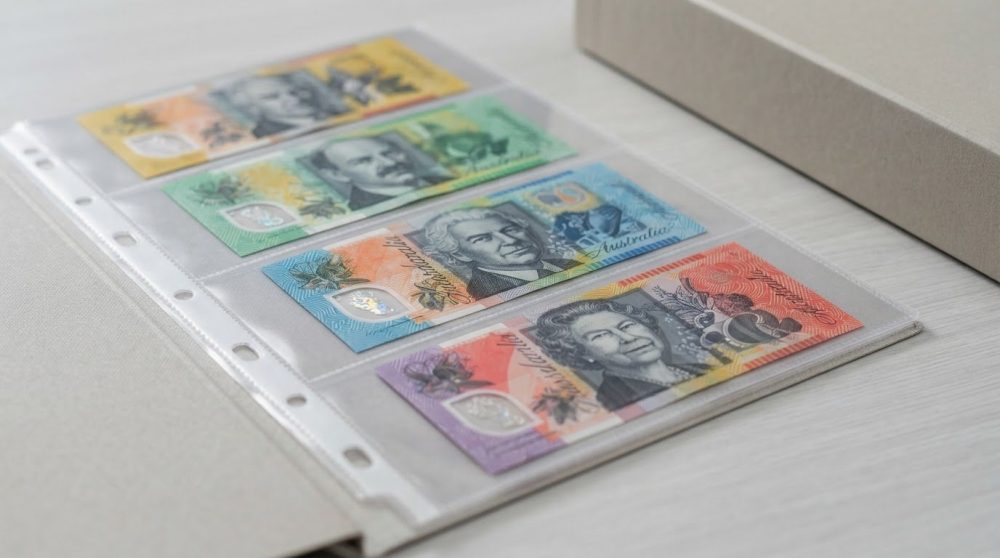
Keep notes flat, separated and away from direct sunlight and heat sources such as heaters, hot windowsills or vehicles. Avoid placing heavy objects on a stack, as prolonged pressure can encourage bending or distortion. A correctly sized, PVC-free individual banknote sleeve helps keep each note separate during storage.
These precautions are the basis of the best way to store Australian polymer banknotes: account for their greater moisture resistance without assuming they can withstand every storage condition. Keeping notes flat, cool and appropriately housed is a sound starting point for preserving their condition.
How to store Australian polymer banknotes step by step
A consistent routine reduces avoidable handling, pressure and exposure. Prepare the storage area before taking notes out of their current housing, so they spend as little time as possible on an exposed surface.
- Prepare the space. Choose a clean, dry surface away from heaters, hot windowsills and direct sunlight. Keep food, drinks and cleaning products clear of the work area.
- Handle notes carefully. Wash and dry your hands, then hold each note by its edges. Avoid touching the printed surfaces or bending a note. Do not try to flatten a crease by force.
- House each note flat. For collectable notes, use a correctly sized individual sleeve rather than a tightly packed stack. Separate housing helps limit friction and pressure between notes.
- Put the housed notes away. Store sleeves flat in a suitable album or storage system, away from heat and light.
Choosing sleeves and handling notes without adding avoidable risk
Check the sleeve’s stated composition instead of relying on its clear appearance. PVC can contain plasticisers that migrate over time, leaving residue or causing clouding and discolouration. Polypropylene and polyester, including Mylar-type material, are commonly used PVC-free options for note storage. Confirm the material description before treating a sleeve or album page as PVC-free.
Size matters as well. A sleeve that is too small can force a note to bend; one that is much too large may let it shift around. Choose a fit that accommodates the note flat without forcing it into place. Renniks’ individual banknote sleeves provide a practical format for separating collectable notes.
The best way to store Australian polymer banknotes is a routine you can follow: prepare the area, handle notes by their edges and house them flat in suitable sleeves. Keep the storage system in a stable, shaded location, and avoid compressing it with other objects.
Choosing a banknote storage format for your collection
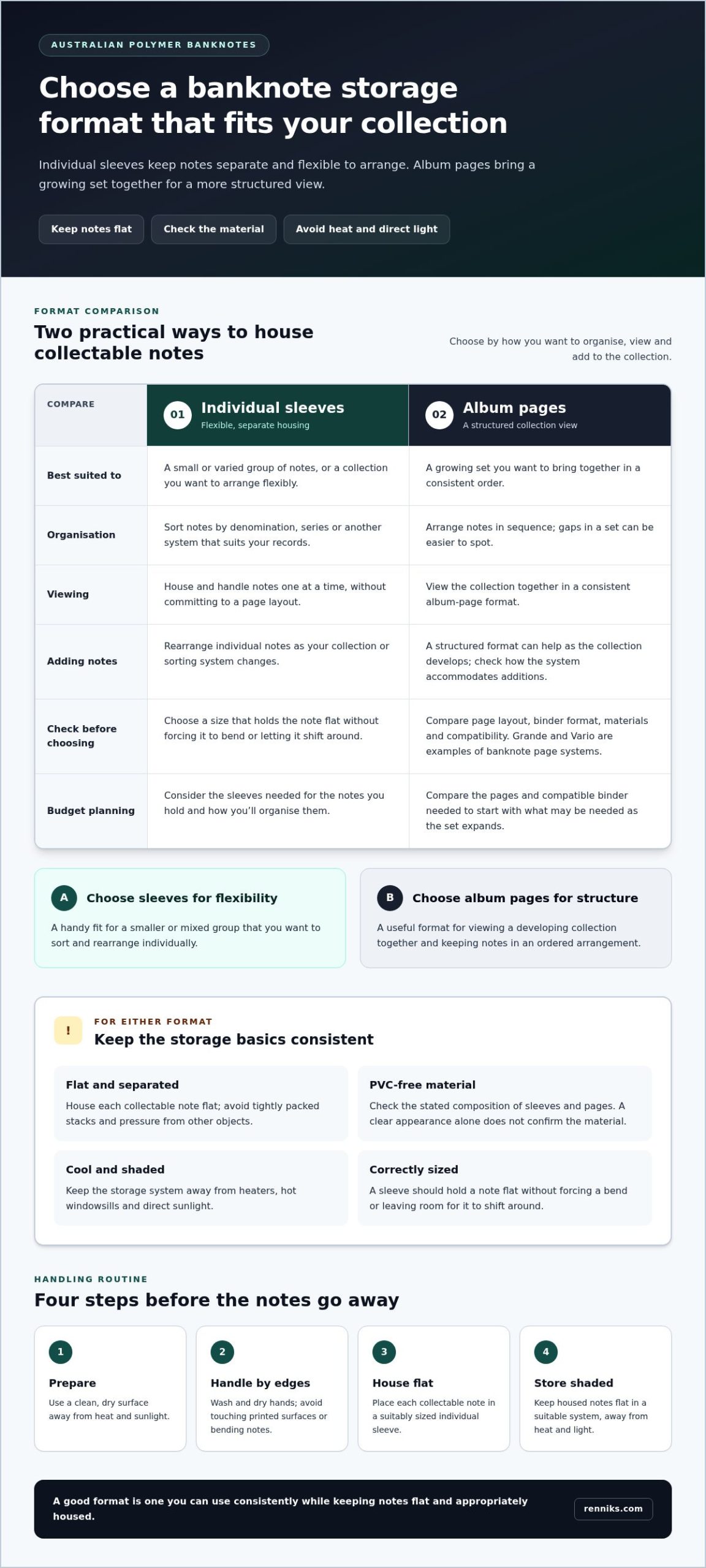
The right format depends on how you want to handle, view and organise your notes. Individual sleeves house notes separately and make it easy to store or rearrange them one at a time. Album pages bring a developing set together in a consistent order, making it easier to view the collection as a whole.
Matching sleeves and album systems to the way you collect
For a small or varied group, individual sleeves offer flexibility. You can sort notes by denomination, series or another system that suits your records. If your collection is growing, album pages provide a more structured presentation and make gaps in a sequence easier to spot. Keep notes protected while you organise them, and choose pages for their fit and function, not appearance alone.
Compare the page layout with the size and number of notes you plan to display. Then consider the binder format and how the system can accommodate additions. The Grande System banknote pages and Vario System banknote pages are examples of album-page formats. Check each system’s product information for its layout, materials and compatibility rather than assuming capacities or features.
Budget is another practical consideration. Compare the components you need to start, such as sleeves or pages and a compatible binder, with what you may need as the collection expands. The best way to store Australian polymer banknotes is a format you can use consistently while keeping notes flat and appropriately housed.
Choose a format that can grow with your collection
Your storage choice affects how easily you can revisit and extend a collection. Select a format that suits the notes you hold now and gives you a clear method for adding future acquisitions. Recording each note’s source and place in your arrangement can also make the collection easier to manage over time.
Renniks has served Australian collectors since 1947 and publishes the Australian Coin & Banknote Values reference guide. Its banknote sleeves and album systems offer practical formats for organising a collection. Choose an approach you can maintain as your collection develops, keeping notes flat and protected as you add to it.
Browse Renniks banknote storage systems to compare sleeves and album-page formats for your collection.
Shop the supplies in this guide
Put the advice above into practice with these collecting supplies from Renniks:
- BASIC Banknote Sleeves, for banknotes up to 170 x 86mm, pack of 50
- BASIC Banknote Sleeves, for banknotes up to 204 x 123mm, pack of 50
- BASIC Banknote Sleeves, to fit banknotes up to 158 x 75mm, pack of 50
- ROUTE Banknotes 170 pocket album
- Hagner 1/2 Page (1 Strip) – Black (Pack of 100) Banknote holder
Frequently Asked Questions
Can Australian polymer banknotes get damaged by heat?
Yes. Heat can cause a polymer note to soften, distort or stick to another surface, especially if notes are pressed together. Avoid leaving a collection in a parked car, near a heater or on a sunlit shelf. If notes have become warm, let them return to room temperature before handling them. Don’t try to separate stuck notes by pulling them apart.
Are Australian polymer banknotes waterproof?
No. Polymer notes are more moisture-resistant than paper notes, but that doesn’t make them waterproof or suitable for immersion. If a note gets wet, don’t rub it, apply heat or place it against another note. Handle it gently by the edges and allow it to air-dry on a clean, flat surface before returning it to storage.
How can I tell whether a clear banknote sleeve is suitable for long-term storage?
Check the product information for the sleeve’s material rather than judging it by clarity alone. Choose a sleeve identified as PVC-free and made from a stable material such as polypropylene or polyester. Avoid sleeves with unspecified plastic composition. If an existing sleeve becomes cloudy or tacky, or leaves residue, remove the note carefully and transfer it to suitable storage.
Should I use an iron to flatten a creased polymer banknote?
No. An iron can expose the note to damaging heat and pressure, risking distortion or changes to its printed surface. Don’t press, steam or try to heat out a crease. Keep the note flat and separately housed instead. The best way to store Australian polymer banknotes is preventive: avoid folding them and use a suitable storage format before creases develop.
Disclaimer
This article is provided for general information and collecting guidance only, and is not financial or investment advice. Coins, stamps, banknotes and trading cards can fluctuate in value, and nothing here should be read as a guarantee that any item will increase in value. Any value mentioned reflects a reference-guide estimate at the time of writing, not a current market valuation; always check the latest edition of Renniks Australian Coin & Banknote Values or an independent source for current figures. Renniks does not grade, authenticate or appraise items; grading opinions belong to independent third-party services such as PCGS and NGC. Links to external websites are provided for reference only; Renniks is not responsible for the content of third-party sites.
