



Stamps
Inherited stamp collection: assess its value and find expert help
Nov
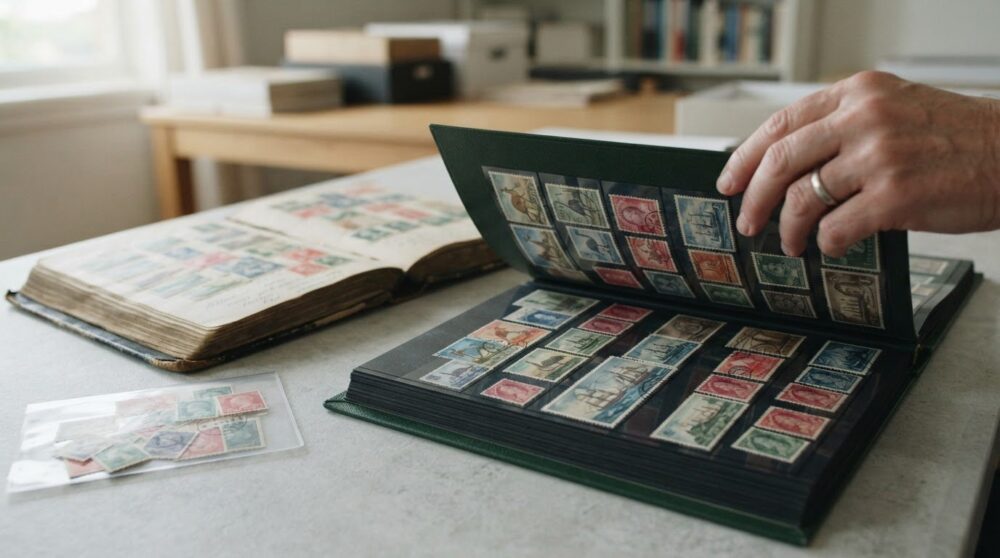
Keep an inherited stamp collection together until you understand what it contains and have considered its history. If you’re deciding what to do with an inherited stamp collection in Australia, arrange an in-person assessment before selling, donating or reorganising it. Albums may contain more than stamps: annotations, correspondence and the collector’s arrangement can help explain how particular material was assembled.
This guide outlines how scarcity, demand and condition shape stamp values, and why a catalogue estimate differs from a sale offer. It also explains how to approach Australian stamp dealers, understand appraisal terms and compare possible sale methods. You’ll find practical steps for documenting what you have and choosing what happens next, whether you plan to retain the collection, pass it to another collector or sell it. A considered assessment gives you a clearer basis for making that decision.
Key Takeaways
- Compare stamps by scarcity and condition, including original gum, hinge marks, perforations and postmarks, rather than age alone.
- Assess dealer offers carefully and look for traders who belong to the Australian Philatelic Traders’ Association, which requires members to follow a code of ethics.
- Store albums upright in a dry place, away from direct sunlight, damp and insects, while you decide what to do with the collection.
- If stamps need remounting, acid-free, PVC-free hingeless mounts help avoid the marks traditional hinges can leave; Renniks offers Hawid Mounts for stamps.
1. How stamp values are determined by supply and demand
Stamp values depend on scarcity, demand and condition, not age alone. Many old Australian stamps are common and worth little. A stamp with a catalogue value of a few cents may attract hundreds of Australian dollars on cover because collectors value its postmark. The envelope can show postal history that a loose stamp no longer conveys.
Some nineteenth-century Australian stamps are scarce because few were used on mail or collecting was less established. By contrast, stamps removed from mail about a century ago can still be plentiful. Many stamps were printed in large quantities, so leaving Post Office circulation does not automatically make them valuable. Demand for a particular issue or variety matters too.
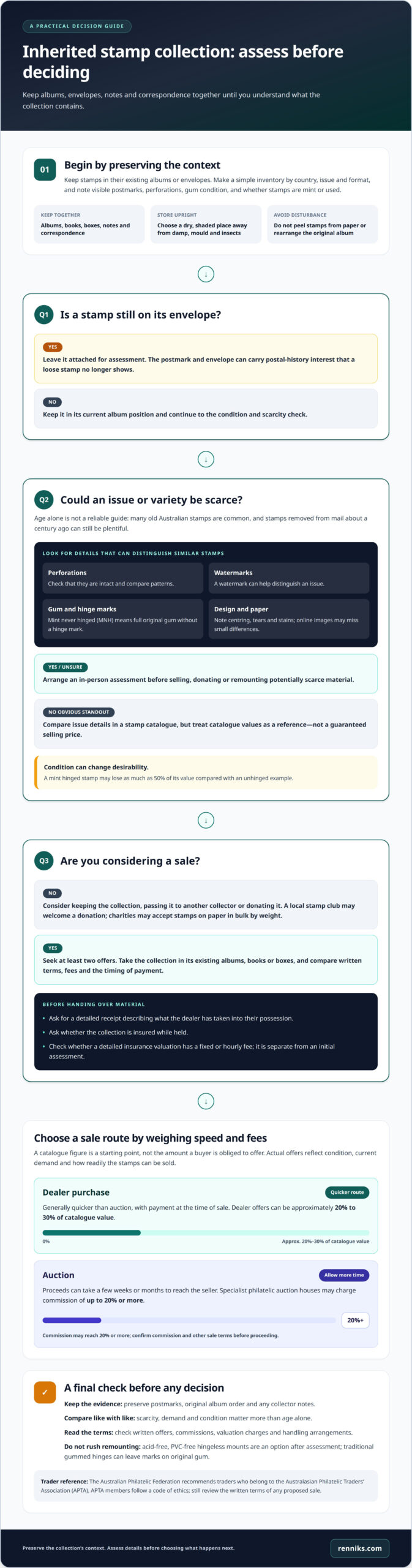
Condition can change a stamp’s desirability. Check whether the perforations are intact, the design is centred, and the paper is free from tears or stains. For mint stamps, original gum matters: mint never hinged (MNH) means full gum without a hinge mark. A mint hinged stamp may lose as much as 50% of its value compared with an unhinged example. Don’t remove a stamp from its envelope before assessment; the postmark may be significant.
To assess an inherited collection, note its countries, date ranges, albums and any stamps still on cover. Compare issue details and varieties in a stamp catalogue, then seek an in-person assessment for potentially scarce material. Perforation differences, watermarks and postmarks can distinguish similar-looking stamps, but online images may not show them clearly.
A catalogue value is a reference, not the price a buyer will offer. Actual offers reflect condition, current demand and how readily a stamp can be sold. Treat catalogue figures as a starting point, not a guaranteed return.
2. Stamp dealers and professional trader associations
If you plan to sell an inherited collection, seek at least two offers before deciding. Take the stamps in their existing albums, books or boxes, as their arrangement can preserve context and provenance. An initial assessment may be free, while a detailed insurance valuation is a separate service that can incur a fee. Before leaving the material, agree whether any valuation charge is fixed or hourly.
Ask for a detailed receipt describing what the dealer has taken into their possession, and whether it will be insured while held. The Australian Philatelic Federation recommends using traders who belong to the Australasian Philatelic Traders’ Association (APTA). APTA members must follow a code of ethics. Membership offers a useful point of reference, though it does not replace reviewing the written terms of a proposed sale.
A dealer purchase is generally quicker than an auction, with payment made at the time of sale. In exchange for convenience, sellers may receive less than the catalogue value: dealer offers can be approximately 20% to 30% of that figure. Auction sales can take a few weeks or months before proceeds reach the seller, and specialist philatelic auction houses may charge commission of up to 20% or more. Confirm the commission and other sale terms before handing over the collection.
Put each offer in context. A catalogue value is not a guaranteed selling price, and an offer depends on demand, condition and how readily the stamps can be resold. Compare written offers and fees, then weigh speed and convenience against the possibility of a different sale outcome.
3. Advice for people who have inherited a stamp collection
Make a simple inventory by country, issue and format, while keeping stamps in their existing albums or envelopes. Note visible details such as postmarks, perforations, gum condition and whether stamps are mint or used. These observations help describe the collection accurately.
Leave stamps on envelopes until they have been assessed, as postmarks can add postal-history interest. Don’t peel stamps from paper or disturb their original album arrangement. Store albums upright, away from water, mould, insects and damp garages. Heat and direct sunlight can affect gum, ink and album materials, so choose a dry, shaded place.
Online images may not show small differences between similar issues. Watermarks, perforation patterns and postmarks can distinguish one stamp from another, so internet searches alone may miss a scarce variety. For an assessment, bring the collection in its existing albums, books or boxes, and keep any notes or correspondence left by the collector.
Once you understand the collection, consider whether to keep, sell or donate it. A local stamp club may welcome a donation for a young collector or offer low-value stamps through its exchange books, which charge a small commission. Charities may accept stamps on paper in bulk by weight. Keep inherited philatelic books with the collection until you have considered them, as reference material may also have value. If the collector left disposal instructions in a will, let them guide your next steps.
The American Philatelic Society advises keeping albums upright, as pressure can sometimes make stamps stick to pages. Collectors cannot reliably predict future popularity or value.
Renniks: Hawid Mounts for stamps
Renniks offers HAWID mounts for stamps, a practical option if you decide to remount stamps after assessment. Traditional gummed hinges can leave marks on original gum, so hingeless mounts are generally preferred for stamps worth preserving. Choose mounts that are acid-free and PVC-free, and avoid transferring stamps that may still need expert assessment.
For inherited material, keep the original album arrangement intact until you have decided what to retain, sell or donate. If you later reorganise the collection, mounts can hold individual stamps in album pages without attaching a hinge directly to the stamp. Renniks’ HAWID mounts and stamp sheets relate to this stage of collection care.
For guidance on stamp storage supplies, contact Renniks.
Choose a considered next step
Deciding what to do with an inherited stamp collection in Australia can also be an opportunity to preserve its story. Keep notes on where the albums came from, who collected them and any family history connected to particular covers or issues. That context can remain valuable even if you later pass the stamps on.
If you plan to reorganise stamps after assessment, choose storage that suits their condition and format. Renniks offers Lighthouse Album Systems, Lighthouse Coin Capsules and 2×2 coin holders for collectors with varied material. For stamp-storage guidance, contact Renniks.
Shop the supplies in this guide
Put the advice above into practice with these collecting supplies from Renniks:
- Renniks Stamps of Australia 18th Edition
- STANLEY GIBBONS 2023 Commonwealth & British Empire Stamps Catalogue 1840-1970
- STANLEY GIBBONS 2023 Stamps Of The World – Set Of 6 Catalogues
- Protective sheets for stamps and picture postcards for A5 approval cards 210x148mm, clear
- Protective sheets for stamps and picture postcards, for postcards up to 145x95mm, clear
- Folded Stamp Hinges FASTO
Frequently Asked Questions
How can I find out what an Australian stamp collection is worth?
To decide what to do with an inherited stamp collection in Australia, arrange an in-person assessment from a stamp specialist. Prepare a simple inventory of countries, date ranges and notable material without rearranging the albums. Remember that a catalogue figure is a reference, not a sale price. The Australian Philatelic Federation can point collectors towards philatelic organisations, but it does not value collections.
Where can I get a stamp collection appraised in Australia, and what does it cost?
Approach stamp traders, preferably members of the Australasian Philatelic Traders’ Association (APTA), whose members follow a code of ethics. If deciding what to do with an inherited stamp collection in Australia for insurance or sale, distinguish a detailed insurance valuation from a market appraisal. Agree in advance whether any valuation fee is fixed or hourly, and what written detail the assessment will include.
How do I sell an inherited stamp collection in Australia: auction, dealer or online?
A dealer sale is generally more direct, while an auction may suit material likely to attract specialist bidding, but can take longer and involve commission. Online listings let you control individual sales, but require accurate descriptions, clear photographs and careful packing. Compare at least two offers or sale proposals, including fees and payment terms. Keep covers and album records together to preserve their context.
Disclaimer
This article is provided for general information and collecting guidance only, and is not financial or investment advice. Coins, stamps, banknotes and trading cards can fluctuate in value, and nothing here should be read as a guarantee that any item will increase in value. Any value mentioned reflects a reference-guide estimate at the time of writing, not a current market valuation; always check the latest edition of Renniks Australian Coin & Banknote Values or an independent source for current figures. Renniks does not grade, authenticate or appraise items; grading opinions belong to independent third-party services such as PCGS and NGC. Links to external websites are provided for reference only; Renniks is not responsible for the content of third-party sites.
