




Coins
Australian coin albums organised by denomination
Nov
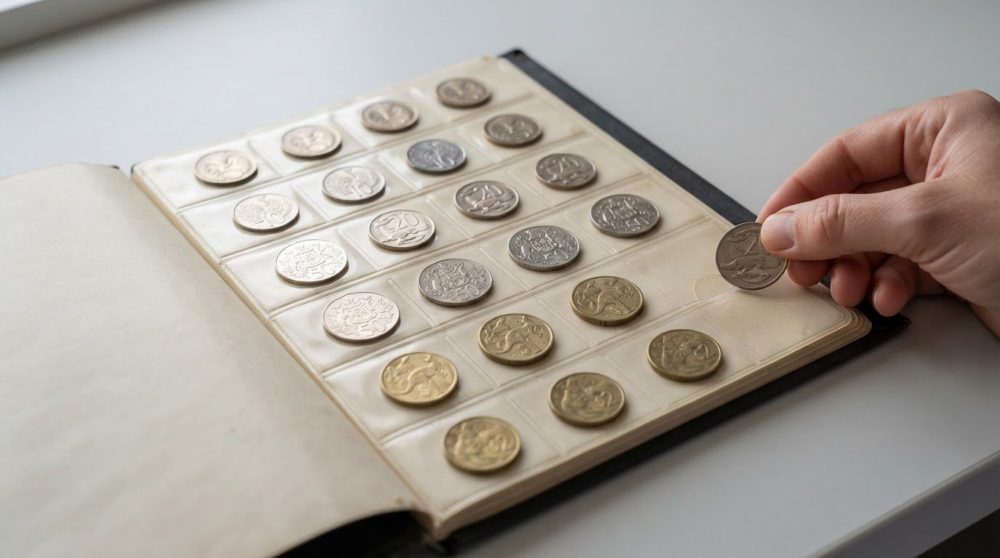
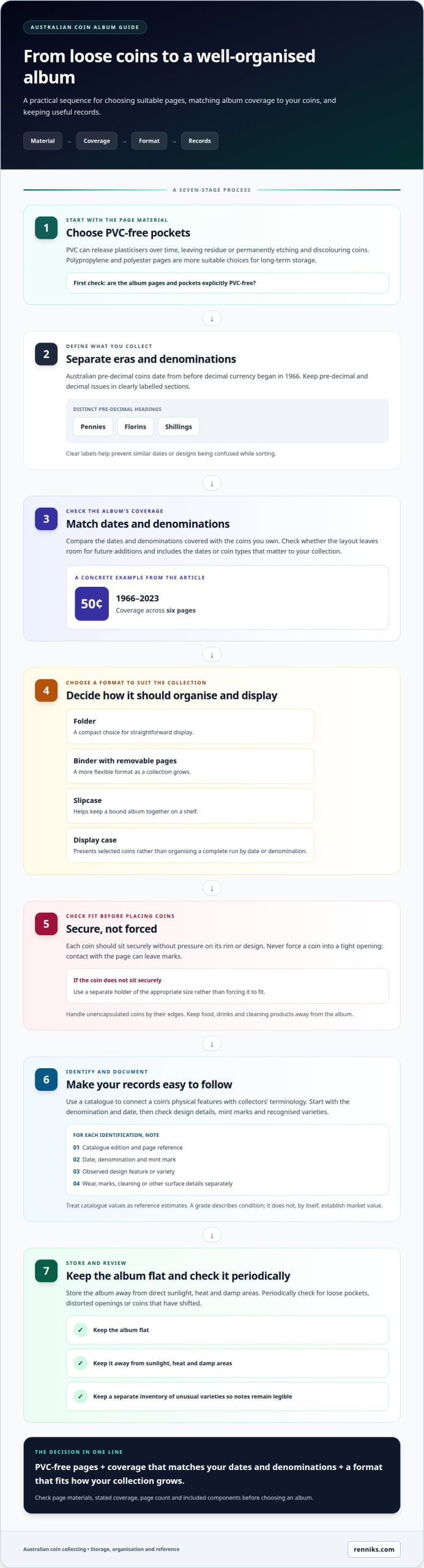
An Australian coin collection book can organise and display coins while helping protect them, provided its pages and pockets are PVC-free. PVC can release plasticisers over time, which may leave residue or permanently etch and discolour coins. Polypropylene and polyester pages are more suitable choices for long-term storage.
An album should keep coins organised without compromising their condition, so both its materials and storage conditions matter. This guide explains how to assess album safety, choose an album arranged by Australian denomination, and use catalogues and other references to document your collection. It also covers practical steps such as handling coins by their edges and keeping albums away from heat, humidity and direct sunlight. The goal is to help you choose a format for the coins you collect, from decimal denominations to pre-decimal issues, while keeping preservation in mind.
Key Takeaways
- Choose PVC-free album pages to avoid materials that can leave residue or damage coin surfaces over time.
- Match an album organised by denomination and date range to the Australian coins you collect.
- Use a coin catalogue to support identification and record-keeping, while treating listed values as reference estimates.
- For a suitable storage format, consider Lighthouse Album Systems, coin capsules, 2×2 coin holders or HAGNER sheets and binders.
Are Coin Albums Safe for Your Coins?
An album’s safety depends on fit, handling and storage. Each coin should sit securely without pressure on its rim or design. Never force a coin into a tight opening, as contact with the page can leave marks. Handle unencapsulated coins by their edges, and keep food, drinks and cleaning products away from the album.
Australian pre-decimal coins date from before decimal currency began in 1966, according to the Royal Australian Mint’s account of decimal currency. Keep pre-decimal and decimal issues in clearly labelled sections. Older denominations such as pennies, florins and shillings need distinct headings, so similar dates or designs are not confused during sorting.
Varieties need more than a denomination label. A die variety is a design difference associated with a particular coin die. Record the date, denomination and observed feature alongside the coin’s album position. For example, noting a change in lettering can help distinguish coins from the same year without repeatedly removing them.
Check the album periodically for loose pockets, distorted openings or shifted coins. Store it flat and away from direct sunlight, heat and damp areas. If a coin does not sit securely in an album opening, use a separate holder of the appropriate size rather than forcing it to fit. Keep an inventory of unusual varieties outside the album too, so your notes remain legible and are not mistaken for part of the coin’s description.
Albums organised by Australian coin denomination
A denomination-based album gives each coin a defined place and makes gaps easier to see. A 50-cent album covering 1966-2023, for example, uses six pages.
Before choosing, compare the dates and denominations covered with the coins in your collection, then consider whether the layout leaves room for future additions.
Folders suit compact collections and straightforward display. A binder with removable pages is more flexible as a collection grows, while a slipcase helps keep a bound album together on a shelf. Display cases serve a different purpose: they present selected coins rather than organise a complete run by date or denomination.
Page materials matter as much as the layout. Choose PVC-free pockets, and make sure page openings suit the coins or their holders without forcing them into place. Accessories should match the album system, since incompatible pages may not fit the binder securely. For a collection that may expand beyond one denomination, compare coin storage formats alongside the album’s page and binder compatibility.
Prices and stock availability can change, so treat them as current product details, not permanent features of an album. Compare the stated coverage, page count, materials and included components. This helps you tell whether a denomination album suits your collection or leaves out important dates or coin types.
Coin collecting reference books and catalogues
A catalogue connects a coin’s physical features with the terminology collectors use to describe it. Start with the correct denomination and date, then check the entry for design details, mint marks and recognised varieties. Record the catalogue edition and page reference with your notes so another collector can follow how you identified the coin.
Grading references help make condition descriptions more consistent. Compare wear on the design’s raised areas, then note marks, cleaning or other surface problems separately. PCGS explains the Sheldon grading scale and its numerical grades in its coin grading reference. A grade describes condition; it does not, by itself, establish a coin’s market value.
Choose a reference whose coverage matches your collecting focus. An Australian catalogue can support research across local coin denominations, while a specialised reference may be more useful for a particular series or variety. Check the edition and scope before recording a citation, especially when a later publication may include revised entries or additional issues. The coin and banknote catalogue range is relevant for collectors seeking Australian references.
Keep factual observations separate from your own assessment. For example, record the date, mint mark and catalogue description in one field, then note wear or surface marks separately. This makes the entry easier to review and prevents a personal judgement about condition from being mistaken for a catalogue description.
Renniks
Renniks offers Australian coin albums and storage materials for collectors organising decimal, pre-decimal or commemorative issues. When choosing an album, consider how its page format, denomination coverage and materials suit the coins you own and the way you want to display them.
Renniks coin collection book options provide robust binder-based formats, while Australian Premier Coin Albums provide another alternative for denomination-focused collections. For individual coins, protective coin capsules and 2×2 coin holders provide separate storage formats. HAGNER sheets and binders can also suit collectors arranging coins in a flexible page system. Match the holder or sheet to the coin and album format before building out a collection.
Contact Renniks to discuss coin album formats and storage materials for your collection.
Plan the next stage of your collection
An album works best when its organisation reflects how you plan to collect, not just the coins you already own. Before choosing an Australian coin collection book, consider which denominations or dates you may add, how you want to record varieties, and whether you prefer a bound album or a system that can grow with your collection.
Your plan can also guide how you arrange new acquisitions. Use consistent naming for dates, denominations and varieties across your album and notes. A clear, consistent record makes it easier to find a coin and understand its place in a series, especially as your collection develops.
To compare denomination-focused formats for an Australian coin album, explore the available album options. A considered format gives each new addition a clear place in your collecting record.
Shop the supplies in this guide
Put the advice above into practice with these collecting supplies from Renniks:
- Coin Capsules, Inner Diameter 29mm suits Australian 20c + Florin
- ULTRA Coin Capsules, inside Ø 29mm suits Australian 20c + Florin
- Volterra Uno – Coin box for 30 gold coins “Australian Kangaroo” in capsules
- Hagner 20 pocket coin album pages 3 ring (PK 10)
- Coin Album NUMIS, with 5 pocket sheets, green
- Renniks Australian & New Zealand Tokens Values
Frequently Asked Questions
Coin Albums vs Coin Folders: What’s the Difference?
A coin folder is usually compact, with fixed openings, while an album may be a bound book or use replaceable pages. Fixed openings suit a defined series and make vacant positions visible. A page-based album offers more flexibility for notes or additional sections. Choose based on whether you prefer a set layout or room to adapt.
What is the best way to organise your coins?
Group coins according to a clear rule, such as denomination, design series or mint mark, and apply it consistently. Keep duplicates together in a separate section instead of placing them randomly in empty spaces. A simple inventory can record each coin’s album position and distinguishing feature, making it easier to locate a coin without handling every piece.
What Australian coins do collection books cover?
Australian coin books may cover decimal denominations, circulating commemoratives or pre-decimal denominations such as pennies, halfpennies, florins and shillings. Coverage varies by album: some focus on one denomination or series, while others include several denominations. Read the stated date range and coin types to see whether the layout suits your collecting focus.
Where can I buy an Australian coin collection book in Australia?
Renniks sells Australian Premier Coin Albums and Lighthouse Album Systems through its online store. These offer options for collectors looking for a denomination-focused album or a binder-based format. Compare the stated coin coverage and layout with the series you collect, so your chosen format supports the way you organise your collection.
How much does an Australian coin collection book cost?
The price depends on the album format and what it includes, such as pages, a binder or a slipcase. A focused denomination album and a larger system album may differ in construction and coverage. Compare the current product details and included components before deciding. There is no single price for every Australian coin album.
Disclaimer
This article is provided for general information and collecting guidance only, and is not financial or investment advice. Coins, stamps, banknotes and trading cards can fluctuate in value, and nothing here should be read as a guarantee that any item will increase in value. Any value mentioned reflects a reference-guide estimate at the time of writing, not a current market valuation; always check the latest edition of Renniks Australian Coin & Banknote Values or an independent source for current figures. Renniks does not grade, authenticate or appraise items; grading opinions belong to independent third-party services such as PCGS and NGC. Links to external websites are provided for reference only; Renniks is not responsible for the content of third-party sites.
