





Coins
Coin Toning: Can Artificial Toning Be Reversed, and How Can You Prevent It
Nov
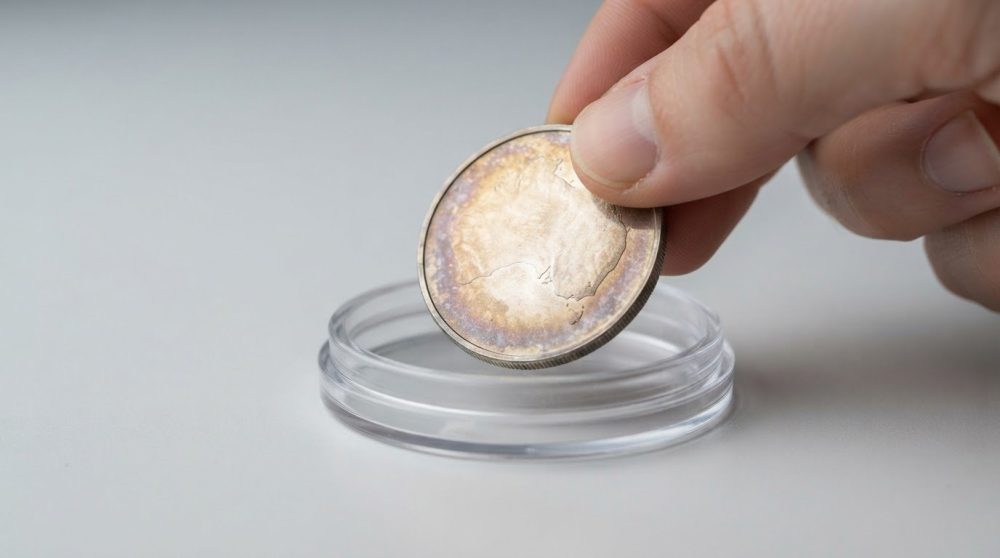
Artificial toning is rarely reversible without risking further damage. Attempts to strip colour can alter a coin’s surface and affect market acceptance. The safest response is usually to leave an uncertain coin untreated. To understand how to prevent coin toning, limit exposure to reactive materials and store coins in stable conditions.
Toning alone doesn’t determine a coin’s quality or originality. A natural-looking pattern may be acceptable to collectors, while artificial or questionable colour can raise concerns. This article explains how toning relates to grading and value, how storage history and Australian conditions can affect coin surfaces, and how to choose holders for raw and graded coins. Make preservation decisions based on the coin’s condition and storage needs, rather than trying to change its appearance.
Key Takeaways
- Assess toning by its appearance and effect on the coin’s surfaces, not colour alone, before drawing conclusions about grading or value.
- Avoid cleaning or chemically treating questionable toning; intervention can cause further surface damage.
- Choose stable, PVC-free holders and keep coins away from reactive materials and changing environmental conditions.
- Match your storage to the collection: Lighthouse Album Systems, coin capsules and 2×2 holders offer different ways to house and organise coins.
Potential effects of toning on grading and value
Colour alone doesn’t establish a toned coin’s originality or value. Assess the surface, colour pattern and remaining detail together. Consider whether the toning looks stable, natural and visually balanced, and compare it under different lighting before forming an opinion. A coin’s age alone can’t prove that its colour developed naturally.
Market response varies by coin and appearance. Balanced, attractive original toning can add a premium, while light, even colour often has little effect on market value. Dark, blotchy or questionable colour can reduce buyer interest. Toning may also leave value unchanged, as demand for the underlying coin remains relevant.
Grading depends partly on the surfaces beneath the colour. Scratches, corrosion, muted lustre and obscured design details remain concerns. Artificial toning can raise doubts about surface originality. PCGS and NGC refuse to grade artificially toned or cleaned coins. Market-acceptable toning is more likely to be accepted for grading, which can affect whether a coin receives a third-party holder.
Patterns offer clues, not proof. Tab toning is associated mainly with commemoratives from the 1930s-1950s. On other coin types, that pattern may attract closer scrutiny. Crescent toning can reflect partial shielding inside a holder. Target rings can also reflect packaging or holder contact. Judge each pattern against the coin’s type and surfaces.
Don’t dip or polish a questionable coin to improve its appearance. Chemical treatment can alter surfaces and affect market acceptance. Keep photographs, provenance and known storage details for comparison. For raw coins, record the holder and storage history; suitable coin storage materials can limit contact with reactive substances.
Coin storage and environmental damage
Storage materials and surrounding conditions influence how a coin’s surfaces change. For Australians considering how to prevent coin toning, keep coins away from heat, humidity and reactive materials.
Long-term holders and storage materials
Choose holders made from stable, PVC-free materials, such as polypropylene or polyester. PVC plasticisers can migrate and damage coin surfaces; NGC’s conservation guidance explains why surface treatment requires care. Australian collectors can buy coin-storage supplies from specialist numismatic suppliers. Check material descriptions and choose a holder suited to each coin. Don’t clean or coat a coin to prevent toning, as treatment can alter its surface.
Storage by coin metal
Silver and copper are more prone to visible toning than gold. Heat and humidity can accelerate surface reactions, so store silver and copper in a stable, dry place. Gold still needs protection from handling oils and abrasion. Hold raw coins by their edges, and keep them separate to avoid contact marks. PCGS provides coin reference material for examining coin surfaces and types.
PVC flips and coin damage
PVC flips can release plasticisers over time, potentially leaving sticky residue, discolouration or etching. Check old flips for cloudiness or deposits, then carefully transfer coins to PVC-free holders. Don’t rub off residue, as friction can scratch the surface. Avoiding PVC is a practical step in preventing coin toning.
Desiccants in coin storage
Silica gel absorbs moisture in enclosed spaces, but keep sachets separate from coins and holders. Follow the packet’s handling instructions and replace or regenerate the sachet as directed. Desiccants don’t replace stable storage or reverse existing toning. Keep coins away from damp areas and temperature swings, and never place loose granules among them.
What coin holders and storage materials are safe for long-term coin preservation?
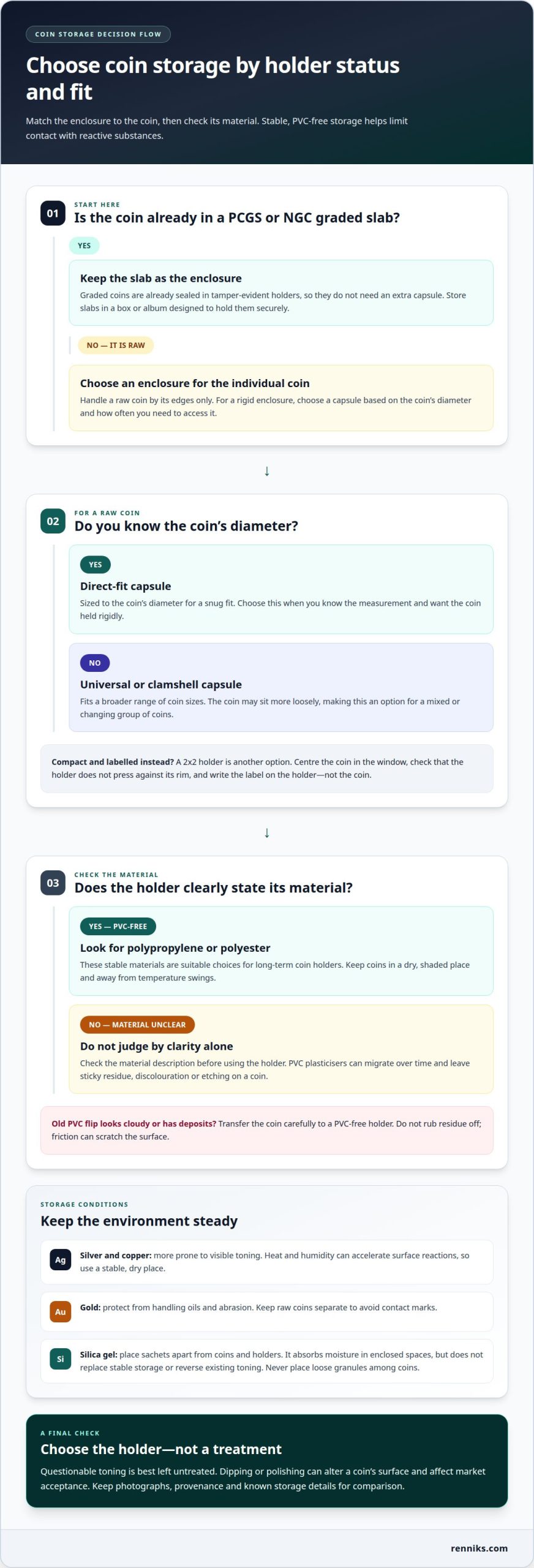
For long-term storage, choose coin holders made from stable, PVC-free polypropylene or polyester. Check the material description rather than judging by appearance: clear plastic alone doesn’t indicate suitability. Acid-free storage in a dry, shaded location also helps limit avoidable exposure. Keep holders clean and don’t place coins in direct contact with cardboard or packaging of unknown composition.
For a raw coin, a capsule provides a rigid enclosure that limits handling and surface abrasion. A direct-fit capsule suits a coin when you know its diameter and want a snug fit. A universal or clamshell capsule accommodates a broader range, though the coin may sit more loosely. Choose according to fit and how often you need to access the coin.
A 2×2 holder is a compact option for separate storage and labelling. Before closing it, centre the coin in the window and ensure the holder doesn’t press against its rim. Label the holder rather than writing on the coin or placing adhesive near its surface. Store filled holders so they don’t slide against one another.
PCGS and NGC graded coins are already sealed in tamper-evident slabs, so they don’t need an additional capsule. Keep slabs in a box or album designed to hold them securely. Raw coins need a suitable holder of their own, and should be handled only by the edges.
To choose an enclosure for individual raw coins, compare the fit and format of premium coin capsules with your collection’s needs. Record each coin’s holder type, then inspect it periodically for movement, dust or visible changes.
Renniks: Lighthouse Album Systems
Renniks offers Lighthouse Album Systems for collectors who want to organise coins in a consistent format. Choose an album system to suit your series and preferred page layout. Matching the format from the outset can save you from rebuilding your storage later. Lighthouse pages use stable, archival-safe materials rather than PVC, whose plasticisers can damage coin surfaces over time.
For individual raw coins, Lighthouse Coin Capsules and 2×2 coin holders provide separate storage options. Capsules hold a coin within a protective enclosure, while 2×2 holders offer a compact, labelled format. Select the holder to suit the coin and your preferred way of storing or displaying it.
To compare formats, explore the coin storage systems available through Renniks. Visit Renniks online to choose storage that fits your collection.
Make preservation part of your collecting routine
Before changing a coin’s storage, record its condition and storage history. Note when you first observed a colour shift, which holder the coin was in and where it was stored. These details can help distinguish an ongoing environmental change from an older surface characteristic. Keep the record with your catalogue notes, and compare future observations under consistent lighting.
To prevent coin toning, focus on consistent storage habits rather than trying to control a coin’s appearance. Avoid unnecessary handling, and don’t try to reverse colour changes with polishing or chemicals. If you’re planning a storage update, consider which format suits how you organise and access your collection.
Explore Renniks’ collecting supplies and storage options, or get in touch through the website to discuss your next step. A measured approach helps you preserve the coin’s existing surfaces while continuing to build your collection with care.
Shop the supplies in this guide
Put the advice above into practice with these collecting supplies from Renniks:
- Presentation case for 20 silver Koala coins in capsules, black
- EVERSLAB Coin Capsules , Inner Diameter 24mm
- SO YOU WANT TO BE A COACH
- Renniks Australian Coin & Banknote Values 31st Ed. Softcover
- QUICKSLAB coin capsule, inside Ø 39mm
- plastic Stock pages GRANDE, with 20 spaces for coin Holders
Frequently Asked Questions
Can artificial toning be reversed or removed?
There’s no reliable way to reverse artificial toning and restore a coin’s original surface. Chemical dips, abrasives and coatings can cause further changes that affect detail and market acceptance. If you suspect artificial colour, photograph both sides under consistent lighting and leave the coin untreated. The records help you track its condition without causing more surface damage.
Do older coins automatically have natural toning?
No. Age alone doesn’t establish how a coin acquired its colour. A coin may have been stored in a reactive holder, exposed to chemicals or deliberately altered long after minting. Consider the toning pattern alongside the coin’s surfaces and known history. For example, a dramatic colour change on an old coin still deserves careful examination.
Is colourful toning always a sign of quality?
No. Bright colour doesn’t prove that toning is natural, stable or desirable to collectors. Look for colour that sits convincingly on the surface without obscuring lettering, design details or original lustre. A vivid but blotchy appearance may raise concerns, while subtle colour can be compatible with a well-preserved coin. Appearance alone can’t establish originality.
Should toned coins be stored differently than non-toned coins?
Usually, no. Use the same suitable holder and stable storage conditions for toned and untoned coins. For a toned coin with a known history, note its appearance before changing holders, then record the new holder and storage location. This gives you a useful comparison if the surface changes later and helps preserve provenance.
What is coin toning?
Coin toning is a colour change that develops on a coin’s surface through reactions with substances in its surroundings. The colours and patterns vary with the metal, exposure and storage history. Silver, copper and brass can show distinct changes. Toning may develop gradually or result from artificial treatment, so colour alone doesn’t identify its cause.
Disclaimer
This article is provided for general information and collecting guidance only, and is not financial or investment advice. Coins, stamps, banknotes and trading cards can fluctuate in value, and nothing here should be read as a guarantee that any item will increase in value. Any value mentioned reflects a reference-guide estimate at the time of writing, not a current market valuation; always check the latest edition of Renniks Australian Coin & Banknote Values or an independent source for current figures. Renniks does not grade, authenticate or appraise items; grading opinions belong to independent third-party services such as PCGS and NGC. Links to external websites are provided for reference only; Renniks is not responsible for the content of third-party sites.
