




Banknotes
Banknote Storage Albums: Compare Capacities and Fit
Oct
A suitable banknote storage album fits the notes you collect and the way you want to organise them. First, decide whether you arrange your collection by country, denomination, series or another focus. This helps you choose a layout that makes notes easy to view and handle. Capacity matters, but so does being able to browse and maintain the collection with ease.
Choosing an album involves more than comparing advertised capacities. Page compatibility, room for future additions and the album’s footprint all affect how well it suits your collection and storage space. This guide covers how to compare refillable and fixed-page formats, and how to choose a binder or slipcase. It also explains what to consider about page materials and handling, so you can choose an album that works for your collection now and as it grows.
Key Takeaways
- Choose pocket layout for the size and orientation of your notes, then allow room for additions rather than relying on capacity alone.
- Match refill sheets to the binder system before expanding, so new pages fit the existing album.
- Compare the binder’s external dimensions with your shelf space, including the extra room a slipcase requires.
- Store polymer notes flat in individual sleeves or pocket pages, away from heat and direct sunlight, to reduce the risk of sticking or distortion.
Album capacities and dimensions
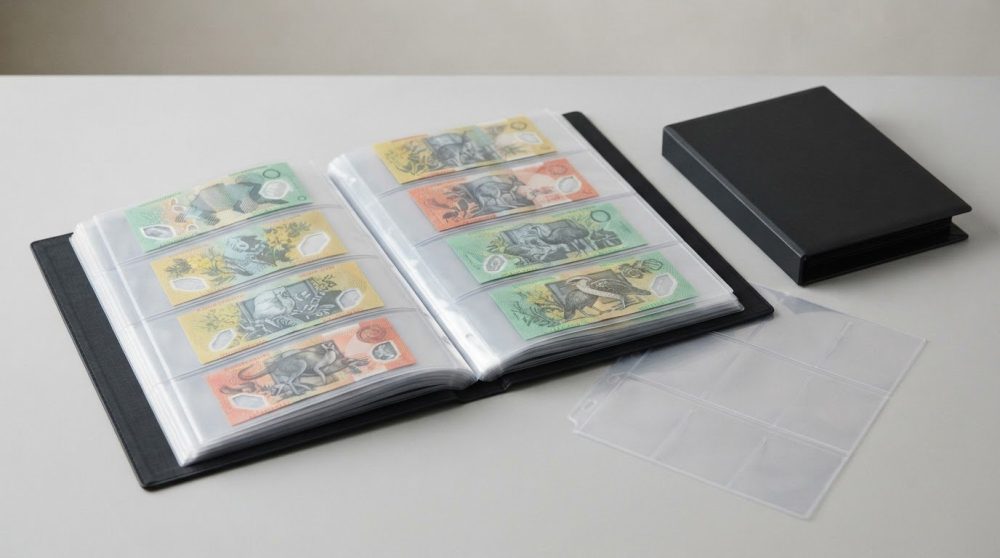
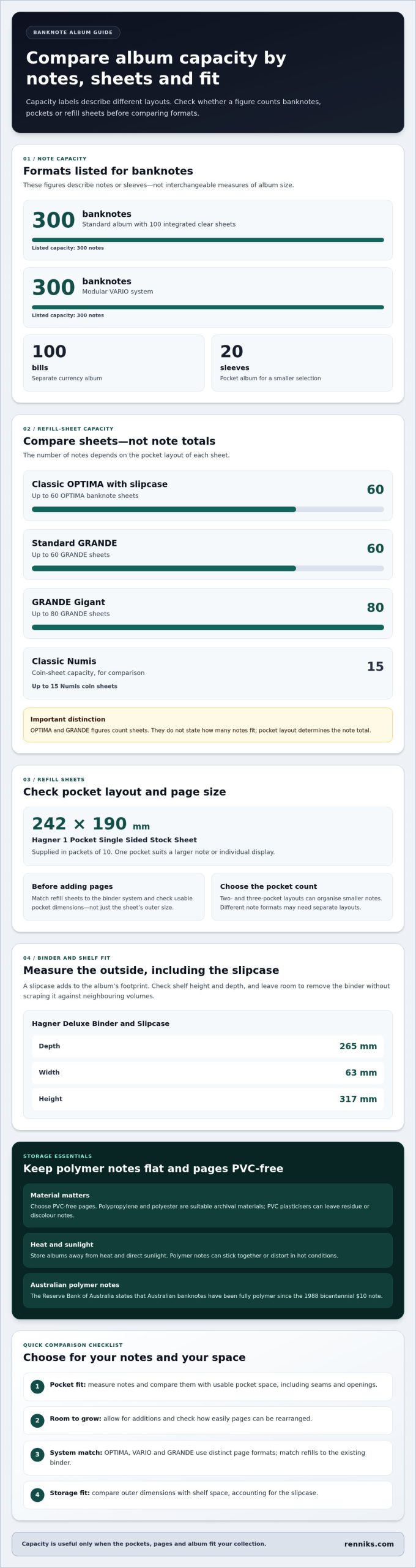
Capacity labels describe different layouts, so compare pocket count with sheet count. A standard banknote storage album with 100 integrated clear sheets holds 300 banknotes. Alternatively, a modular VARIO system is also listed for 300 notes. A separate currency album may hold 100 bills, while a pocket album with 20 sleeves suits a smaller selection. These totals help estimate space, but only if the pockets suit your notes.
Sheet-based systems allow capacity to grow. A classic OPTIMA album with slipcase holds up to 60 OPTIMA banknote sheets. A standard Grande album accommodates up to 60 Grande sheets, while a larger Grande Gigant holds up to 80. These are sheet capacities, not note totals: the number of notes depends on each sheet’s pocket layout. Check that distinction before comparing albums.
Measure the notes and compare them with each pocket’s usable space, including its seams and opening. A snug pocket can make insertion awkward, while excess room lets a note shift during handling. Also consider the binder’s outer dimensions and shelf depth. Compare those measurements alongside the page system; the Renniks coin and banknote storage range groups formats for this practical comparison.
Yes, a banknote storage album with individual pockets suits Australian polymer notes when each note lies flat. Keep albums away from heat and direct sunlight; polymer notes can stick together or distort in hot conditions. The Reserve Bank of Australia states that Australian banknotes have been fully polymer since the 1988 bicentennial $10 note. Choose pocket pages over tightly packed stacks for notes kept beyond everyday circulation.
Capacity comparisons can include coin storage too: a classic Numis album can hold up to 15 Numis coin sheets.
Banknote album refill sheets
Match refill sheets to the binder system and note dimensions before adding pages. Hagner 1 Pocket Single Sided Stock Sheets measure 242 mm x 190 mm and come in packets of 10. One pocket suits a larger note or individual display; two- and three-pocket layouts organise smaller notes efficiently. Check each pocket’s usable dimensions, not only the sheet size. Different note formats may need separate layouts.
Choose pages made from PVC-free material. Polypropylene and polyester are suitable archival materials; PVC can release plasticisers that leave residue or discolour notes. Keep notes flat, with no folded corners caught in a pocket. For compatible options, compare Hagner banknote sheets and holders with your binder’s page format.
Australian albums include fixed-page books, refillable ring binders, pocket albums and individual sleeves. Prices depend on the format, binder and number of pages. Specialist numismatic and philatelic suppliers, including coin and stamp dealers, are places to find albums and compatible refills. Lighthouse and Hagner are established collector-supply brands; choose a system with pages that match your existing binder.
To reduce the risk of fading and creasing, insert notes without forcing their edges, then store the album flat and away from sunlight, heat and damp. Handle notes with clean, dry hands, supporting the edges rather than pressing the printed surface. Remove dust from the album with a clean, dry cloth, and don’t apply cleaners to pages or notes. Unsuitable PVC pages can become cloudy or sticky as plasticisers migrate, potentially staining or damaging a note’s surface.
Binders and slipcases
A ring binder makes it easier to rearrange notes as your collecting focus changes. Group issues by country, denomination or series, then move pages without disturbing other sections. Think about how often you’ll handle the album: a wide, heavily filled binder can be cumbersome to turn, especially if you regularly compare notes.
Plan the page order before loading the binder. For example, group related denominations and leave space for future additions. This creates a clear sequence and reduces the need to move pages later. Distribute pages evenly across the rings instead of concentrating the weight at one end. Close the binder carefully to prevent pages catching in the mechanism.
A slipcase encloses the binder and helps limit exposure to shelf dust and surface scuffs. It also gives the album a defined footprint, which is useful when storing several volumes together. Measure the shelf’s height and depth, and leave room to remove the binder without scraping the case against neighbouring books.
The Hagner Deluxe Binder and Slipcase measures 265 mm deep, 63 mm wide and 317 mm high as a slipcase. These dimensions help assess whether it suits your shelving and storage position. Store the binder upright only if it sits securely; otherwise, laying it flat can prevent it leaning against adjacent volumes.
Consider these listed prices alongside fit and storage needs.
Renniks: Lighthouse Album Systems
Renniks offers Lighthouse Album Systems for collectors choosing between fixed-page and refillable formats. Match the system to your notes and preferred pocket layout, then choose replacement sheets made for that binder. OPTIMA, VARIO and GRANDE use distinct page formats, so selecting a system before adding pages helps keep a growing collection organised.
For polymer notes, select individual pockets that hold each note flat, and keep the album away from heat and direct sunlight. If your collection includes coins as well, Lighthouse Coin Capsules and 2×2 coin holders provide separate formats for storing them.
Compare the available banknote storage systems at Renniks, or contact Renniks for assistance choosing an album format.
Choose a format that can grow with your collection
Before choosing a banknote storage album, consider how you’ll organise future additions. Your collecting focus may change as you acquire new notes, so leave room to rearrange pages and record provenance. A simple catalogue alongside the album can help you locate notes without handling them repeatedly.
Renniks offers Lighthouse Album Systems for banknotes, alongside Lighthouse Coin Capsules and 2×2 coin holders for related coin collections. Keeping each item in a storage format suited to its material and dimensions helps create a consistent, practical archive across different parts of a collection.
A considered storage choice gives you a clear starting point, and you can refine the arrangement as your collection develops.
Shop the supplies in this guide
Put the advice above into practice with these collecting supplies from Renniks:
- Renniks Banknote Album – Black
- ROUTE Banknotes 170 pocket album
- ROUTE Banknotes 210 pocket album
- Renniks Banknote Album Plastic Refill Pages, 3 Pockets, Pack 10
- Renniks Banknote Album Plastic Refill Pages, 2 Pockets, Pack 10
Frequently Asked Questions
What features should I look for in a banknote album, including pocket size and page capacity?
Look for clear, PVC-free pockets, secure page attachment and openings that let you insert notes without catching their edges. Check whether the pages show both sides, especially if design details or serial numbers matter to your collecting. Leave room for labels or notes recording each banknote’s issue and provenance.
How much do banknote storage albums cost in Australia?
Prices vary by format, binder and number of pages.
Which banknote album brands are recommended by Australian collectors?
Lighthouse and Hagner are established collector-supply brands. Choose a system with pages that suit your notes and fit your binder.
Disclaimer
This article is provided for general information and collecting guidance only, and is not financial or investment advice. Coins, stamps, banknotes and trading cards can fluctuate in value, and nothing here should be read as a guarantee that any item will increase in value. Any value mentioned reflects a reference-guide estimate at the time of writing, not a current market valuation; always check the latest edition of Renniks Australian Coin & Banknote Values or an independent source for current figures. Renniks does not grade, authenticate or appraise items; grading opinions belong to independent third-party services such as PCGS and NGC. Links to external websites are provided for reference only; Renniks is not responsible for the content of third-party sites.
