





Coins
Protecting Coins from Humidity in Australian Homes
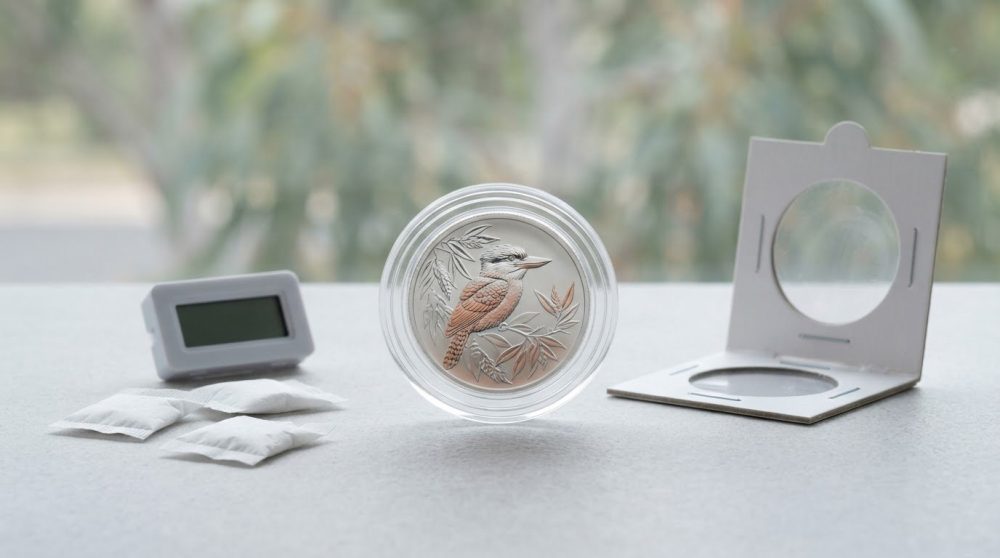
Oct
Aim for 40 to 55 per cent relative humidity and a steady temperature of 18 to 22 degrees Celsius. For Australian coin collections, how to protect coins from humidity starts with choosing a storage approach that suits the metals, the room and how often you access each piece.
One humidity reading cannot describe every storage situation. The same cabinet may hold circulated copper-alloy coins, silver proofs and an inherited mix of raw and encapsulated pieces, each with different preservation needs. This guide explains how to interpret humidity readings, decide whether to control the room or use a contained storage area, and recognise when the location itself needs attention. It also considers the materials around a coin, since a holder or album forms part of its storage environment. With these factors in mind, you can make a considered plan for your collection rather than relying on a single product or one-off adjustment.
Key Takeaways
- Aim for 40 to 55 per cent relative humidity and a steady temperature of 18 to 22 degrees Celsius, with consistency more important than chasing an exact reading.
- Use a hygrometer to monitor the storage area, and consider silica gel or room humidity control where conditions remain damp.
- Choose a cool, dry indoor location; garages, laundries, sheds and attics can expose coins to moisture and temperature swings.
- For organised storage, match Lighthouse Album Systems, Lighthouse Coin Capsules or 2×2 coin holders to the way you collect and access your coins.
1. What is the ideal humidity level for storing collectible coins?
Use 40 to 55 per cent relative humidity as a general target, with a steady storage temperature of 18 to 22 degrees Celsius. Metal composition affects the risks within that range. Copper and bronze become more vulnerable above 45 per cent humidity when temperatures exceed 20 degrees Celsius; silver may blacken above 50 per cent. These thresholds help explain why one humidity reading does not describe every coin’s preservation needs.
Iron and steel medals face surface and deeper rust risks above 40 per cent relative humidity. Gold patina can alter above 70 per cent. For mixed collections, monitor conditions and pay particular attention to copper-alloy and silver pieces. Sudden changes can matter as much as the reading itself, so aim for a steady environment rather than repeatedly adjusting storage to chase a precise figure.
Store coins individually in capsules, holders or an album, not loose together in a drawer. For raw coins, a correctly sized capsule reduces handling and contact with other pieces. A graded coin already has a sealed holder. Choose PVC-free storage materials: plasticisers from PVC can leave residue or damage a coin’s surface. A cardboard 2×2 holder with a Mylar window is another individual storage option. Lighthouse coin capsules provide a capsule option.
The cost of a humidity-controlled coin cabinet in Australia depends on its capacity, construction and humidity-control features. Match those requirements to your collection and the room where you plan to store it.
For moisture protection, place each coin in a PVC-free holder or capsule and store it somewhere dry and stable. Silica gel won’t harm coins if its intact sachet stays separate from the metal and holder. If a coin is damp or tarnished, handle it by the edges and don’t rub or polish it. Cleaning can remove its original surface.
2. Climate control and silica gel in humid Australian climates
In humid parts of Australia, measure conditions where coins are stored, rather than relying on readings elsewhere in the house. A digital hygrometer accurate to ±2-3 per cent relative humidity is suitable for monitoring. If room readings consistently exceed 55 per cent, whole-room humidity control may help; a dehumidifier set to 45 per cent is one recommended approach. Regular readings help you decide how to protect coins from humidity in the space you actually use.
For a closed storage box, silica gel absorbs moisture from the surrounding air. Use about 1 gram per litre of container volume; a 5-gram sachet suits a box of around 5 litres. Keep packets intact and separate from coins, holders and album materials. Silica gel can help reduce moisture in a closed storage space. A buffer is designed to absorb or release moisture to maintain its stated level, so the products serve different purposes.
Check indicator beads or sachet instructions every 30-60 days, and replace or regenerate the gel when indicated. Reusable silica gel can be regenerated in an oven at 120°C for one hour, then cooled before returning to storage. Don’t heat packets unless they’re intended for regeneration. In humid conditions, monitor the indicator rather than assuming the gel remains effective indefinitely.
Silica gel can help protect coins from humidity when it is contained and kept away from direct contact with them. Choose a desiccant suited to the container’s size and check its condition. Rice is a poor substitute because it absorbs roughly ten times less humidity than silica gel.

3. Temperature fluctuations and storage locations
Temperature swings cause coins and storage materials to expand and contract. Repeated movement can stress holders and expose coin surfaces to changing conditions. Choose a stable indoor cupboard or drawer, away from heaters, windows and direct sunlight. A room with steady conditions is better than a garage or sunroom that heats and cools sharply.
Keep coins away from damp or poorly ventilated areas. Laundries can produce moisture, while sheds and garages may be damp and hot. Attics can become hot and stuffy, making them unsuitable for a collection. Avoid displaying silver coins in humid rooms, where moisture can contribute to toning or corrosion. A closed cabinet in a dry room offers more consistent conditions than an exposed shelf.
Ventilate the storage area at least once a week, then close it again to limit dust and exposure to changing conditions. Check for condensation, musty smells or damp patches, especially after wet weather. If you notice these signs, move the collection to a drier location rather than relying on capsules alone. Capsules reduce handling and exposure to airborne contaminants, but they will not fix a damp room.
Use acid-free, PVC-free materials for coins and their surrounding storage. PVC can release plasticisers that leave residue or damage a coin’s surface; polypropylene and polyester are inert alternatives. Store raw coins individually to prevent contact marks, and handle them by the edges.
Renniks: Lighthouse Album Systems
Renniks offers Lighthouse Album Systems for collectors who want an organised place to store individually protected coins. An album keeps holders together and accessible, but it doesn’t control room humidity. Store it in the same cool, stable location recommended for loose capsules.
Choose a format that suits how you collect and expand your collection. Lighthouse Coin Capsules hold individual coins, while 2×2 coin holders provide another way to separate and organise them. HAGNER sheets and binders can also help arrange compatible holders for viewing and storage. Keep album materials away from damp walls, direct sunlight and heat sources, and check the surrounding room conditions regularly.
As a practical next step, compare storage formats with your collection’s size and how often you handle or display coins. Visit renniks.com to explore the storage options, or contact Renniks with your enquiry.
Make your storage plan work for your collection
Planning how to protect coins from humidity is also a chance to make your collection easier to organise and handle. Consider how often you access each coin, whether you prefer individual holders or an album, and whether the storage materials are suitable for long-term use. A consistent system can make routine checks and careful handling simpler.
Renniks offers Lighthouse Album Systems, Lighthouse Coin Capsules and 2×2 coin holders for different storage preferences. A considered storage choice is a practical next step towards caring for your coins with confidence.
Shop the supplies in this guide
Put the advice above into practice with these collecting supplies from Renniks:
- Volterra Uno – Coin box for 30 gold coins “Australian Kangaroo” in capsules
- Coin Capsules, Inner Diameter 29mm suits Australian 20c + Florin
- Coin gloves made of Microfibre Black – Medium
- Coin gloves made of Microfibre Black – Small
- ULTRA Coin Capsules, inside Ø 29mm suits Australian 20c + Florin
- MATRIX coin holders, black, inside Ø 25mm, self-adhesive, pack of 100
Frequently Asked Questions
What is the ideal humidity level for storing collectible coins?
Aim for 40 to 55 per cent relative humidity and a steady temperature of 18 to 22 degrees Celsius. These are practical general targets, not a reason to expose coins to changing conditions while chasing an exact reading. Reactive metals, including copper alloys and silver, can show surface changes as moisture and heat interact with their metal composition.
Can I regenerate silica gel?
Yes, if the silica gel is designed to be regenerated. The recommended method is heating it in an oven at 120°C for one hour, then letting it cool fully before use. Follow the packet or product instructions, and don’t heat sealed sachets unless they’re made for that purpose. An indicator can help show when the gel has absorbed moisture.
Does silica gel really protect coins from humidity?
Silica gel absorbs moisture from the air around a coin, so it can help manage humidity inside a closed container. It doesn’t seal the container or correct damp conditions in the room. For better results, use an intact sachet in a suitably closed box and monitor humidity nearby. Replace or regenerate the gel when its indicator shows it is saturated.
How can I tell if humidity has already damaged my coins?
Look for changes such as new spots, uneven darkening, corrosion or powdery green deposits on copper-alloy coins. Compare each coin with clear photographs taken earlier, since gradual toning can be difficult to notice. Don’t rub or polish a suspect coin: cleaning can remove original surface detail. Keep it separate from other coins and record the visible changes.
What is the difference between silica gel and Boveda packs?
Silica gel is a desiccant that absorbs moisture and is generally used to lower humidity in an enclosed space. Boveda packs are humidity-control buffers designed to absorb or release moisture around a stated target. They serve different purposes, so don’t combine them without considering the target and container. For coin storage, monitor conditions rather than relying on either pack alone.
Disclaimer
This article is provided for general information and collecting guidance only, and is not financial or investment advice. Coins, stamps, banknotes and trading cards can fluctuate in value, and nothing here should be read as a guarantee that any item will increase in value. Any value mentioned reflects a reference-guide estimate at the time of writing, not a current market valuation; always check the latest edition of Renniks Australian Coin & Banknote Values or an independent source for current figures. Renniks does not grade, authenticate or appraise items; grading opinions belong to independent third-party services such as PCGS and NGC. Links to external websites are provided for reference only; Renniks is not responsible for the content of third-party sites.
