




Banknotes
Mylar Sleeves for Banknote Storage in Australia: How to Choose the Right Fit
Oct
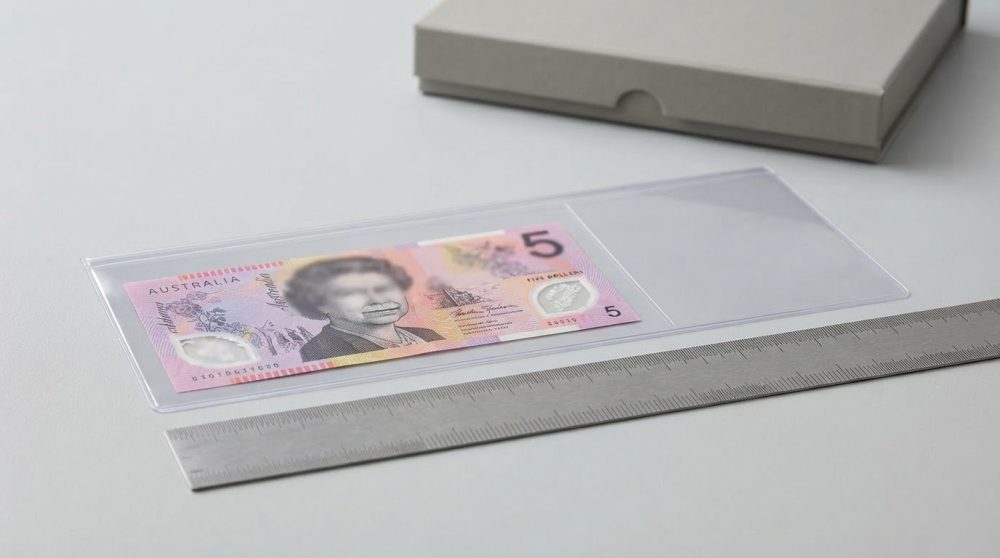
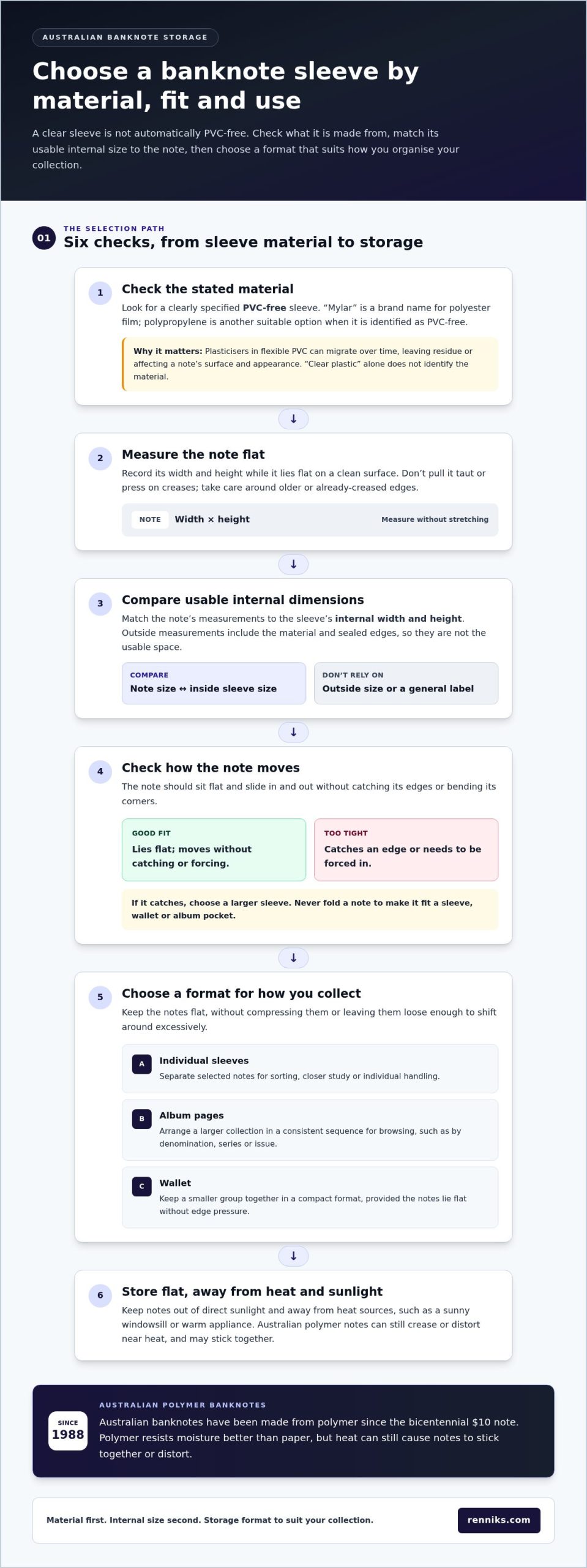
The sleeve’s material matters more than the word “Mylar” on its label. If you’re choosing Mylar sleeves for banknote storage in Australia, start with a clearly specified PVC-free material, such as polyester or polypropylene, then check the sleeve’s internal dimensions and opening.
A sleeve that is too tight can catch a note’s edges, while too much room lets it shift. Australian polymer notes can still crease or distort near heat, and direct sunlight can fade inks. This guide explains what “Mylar-type” means, how to assess fit and when individual sleeves, album pages or a wallet may suit your collection.
By the Renniks team
Key Takeaways
- “Mylar” is a brand name for polyester film. Check the sleeve’s material rather than assuming a clear or flexible sleeve is PVC-free.
- Compare a sleeve’s internal dimensions with the note, not the outside measurements or the product label alone.
- Choose a fit that lets the note slide in and out without catching its edges. Never fold a note to make it fit.
- Individual sleeves, album pages and wallets suit different ways of storing and organising notes. Whichever format you use, keep notes flat and away from heat and direct sunlight.
Why PVC-free Mylar-type sleeves matter for Australian banknote storage
When comparing sleeves for banknote storage, start with the material. “Mylar” is a brand name for polyester film, and collectors often use “Mylar-type” to describe stable polyester sleeves. The Mylar overview explains the material’s wider uses, but the sleeve’s stated composition is what matters when choosing storage.
Flexible PVC often contains plasticisers that help keep it soft. Over time, these additives can migrate out of the plastic and leave sticky residue or etch, cloud and discolour stored collectibles. On a banknote, this can affect the surface and appearance, with changes that may be difficult to reverse.
PVC, polypropylene and polyester: what the material names tell collectors
Polypropylene and polyester are stable alternatives used for archival-style storage. Polyester film is often called Mylar-type in the hobby; polypropylene is another suitable option when it is specifically identified as PVC-free. “Clear plastic” alone does not tell you what a sleeve is made from.
Check the material specification for the individual sleeve rather than assuming every product in a category is the same. Renniks’ coin and banknote storage range includes storage options for collectors, but you should assess each product’s material and dimensions. PVC-free storage avoids the risk associated with plasticiser migration, but no sleeve can guarantee permanent preservation.
How to choose Mylar-type banknote sleeves by size and fit
A sleeve should hold a note without pressing against its edges or leaving so much room that it slides around. Measure the note and compare it with the sleeve’s usable internal dimensions. This is more reliable than choosing by the sleeve’s external size or by a general description such as “banknote sleeve”.
Measure a banknote before selecting its sleeve
Lay the note flat on a clean surface and measure it without pulling it taut or pressing on creases. Check the sleeve’s stated internal measurements: the outside dimensions include the material and sealed edges. The American Institute for Conservation also discusses polyester film sleeves for paper-based objects.
- Measure the note. Record its width and height while it lies flat. Take care around the corners and edges, especially if the note is older or already creased.
- Compare usable dimensions. Match your measurements to the sleeve’s internal width and height. Leave enough room to insert the note without catching an edge.
- Check the fit. The note should sit flat and come out without bending its corners or flexing its edges. If it catches or needs to be forced in, choose a larger sleeve.
Never fold a note to make it fit a sleeve, wallet or album pocket. Polymer notes can retain a crease, and forcing any note into a tight opening can stress its edges. Individual sleeves are useful for separating selected notes, such as pieces you are examining or arranging by series. Compare your measurements and intended use with Renniks’ protective sleeves for individual banknotes.
Choose a banknote storage format for your collection
The right format depends on how you organise and handle your notes. Individual sleeves separate selected pieces, album pages keep a series together for viewing, and a wallet holds a smaller group in a compact format. In each case, the note should lie flat without being compressed or left loose enough to slide around excessively.
Individual sleeves or album pages: match the format to how you collect
Individual sleeves suit notes you want to house separately, for example while sorting an inherited collection or setting aside pieces for closer study. Album pages make a collection arranged by denomination, series or issue easier to browse. A wallet can keep a smaller group together, provided it holds the notes flat without pressing their edges.
Australian banknotes have been made from polymer since the bicentennial $10 note issued in 1988. Polymer resists moisture better than paper, but notes can still stick together or distort if exposed to heat. The Reserve Bank of Australia’s banknote information provides background on Australian polymer currency.
- Individual sleeves: Separate notes and make selected pieces easier to handle.
- Album pages: Arrange a larger collection in a visible, consistent sequence.
- Wallets: Keep a smaller group together in a compact format.
Whatever format you choose, store notes flat and away from direct sunlight and heat sources, such as a sunny windowsill or a warm appliance. To organise a collection for browsing, compare Renniks’ banknote storage systems with the way you catalogue and access your notes.
Make a considered choice for your collection
Choosing suitable sleeves is a practical way to set a consistent storage standard as your collection develops. Renniks has served collectors since 1947 and is a recognised member of SCDAA, ANDA and APTA, with a long-standing place in the Australian collecting community.
Compare the stated material and internal dimensions, then decide how you want to arrange and access your notes. A well-matched format makes it easier to handle and organise a collection, whether it contains selected notes or a growing series.
For individual sleeves, start with the note’s measurements and the product’s material specification. Explore Renniks online and browse the banknote storage options to find a format that suits your collection.
This article provides general information about banknote storage and is not a valuation or appraisal of individual notes.
Shop the supplies in this guide
Put the advice above into practice with these collecting supplies from Renniks:
- BASIC Banknote Sleeves, for banknotes up to 170 x 86mm, pack of 50
- BASIC Banknote Sleeves, for banknotes up to 204 x 123mm, pack of 50
- BASIC Banknote Sleeves, to fit banknotes up to 158 x 75mm, pack of 50
- Supersafe Museum Grade 5″ x 8″ Banknote Slips (Pack of 100)
- Renniks Banknote Album – Black
Frequently Asked Questions
Does a banknote sleeve need to be PVC-free?
For long-term storage, choose a sleeve whose material is clearly identified as PVC-free. If an existing sleeve or album has no material information, don’t assume its composition from its age, flexibility or appearance. Check the packaging or product information before storing notes in it.
Can Australian polymer banknotes stick together in storage?
Yes. Heat can cause polymer notes to stick together or distort. If two notes seem to have adhered, don’t pull them apart or flex their corners, as force can leave marks or distort a note. The Reserve Bank of Australia’s banknote information is useful for learning about Australian polymer notes and their features.
How should I store older paper banknotes?
Support an older paper note across its full width rather than lifting it by a corner. Don’t try to flatten folds with pressure or repair a tear with adhesive tape. If you’re sorting an inherited group, record each note’s source or family history separately so written details don’t need to be attached to the paper.
Do Mylar-type sleeves protect banknotes from every kind of damage?
No. A sleeve is a housing, not a rigid case or a controlled storage environment. It can’t prevent crushing under heavy objects or damage from a sharp bend during handling. Inspect sleeves for splits, open seams or debris inside, and replace any that no longer hold a note securely.
Disclaimer
This article is provided for general information and collecting guidance only, and is not financial or investment advice. Coins, stamps, banknotes and trading cards can fluctuate in value, and nothing here should be read as a guarantee that any item will increase in value. Any value mentioned reflects a reference-guide estimate at the time of writing, not a current market valuation; always check the latest edition of Renniks Australian Coin & Banknote Values or an independent source for current figures. Renniks does not grade, authenticate or appraise items; grading opinions belong to independent third-party services such as PCGS and NGC. Links to external websites are provided for reference only; Renniks is not responsible for the content of third-party sites.
