



Knowledge Base, Stamps
Stock Albums for Stamps: How They Compare with Traditional Albums
Oct
A stock album suits stamps you’re sorting, rearranging or keeping as duplicates; an illustrated album gives each issue a planned space. The better fit depends on whether you value flexibility or a set sequence.
Both formats can organise a collection, but they handle additions differently. This comparison covers pocket layout, stamp size and material, including how to store mint never hinged stamps with their original gum intact. It also explains when stockbooks and stockcards are useful, so you can choose a format that works for the way you collect.
Key Takeaways
- Choose a stock album if you regularly sort, rearrange or separate stamps; use illustrated pages to follow a defined sequence.
- Before selecting a format, consider your collection’s scope, stamp sizes, sorting method and room to expand.
- Prioritise acid-free pages and PVC-free pockets. PVC plasticisers can damage stamps or discolour their gum.
- Compare Renniks stockbooks and stockcards with illustrated pages to find a format suited to how you organise your collection.
Stock album or illustrated stamp album: what is the difference?
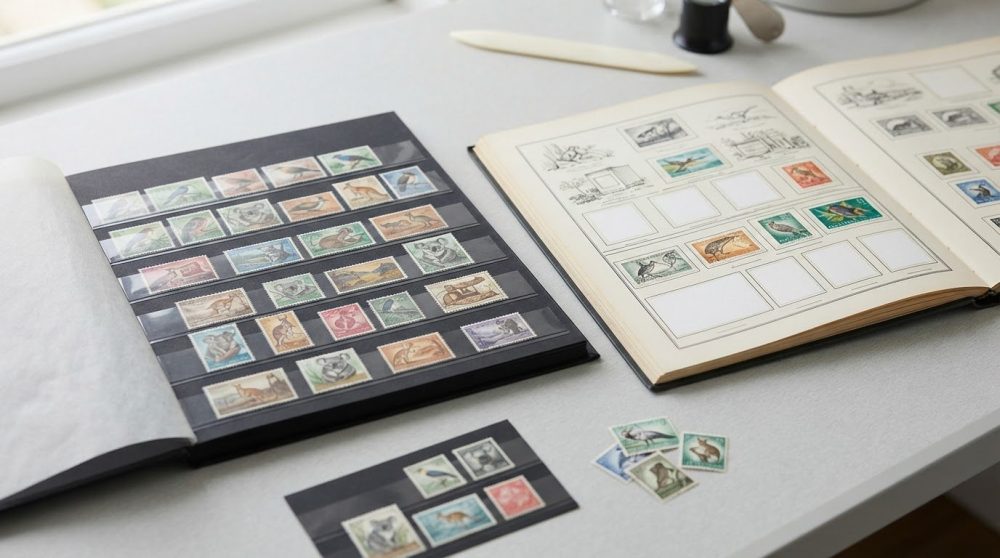
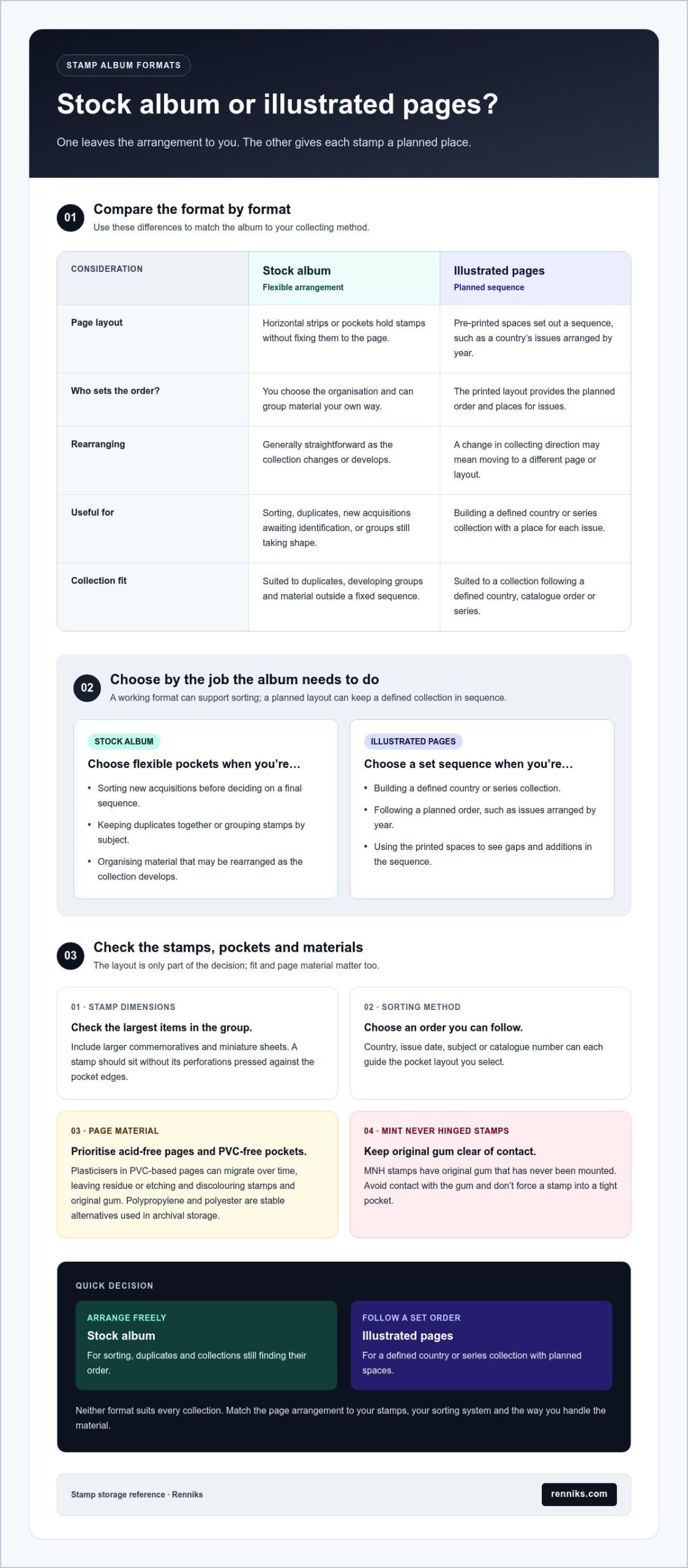
A stock album holds stamps in horizontal strips or pockets. Pocket size and layout vary, but stamps can be moved without fixing them to the page. This makes the format useful for sorting, keeping duplicates together or organising stamps before deciding on a final sequence. The Stockbook Wikipedia article describes the format and its uses.
Illustrated pages provide pre-printed spaces for stamps in a planned sequence, such as a country’s issues arranged by year. The layout makes gaps and additions easy to see, but can be less flexible if your collection changes direction or includes material outside the printed plan.
| Consideration | Stock album | Illustrated pages |
|---|---|---|
| Flexibility | Stamps can be arranged in strips or pockets. | Spaces follow a set printed layout. |
| Structure | Organisation is set by the collector. | A planned sequence is provided. |
| Rearrangement | Generally straightforward as the collection changes. | May require moving to a different page or layout. |
| Collection fit | Useful for duplicates, sorting and developing groups. | Useful for building a defined country or series collection. |
When does a stock album suit a stamp collection?
Use a stock album for new acquisitions awaiting identification, duplicates kept for exchange, or stamps grouped by subject before you settle on a catalogue order. It helps organise stamps, but doesn’t identify or authenticate them. For identification, refer to suitable catalogues and other reference materials.
How to choose a stock album for your stamps and collecting method
Start with the stamps you have and how you want to organise them. The right stock album should fit your material now, with enough room to make additions or change the arrangement without squeezing stamps into unsuitable pockets.
A stock album leaves the sequence to the collector; an illustrated album prints the sequence into the page.
- Define the collection’s scope. Decide whether you’re storing one country, a topical group, duplicates or a mixed accumulation. A broad working collection may need more flexible page capacity than a tightly defined series.
- Compare stamp sizes. Check pocket dimensions against the largest items you plan to store, including larger commemoratives or miniature sheets. A stamp should sit without its perforations pressed against the pocket edges.
- Choose a sorting method. You might arrange stamps by country, issue date, subject or catalogue number. Pick a pocket layout that makes your chosen order easy to follow and review.
- Allow for additions. Consider whether the collection is likely to grow and whether you’ll want to add or rearrange pages as it does.
Which page and material details should collectors check?
Look for acid-free pages and PVC-free pockets. Plasticisers in PVC-based pages can migrate over time, leaving residue or etching and discolouring stamps and original gum. Polypropylene and polyester are stable alternatives used in archival storage. Keep albums out of direct sunlight, which can fade stamp inks and gum.
Check that the pockets leave enough room to insert and remove each stamp without catching its perforations or rubbing its printed surface. Take particular care with mint never hinged (MNH) stamps: their original gum has never been mounted, so avoid contact with the gum and don’t force a stamp into a tight pocket. Renniks’ stamp stockbooks and stockcards offer formats for flexible sorting and storage.
Choosing a stock album from Renniks for your collection
A flexible stockbook suits stamps you’re still sorting, duplicates you want to keep together, or a collection that doesn’t follow a fixed catalogue sequence. Illustrated pages are a better fit when you’re building a defined country or series collection and want each issue to have a planned place. The choice is about how you want to organise and handle your stamps, not which format is universally better.
Renniks supplies specialist stamp storage and reference materials, including stockbooks, stockcards, illustrated pages and album systems. Stockcards can keep a smaller group together, while a book format may suit material you want to organise across pages. Compare the actual pocket arrangement and intended use rather than relying on the format name alone.
What is a sensible next step after choosing a stock album?
Compare the pocket arrangement with the dimensions of your stamps, including any larger issues in the group. Decide whether you plan to sort by country, date, subject or another system, then check that you can remove stamps without catching their perforations. A layout that suits your collection should also make your preferred sorting method easy to maintain as it develops.
If you prefer a pre-set sequence, consider illustrated pages. If you want to arrange stamps freely, compare the available stockbooks and stockcards by layout and suitability for your material. This gives you a practical basis for choosing storage that fits both the stamps and the way you work with them.
Make your album choice part of a clear collecting plan
Give your chosen format a practical role from the outset. Set a consistent order for new additions and record useful details, such as issue date or catalogue reference, so you can locate stamps and maintain the arrangement as the collection grows. A stock album can be a working home for material you’re still sorting, while a planned album layout gives a defined collection a set sequence.
Renniks has served collectors since 1947 and supplies specialist stamp albums and collecting materials in Australia. To compare stockbook layouts with the stamps you hold and the way you organise them, browse Renniks stamp stockbooks and stockcards.
Choose a format that suits your collecting habits now, and you’ll have a sound basis for developing the collection at your own pace.
Byline: By Renniks.
Disclaimer: This article provides general information about stamp storage. Stamp condition and identification depend on the individual item.
Shop the supplies in this guide
Put the advice above into practice with these collecting supplies from Renniks:
- Stockbook DIN A4 with stamps motif HOBBY, 16 white pages, blue
- Protective sheets for stamps and picture postcards for A5 approval cards 210x148mm, clear
- Protective sheets for stamps and picture postcards, for postcards up to 145x95mm, clear
- Stockbook NEUTRAL A4, 16 Black pages, non-padded cover, ASSORTED
- LIGHTHOUSE Blank album pages PRIMUS A, light grey with background grid
- 2024 Great Britain Concise Stamp Catalogue
Frequently Asked Questions
Does a stamp stock album need to be PVC-free?
Yes. Choose PVC-free pockets, particularly for stamps with original gum. Plasticisers in PVC can migrate into a stamp’s surface, leaving gum sticky or discoloured. If an older album has cloudy or tacky pockets, don’t put mint stamps into them. Polypropylene and polyester are suitable alternatives; check the material description rather than assuming clear plastic is inert.
What does mint never hinged mean for a stamp?
Mint never hinged (MNH) means an unused stamp retains its original gum and has never been attached to an album page with a hinge. View the gum without touching it, as fingerprints or pressure can leave marks. MNH describes mounting history and condition; it doesn’t by itself establish a stamp’s identity or authenticity.
Can a stock album hold stamps of different sizes?
Yes, if its pocket layout accommodates their dimensions. A page may suit standard issues but be awkward for a larger commemorative or miniature sheet, so compare the widest and tallest stamps in your group before choosing. Store oversized material in a layout that lets it sit flat, without forcing its perforations against pocket edges.
How should I store a stamp album in Australian conditions?
Store the album flat in a cool, dry place, away from direct sunlight, heaters and areas with changing humidity. Avoid leaving it in a hot car, near a bathroom or kitchen, or in a roof space where temperatures can fluctuate. Keep it off damp floors, and let a closed album adjust to room conditions before opening if it has been moved from a very different environment.
Disclaimer
This article is provided for general information and collecting guidance only, and is not financial or investment advice. Coins, stamps, banknotes and trading cards can fluctuate in value, and nothing here should be read as a guarantee that any item will increase in value. Any value mentioned reflects a reference-guide estimate at the time of writing, not a current market valuation; always check the latest edition of Renniks Australian Coin & Banknote Values or an independent source for current figures. Renniks does not grade, authenticate or appraise items; grading opinions belong to independent third-party services such as PCGS and NGC. Links to external websites are provided for reference only; Renniks is not responsible for the content of third-party sites.
