





Coins
PVC Damage on Coins: How PVC Interacts With Coin Surfaces
Nov
PVC damage on coins is surface deterioration linked to contact with storage materials containing PVC. It describes an effect on the coin, not simply the material of its holder. Understanding what PVC damage on coins is helps collectors assess condition and storage history, while avoiding conclusions based on appearance alone.
This article explains PVC damage in practical collecting terms, including how to assess it when buying coins. It covers visible signs, what storage history can reveal, and how to choose a suitable holder. The aim is not to diagnose every mark from a description, but to help you weigh the evidence, avoid unnecessary handling, and select storage suited to your collection. The same considerations apply to Australian and overseas coins.
Key Takeaways
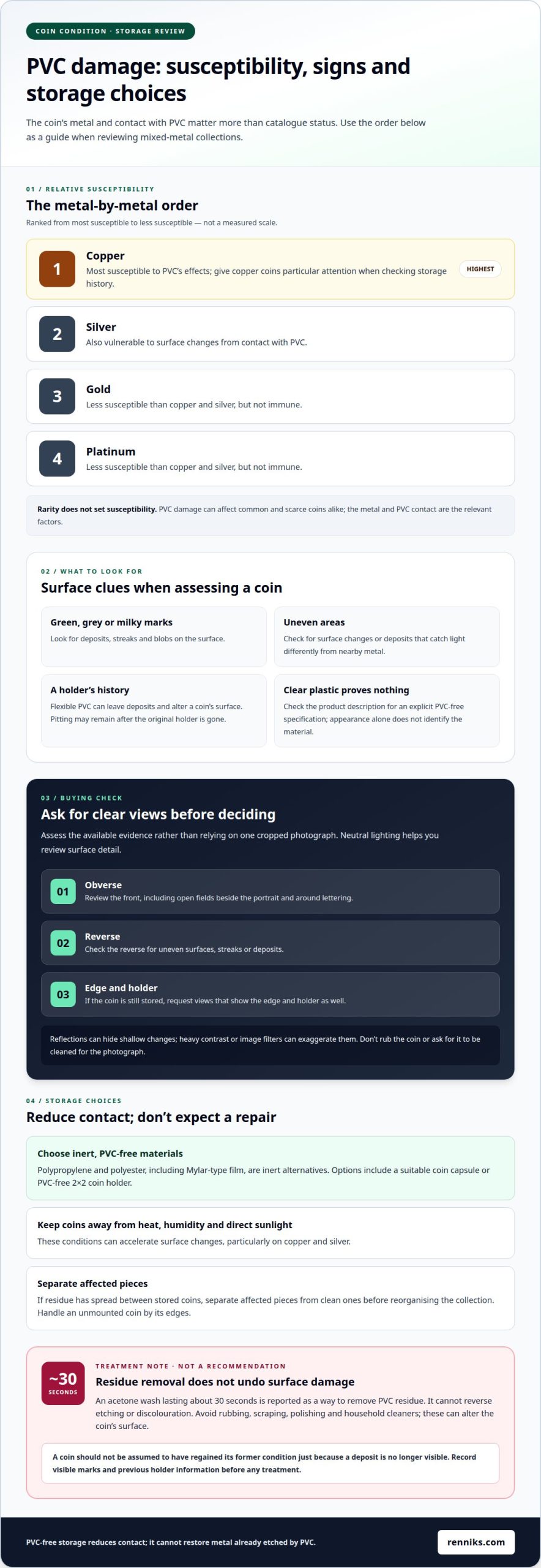
- Give copper coins particular attention when reviewing storage, as their surfaces are especially susceptible to PVC’s effects.
- Learn why flexible PVC holders can leave residue and cause lasting surface changes, even after the residue is removed.
- Look for green, grey or milky marks, streaks and blobs when assessing a coin offered for sale.
- Choose PVC-free storage, such as Lighthouse Coin Capsules or 2×2 coin holders, to reduce contact with PVC-based materials.
Coins’ differing susceptibility to PVC
Copper coins are most susceptible to PVC’s acidic effects, followed by silver, gold and platinum. This order is useful when reviewing mixed-metal collections or inherited albums. A copper coin’s surface can show lasting changes after contact with flexible PVC, and silver coins are also vulnerable. Gold and platinum are less susceptible, but not immune.
Rarity does not determine susceptibility. PVC damage can affect a common coin as well as a scarce one, including a 1967 British copper penny or a 1914 Mexican silver peso. The coin’s metal and contact with PVC matter more than its catalogue status. Pitting may also remain after long-ago contact, even when the original plastic holder is gone.
Acetone may remove PVC residue, but it cannot reverse etching or discolouration. A reported treatment is an acetone wash lasting about 30 seconds. Avoid rubbing, scraping, polishing or using household cleaners: these can alter the coin’s surface and obscure its original finish. A damaged coin intended for grading may also be unsuitable, as reputable third-party grading firms generally reject even slight traces of PVC damage.
For Australian collections, choose inert, PVC-free polypropylene or polyester storage. Keep coins away from heat, humidity and direct sunlight, which can accelerate surface changes, particularly on copper and silver. A suitable capsule or inert album separates each coin from flexible PVC pages. Check older flips and pockets for PVC before storing more coins alongside them.
Handle an unmounted coin by its edges when changing its holder. If residue has spread between stored coins, separate affected pieces from clean ones before reorganising the collection. PVC-free materials reduce contact, while careful handling limits additional marks. Neither measure can restore surface metal already etched by PVC.
How PVC interacts with coins
Plasticisers make PVC flexible, but they can migrate from the material as it ages. Contact with a coin can leave deposits and alter its surface.
Reversibility and permanence of damage
PVC damage can involve both removable residue and lasting changes to a coin’s surface. Removing a deposit does not restore metal that has already been etched or pitted.
This distinction matters when recording a coin’s condition. Note visible marks and retain information about its previous holder before attempting any treatment. Cleaning can change the surface and make its original state harder to assess. Avoid abrasive tools and household cleaners, which may add scratches or leave further residues. A treated coin should not be assumed to have regained its former condition simply because a deposit is no longer visible.
PVC in holders and storage materials
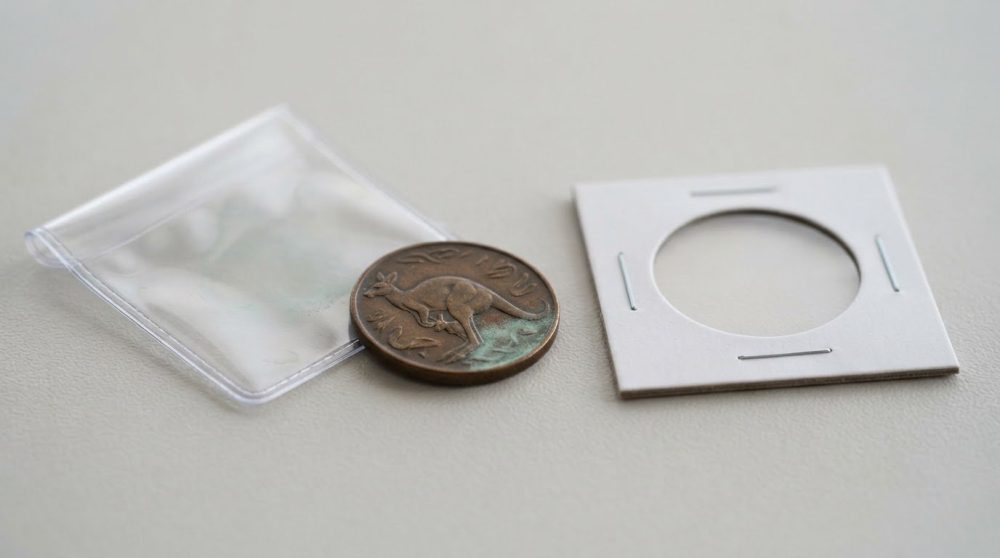
Some soft vinyl 2×2 flips contain PVC, and flexible pages, sleeves and pockets can also be made from it. Clear appearance alone does not identify a holder’s material, so check its product description for an explicit PVC-free specification.
Polypropylene and polyester, including Mylar-type film, are inert alternatives for coin storage. A practical choice depends on the coin and how it will be organised: an individual holder separates a piece, while an album system arranges a group. PVC-free 2×2 coin holders offer one option for storing individual coins. Avoid selecting a holder solely because it looks clear or feels flexible; neither quality establishes its material.
Identifying affected coins when buying
Before buying, assess the available evidence rather than relying on a single cropped photograph. For an online listing, request clear images of the obverse, reverse and edge under neutral lighting. Reflections can hide shallow surface changes, while heavy contrast or image filters can exaggerate them. If the coin is still in a holder, ask for views showing both the coin and holder.
Compare the same area across images where possible. Check the open fields beside the portrait, around lettering and near the rim, where changes may be easier to distinguish from normal wear. Look for an uneven surface or deposits that catch light differently from nearby metal. Don’t rub the coin or ask for it to be cleaned to improve the photograph.
PVC-related surface alteration can affect a coin’s assessed grade because grading considers condition. It can also influence a collector’s willingness to buy and, in turn, the coin’s market value. No single deduction applies to every coin: denomination, rarity, demand and the extent of the surface change all matter. A seller’s stated grade should not override visible condition.
If the photographs leave an important area unclear, pause before deciding. Record which details are visible, what the listing says about storage, and whether the holder is still present. Keep those observations with the purchase record if you proceed. They provide a useful condition reference if you later compare the coin with another example or submit it for independent grading.
Renniks
Renniks helps Australian collectors choose suitable storage for coins that need to be moved out of flexible PVC holders. Its range includes album systems, coin capsules, 2×2 coin holders, and HAGNER sheets and binders. For a raw coin, select storage made from an inert, PVC-free material; a capsule can also limit handling and contact with other surfaces.
When reorganising a collection, consider how each coin’s size and storage format fit your existing album or holder system. Renniks’ coin-storage range includes options for different collecting arrangements, but a new holder cannot remedy existing etching or discolouration. For storage options suited to your collection, explore Renniks’ coin-storage range.
Plan a considered storage review
Understanding what PVC damage on coins is can guide your next collection review. Keep a brief record of the holders used for different groups of coins, especially when combining an established collection with recently acquired pieces. This gives you a reference point when changing storage and helps keep decisions consistent across the collection.
Take the process at a measured pace. A review can begin with one album or group of coins, then continue as you handle other parts of the collection. The aim is to make deliberate storage choices and retain useful notes, not to rush through every item at once. A careful, organised approach is a practical way to make informed decisions for your collection.
Shop the supplies in this guide
Put the advice above into practice with these collecting supplies from Renniks:
- Plastic Sheets ENCAP, clear pockets for 20 square Coin Capsules QUADRUM 50 x 50mm
- OPTIMA Coin Sheets for 24 coins up to 34mm Ø, clear
- OPTIMA Coin Sheets for 35 coins up to 27mm Ø, clear
- Plastic Sheets ENCAP, clear pockets for 48 coins in capsules with a inner diameter between 23.5 and 26mm
- Plastic Sheets ENCAP, clear pockets for 48 coins in capsules with a diameter between 21, 22 and 23mm
Frequently Asked Questions
What does PVC damage look like on coins?
The question “what is PVC damage on coins?” refers to surface changes caused by contact with plasticised PVC. It can appear as green, grey or milky streaks, spots, splotches or blobs. Examine the coin under angled light, including around lettering and raised designs. Appearance alone cannot confirm the cause, so consider the holder and storage history too.
What causes PVC damage to coins?
Plasticisers in flexible PVC can migrate from storage materials and leave deposits on a coin’s surface. Someone asking “what is PVC damage on coins?” may be examining a piece stored in a soft vinyl flip or flexible pocket. If you see residue, separate the coin from others before rearranging the group, since residue can transfer between stored pieces.
How can you tell PVC residue from verdigris or other coin damage?
Appearance can offer clues, but it cannot establish the cause with certainty. Verdigris generally refers to green corrosion on copper or copper-alloy surfaces. PVC residue may also look green, but can appear grey or milky. Check whether the mark appears raised or sticky, and note the coin’s holder and storage history. Avoid scraping it to test.
Does PVC damage affect Australian coins differently from other coins?
A coin’s metal and contact with PVC matter more than its country of origin. An Australian coin made from a susceptible metal can be affected, as can a coin from elsewhere. For a mixed collection, assess each piece by its composition and holder rather than assuming Australian issues need a different standard of PVC-free storage.
Disclaimer
This article is provided for general information and collecting guidance only, and is not financial or investment advice. Coins, stamps, banknotes and trading cards can fluctuate in value, and nothing here should be read as a guarantee that any item will increase in value. Any value mentioned reflects a reference-guide estimate at the time of writing, not a current market valuation; always check the latest edition of Renniks Australian Coin & Banknote Values or an independent source for current figures. Renniks does not grade, authenticate or appraise items; grading opinions belong to independent third-party services such as PCGS and NGC. Links to external websites are provided for reference only; Renniks is not responsible for the content of third-party sites.
